A Tokyo food guide is actually one of the more useful things to read before you land in Tokyo, because eating well here isn’t really about finding “the best restaurant.”
It’s about understanding the different categories of food culture the city runs on, from standing ramen counters to department store basement food halls, so you’re not defaulting to whatever restaurant happens to have an English menu taped to the window.
This guide is built for someone eating their way through Tokyo for the first time. It covers what to actually try, where the different food experiences happen, how ordering and etiquette work, and the honest tradeoffs (cost, queues, language) that most quick lists skip over.
How to Think About Eating in Tokyo
Tokyo doesn’t really have a single food scene. It has several running in parallel: ultra-casual counter food, mid-range izakayas, department store food halls, convenience stores that are shockingly good, and a high end that includes some of the most awarded restaurants in the world. Most first-time visitors end up moving between all five in a single day without quite realizing it.
The practical upshot is that you don’t need to plan every meal in advance. You need to know which category fits the moment: a quick lunch between neighborhoods, a sit-down dinner worth booking ahead, or a late-night bite after a few drinks in Shinjuku.
Dishes Worth Prioritizing
Ramen
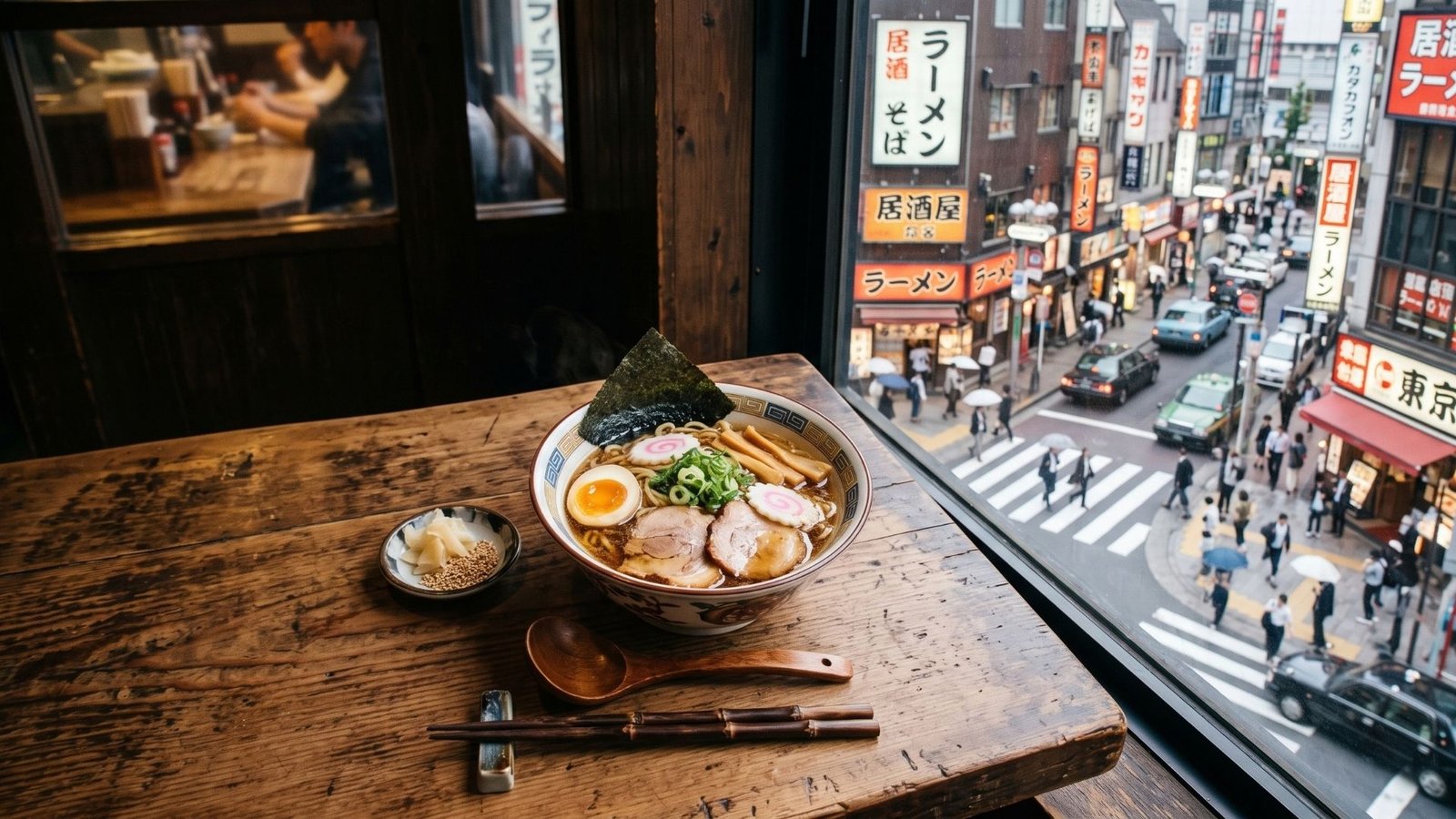
Ramen shops range from tiny eight-seat counters with a ticket vending machine at the door to well-known chains with locations across the city. Tonkotsu (pork bone broth), shoyu (soy-based), miso, and shio (salt-based) are the four broad styles, and neighborhoods often lean toward a regional specialty.
Ordering tip: many shops use a vending machine at the entrance where you buy a ticket for your bowl before sitting down. It looks confusing the first time and takes about ten seconds once you’ve done it once.
Sushi
Sushi in Tokyo spans an enormous range, from conveyor belt chains where a plate costs about the same as a coffee, to reservation-only counters where a meal can run into the hundreds of dollars per person. Neither end is more “authentic” than the other; they’re just different experiences.
For a first-timer, conveyor belt sushi (kaiten-zushi) is a genuinely good entry point: low pressure, no reservation needed, and a chance to try a wide range of items without committing to an expensive omakase menu you might not be ready to fully appreciate yet.
Tempura
Lightly battered, quickly fried seafood and vegetables, usually served with a dipping sauce or a sprinkle of salt. Good tempura is noticeably lighter than what most people expect based on fried food elsewhere, since the batter is meant to be thin and the oil temperature carefully controlled.
Yakitori
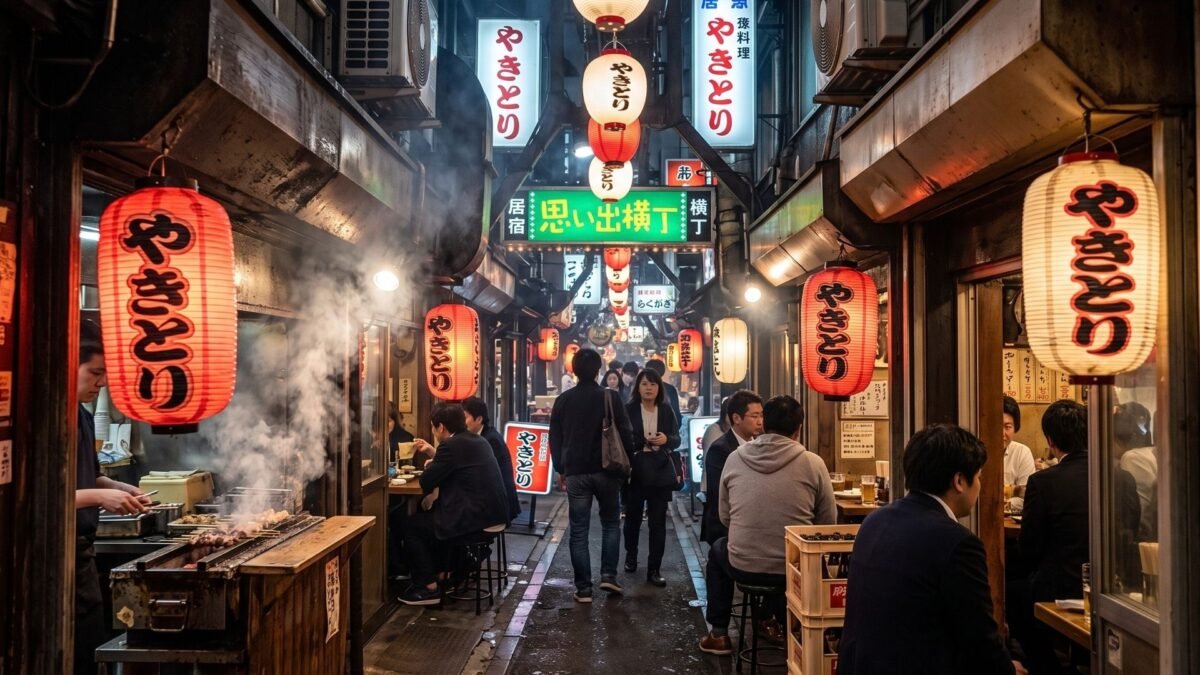
Skewered, grilled chicken (and sometimes other proteins) is one of the most common izakaya orders, and Yakitori alleys built around this specifically, like parts of Omoide Yokocho in Shinjuku, are worth seeking out for the atmosphere as much as the food.
Tonkatsu
Breaded, deep-fried pork cutlet, usually served with shredded cabbage and a thick, slightly sweet sauce. It’s an easy, satisfying meal for anyone slightly overwhelmed by an all-Japanese menu, since most tonkatsu shops keep the format simple.
Soba and Udon
Buckwheat noodles (soba) and thick wheat noodles (udon) show up in both hot broth and cold, dipping-sauce formats. Cold soba in summer is a local staple worth trying even if it sounds like an odd order to visitors used to noodles served hot.
Okonomiyaki and Takoyaki
Okonomiyaki is a savory, griddled pancake mixed with cabbage and various fillings, more associated with Osaka but widely available in Tokyo. Takoyaki are ball-shaped, batter-based snacks with a piece of octopus inside, usually sold from street stalls and festival vendors.
Wagyu and Yakiniku
Yakiniku restaurants let you grill high-quality beef tableside, and it’s one of the more approachable ways to try wagyu without committing to a formal, expensive kaiseki-style meal.
Matcha Desserts
Matcha soft-serve, matcha parfaits, and matcha-flavored sweets are everywhere, and quality varies a lot. The better versions use ceremonial or high-grade matcha and taste noticeably more bitter and complex than the sweeter, milder versions aimed at tourists.
The Dining Formats You’ll Actually Use
Standing Bars and Counter Seats
Common in areas like Shinjuku’s Omoide Yokocho and parts of Shibuya, standing bars serve small plates and drinks in a fast, casual format. They’re a good option if you want atmosphere without committing to a full sit-down meal.
Ticket Machine Ordering
Many ramen shops, and some casual curry and gyudon (beef bowl) chains, use a vending machine at the entrance instead of a server taking your order. You select and pay for your dish before sitting, then hand the ticket to staff.
Conveyor Belt and Rotating Sushi
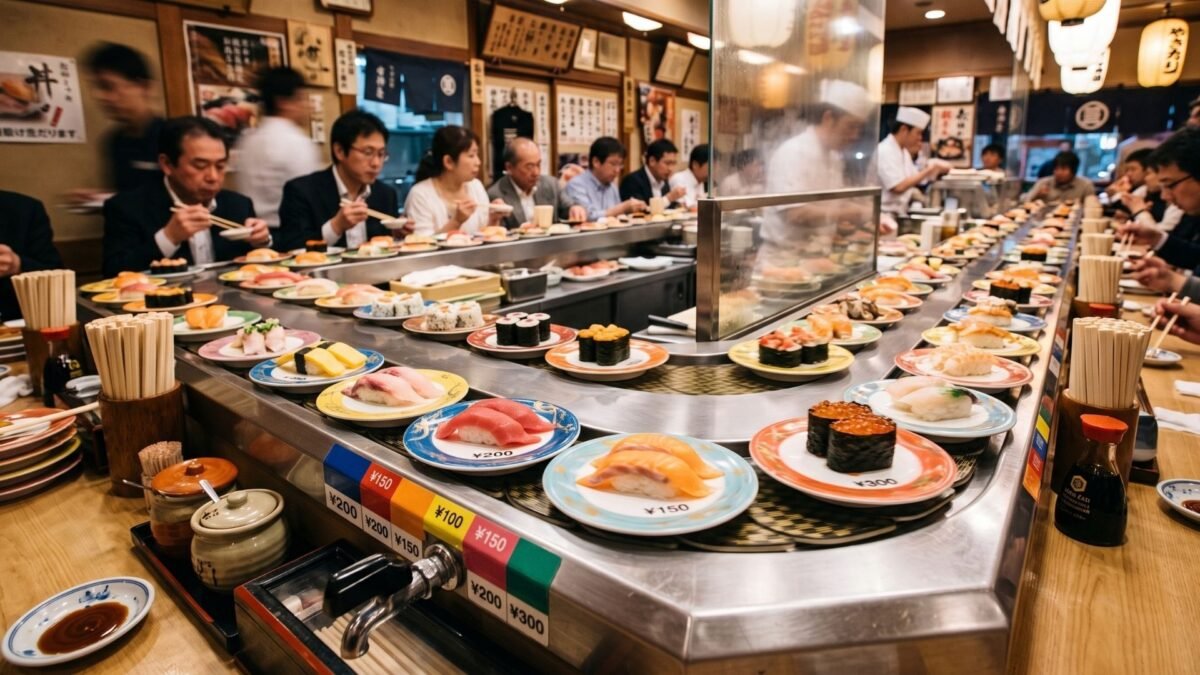
Plates move past you on a belt (or are ordered via tablet at some newer chains), and you’re charged based on the plate color or a final tablet tally. It’s fast, affordable, and doesn’t require any Japanese.
Department Store Food Halls (Depachika)
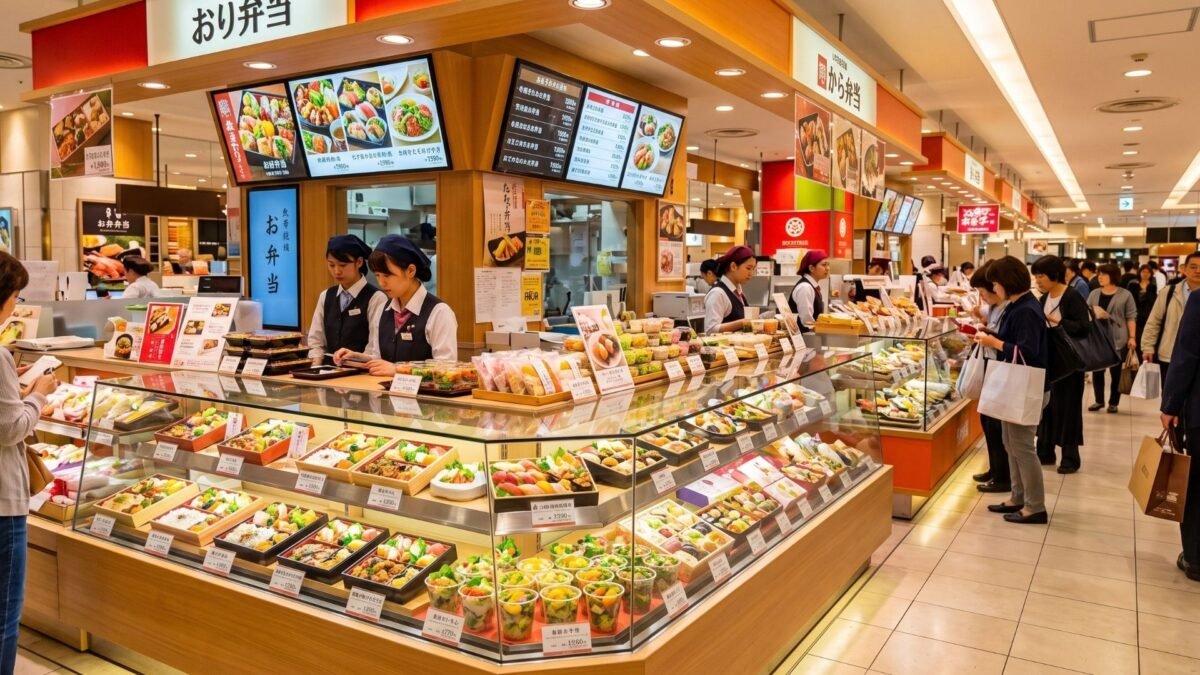
The basement floors of major department stores, particularly around Ginza, Shinjuku, and Shibuya, are packed with prepared food counters selling everything from bento boxes to high-end pastries. It’s one of the best places to put together a picnic-style meal or try a wide range of small bites without sitting down anywhere.
Convenience Stores
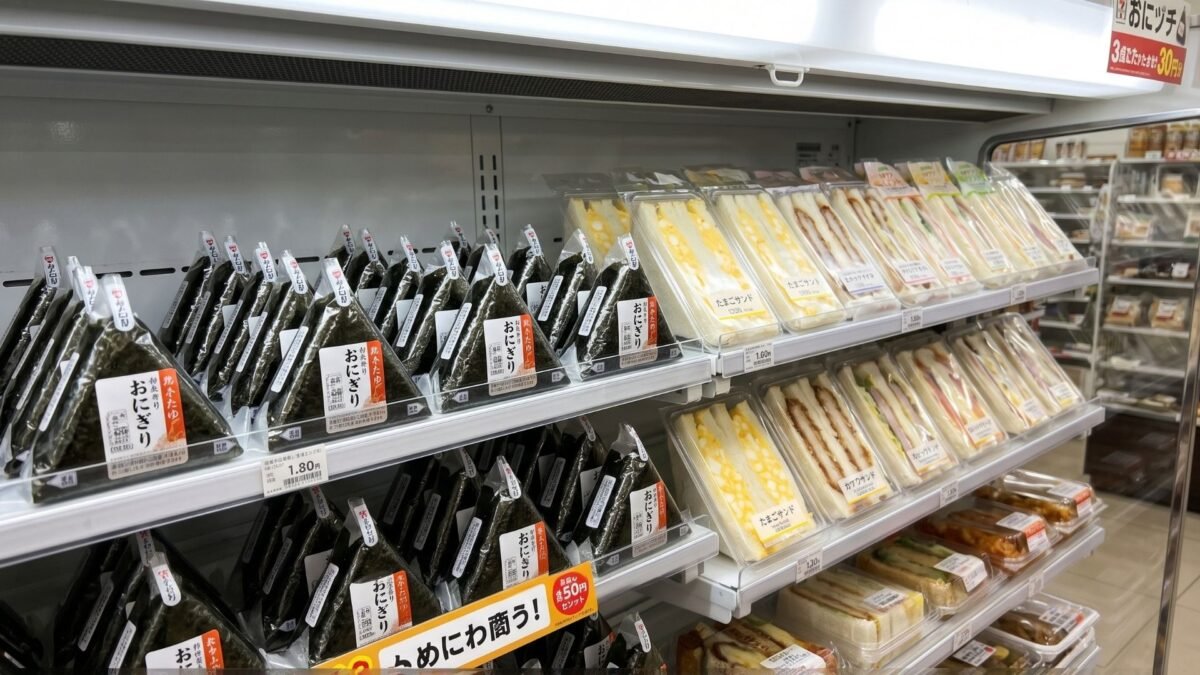
This deserves its own mention because Japanese convenience stores (7-Eleven, Lawson, FamilyMart) genuinely punch above their category. Onigiri (rice balls), sandwiches, and hot food from the counter are reliable, cheap, and available at nearly any hour, which makes them a legitimate backup option rather than a last resort.
Izakaya
The closest Western equivalent is a gastropub: small plates, drinks, and a social, unhurried pace. Izakayas are where most of Tokyo’s after-work dining and drinking happens, and menus typically include a wide mix of grilled, fried, and raw items meant for sharing.
Where to Eat, by Area
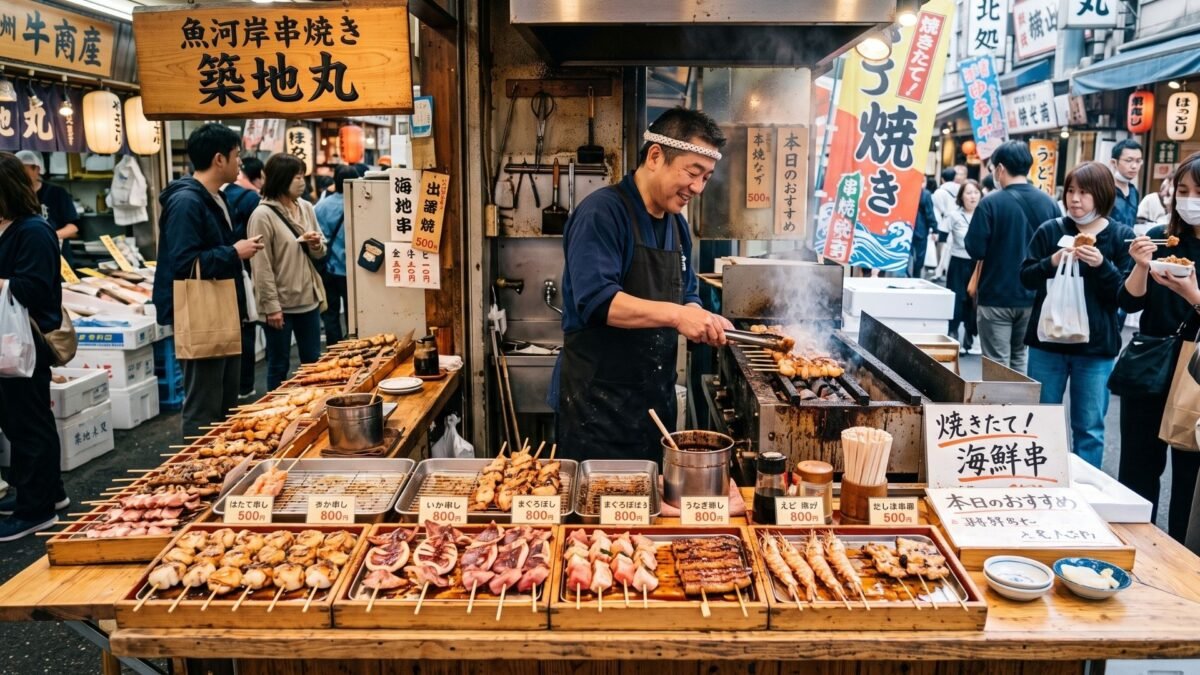
Tsukiji Outer Market is the strongest option for a food-focused morning, with fresh seafood, skewers, and tamagoyaki sold from narrow market stalls. Arrive early, since the better-known stalls sell out of popular items by early afternoon.
Omoide Yokocho and Golden Gai in Shinjuku are the go-to spots for yakitori, small izakayas, and standing bars at night. Some Golden Gai bars charge a cover fee and lean unofficially locals-only, so it’s worth choosing a spot with a visible English menu or one clearly set up for visitors.
If the cover charges and unwritten rules sound like more friction than you want on a first night out, a guided Shinjuku bar hop is a reasonable shortcut.
A local guide handles the door etiquette and the ordering, and picks places that are really great to have visitors, which solves the exact problem of standing outside a Golden Gai bar trying to work out whether you’re welcome.
Most run two to three hours across three or four stops, with a few dishes and a drink or two included. Worth doing on your first night rather than your last, since you’ll pick up enough ordering confidence to handle the rest of the trip unguided.
Ginza covers the higher end, from department store food halls to some of the most respected sushi counters in the city, many of which require reservations booked well in advance.
Shibuya and Shinjuku’s main districts have the highest concentration of casual chains, ramen shops, and conveyor belt sushi, making them the easiest areas to eat well without much planning.
Ameyoko Market near Ueno mixes street food stalls with a more local, less polished market atmosphere than Tsukiji, and tends to be less crowded with tourists.
Yanaka and Kagurazaka are better for a slower, sit-down meal in a quieter, more residential setting, away from the busiest tourist strips.
For a broader sense of how these food areas fit into a wider first-time itinerary, our full guide to the best places to visit in Tokyo breaks down which neighborhoods pair well together across a multi-day trip.
Practical Dining Tips First-Timers Should Know
Cash still matters. Card acceptance has improved significantly in recent years, but many smaller ramen shops, standing bars, and market stalls remain cash-only or have a minimum card purchase amount. Carrying some yen is still a good habit.
Tipping isn’t expected. Leaving extra money on the table is more likely to cause confusion than appreciation. Good service is simply the standard, not something tipped for separately.
Queues are normal for popular spots. Well-known ramen shops and sushi counters can have real waits, especially around lunch and dinner peak hours. Going slightly earlier or later than the standard meal window often avoids the worst of it.
Reservations matter more at the high end. Casual ramen and conveyor belt sushi rarely need advance booking. Well-regarded sushi counters, kaiseki restaurants, and some popular izakayas often do, sometimes weeks ahead.
Vegetarian and vegan options require some research. Traditional Japanese cooking uses dashi (often fish-based) as a base for many dishes, including some that look vegetable-only on the surface. Travelers with dietary restrictions should look up specific restaurants in advance rather than assuming a menu item is automatically meat-free.
Portion sizes at izakayas are meant for sharing. Ordering a handful of small plates across the table is the norm, rather than each person ordering an individual main course.
Mistakes First-Time Visitors Make With Tokyo Food
Only eating at places with English menus. This narrows your options significantly and usually steers you toward more tourist-oriented spots. A translation app pointed at a menu, or simply pointing at what the table next to you ordered, works better than it sounds.
Skipping convenience store food entirely. It’s easy to assume convenience store meals are a downgrade from “real” restaurants, but in Tokyo they’re often a genuinely solid, fast option, especially between sightseeing stops.
Not accounting for cash-only spots. Showing up at a small ramen counter or market stall with only a card can mean an awkward walk to find an ATM. Keeping a reasonable amount of yen on hand avoids this.
Overbooking high-end meals and under-planning the rest. A single splurge dinner is memorable, but filling every night with reservation-heavy restaurants leaves no room for the spontaneous, cheap, excellent meals Tokyo is full of.
Assuming all sushi needs to be an expensive omakase. Conveyor belt sushi is a completely legitimate, lower-pressure way to try a wide range of items, not a lesser substitute.
Frequently Asked Questions
What is the best area in Tokyo for food as a first-time visitor?
Shinjuku and Shibuya offer the widest range of casual options with the least planning required. Tsukiji Outer Market is the strongest choice for a food-focused morning specifically.
Do I need to make restaurant reservations in Tokyo?
Not for most casual dining. Reservations matter more for well-known sushi counters, kaiseki restaurants, and some popular izakayas, particularly during peak travel seasons.
Is Tokyo expensive for food?
It varies widely. Convenience store meals, ramen, and conveyor belt sushi are often cheaper than comparable meals in major Western cities, while high-end sushi and kaiseki dining can be very expensive.
Can vegetarians and vegans eat well in Tokyo?
It takes more planning than in some other major cities, mainly because dashi (often fish-based) appears in many traditional dishes. Researching specific vegetarian-friendly restaurants ahead of time makes a real difference.
Is tipping expected at Tokyo restaurants?
No. Tipping isn’t part of standard dining culture and can cause more confusion than goodwill.
What should I try if I only have one food-focused day in Tokyo?
A morning at Tsukiji Outer Market, a casual ramen lunch, and an evening in Omoide Yokocho or a nearby izakaya covers a wide range of Tokyo’s food culture in a single day.
Where to Go From Here
Tokyo’s food scene actually rewards curiosity more than research. The city is dense enough that you’re rarely more than a few minutes from something worth eating, whether that’s a convenience store rice ball between train transfers or a reservation-only sushi counter you booked months ago.
Pick two or three formats from this guide (a market morning, a ramen counter, an izakaya night) rather than trying to plan every meal, and let the rest happen along the way.