This post contains affiliate links. If you book or buy through them, I may earn a small commission at no extra cost to you.
Most people who look up an Italy travel guide plan their first trip the same way. They open a map, pin Rome, Florence, Venice, the Amalfi Coast, Cinque Terre and Lake Como, and try to squeeze the lot into ten days. Then they spend half the holiday on trains and the other half in queues.
This guide is here to stop that from happening to you.
It covers where to go and how long to stay, the best time of year to visit, how to get between cities, what a trip realistically costs in 2026, and the rules that catch visitors out every year, from Venice’s day-tripper fee to the traffic zones that post fines to your home address months after you fly home.
If you only have two minutes, start with the quick answers below. If you’re planning the whole thing, read on.
Italy Travel Quick Answers
| Question | Answer |
|---|---|
| Best months to visit | April to June, and September to October |
| Ideal first trip | 10 to 14 days (7 days works for two or three cities) |
| Best first-time route | Rome, Florence and Venice |
| Best way to travel between cities | High-speed trains |
| Do you need a car? | Only for rural Tuscany, Sicily, Puglia or the Dolomites |
| Currency | Euro (€). Cards are widely accepted, but carry some cash |
| Language | Italian. English is common in hotels and tourist areas |
| Plugs | Type C, F and L, 230V |
| Tipping | Not expected. Rounding up is appreciated |
| Biggest mistake | Trying to see too much in one trip |
Why Italy Is Worth the Hype
Italy is one of the few countries where you can stand inside a 2,000-year-old temple in the morning, eat the best lunch of your year at a place with paper tablecloths, and watch the sun go down over vineyards by evening. All without an extraordinary budget.
What surprises most first-timers is how different each region feels. Italy only became a single country in 1861, and it still behaves like twenty small nations sharing a flag. The food changes, the dialect changes, even the bread changes when you cross a regional border.
The history
Rome alone holds the Colosseum, the Roman Forum, the Pantheon and Vatican City. Near Naples, Pompeii shows you an entire Roman town frozen in the year 79 AD. Florence has more Renaissance art per square kilometre than anywhere on earth, and Venice is still a working city built on a lagoon over a thousand years ago.
The food, region by region
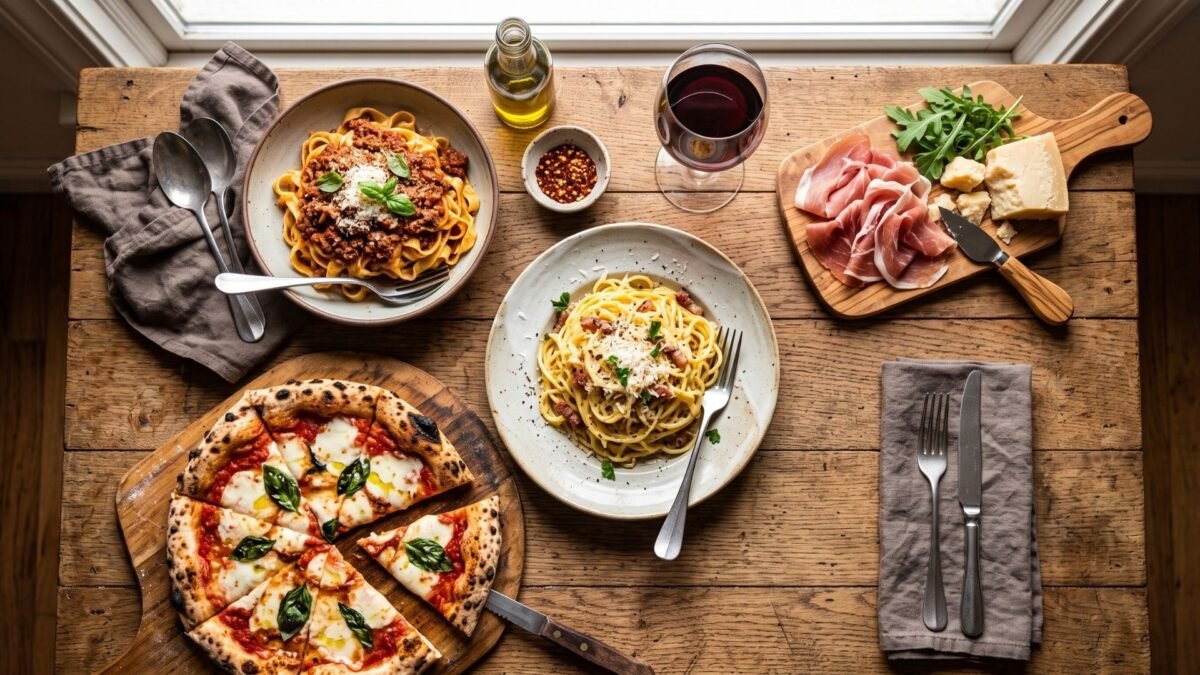
Forget the idea of “Italian food” as one thing. Here is what to order where:
- Rome: carbonara (made with guanciale, egg and pecorino, never cream), cacio e pepe, supplì (fried rice balls) and pizza al taglio, sold by the slice and by weight.
- Bologna and Emilia-Romagna: tagliatelle al ragù (you won’t find “spaghetti bolognese” on a serious menu here), tortellini in brodo, mortadella, Parmigiano Reggiano and real balsamic vinegar from Modena.
- Naples: the original pizza margherita, soft and blistered, plus sfogliatella pastries for breakfast.
- Tuscany: bistecca alla fiorentina, ribollita (bread and vegetable soup), hand-rolled pici pasta, and wines like Chianti Classico and Brunello di Montalcino.
- Sicily: arancine, cannoli filled to order, and granita with a brioche bun for breakfast in summer.
A good rule: eat what the region is known for. Ordering pizza in Venice or seafood in landlocked Umbria isn’t a crime, but it’s rarely the best meal you’ll have.
The landscapes
In one country you get the Dolomites, the northern lakes, the rolling hills of Tuscany, the cliffs of the Amalfi Coast and the volcanic coastline of Sicily. You could come back ten times and never repeat a trip.
Best Time to Visit Italy
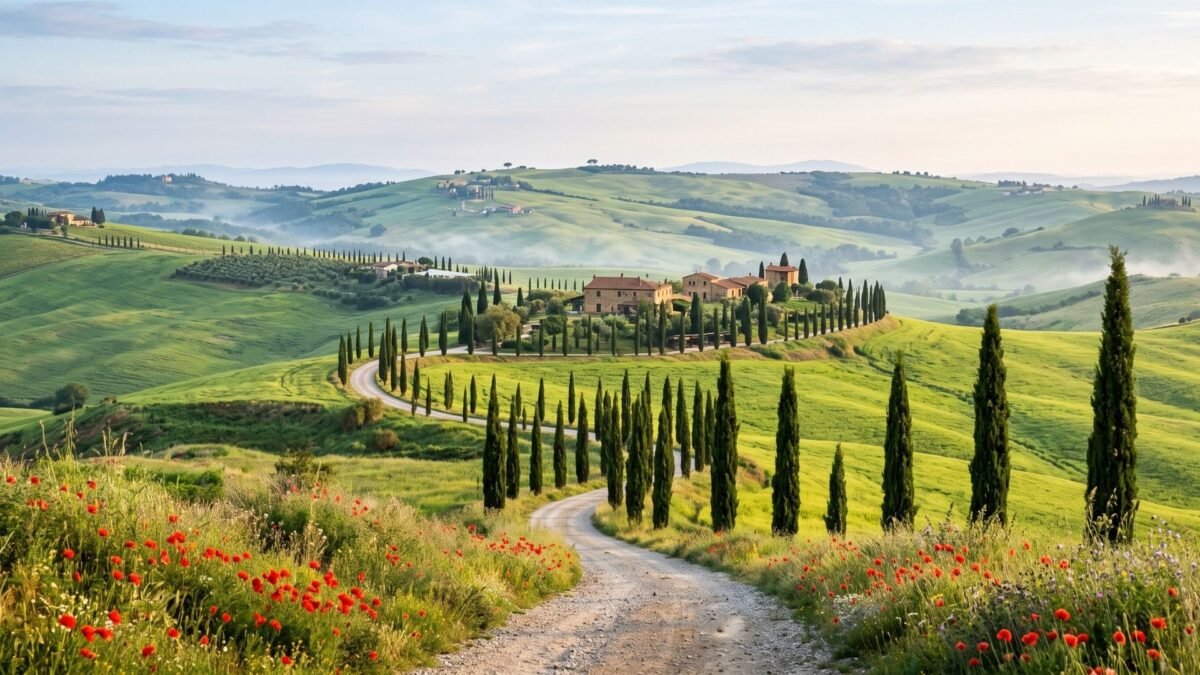
There’s no bad month to visit Italy, but there are months that suit some trips far better than others.
Spring (March to May)
Spring is the sweet spot for most travellers. Days are warm enough for long walks, gardens are in bloom and the Tuscan hills are at their greenest.
Two things to plan around. Easter week brings huge crowds to Rome and the Vatican, and April 25 and May 1 are national holidays when Italians travel too. Book trains and hotels early for those dates.
Best for: Rome, Florence, Tuscany, Lake Como, Sicily.
Summer (June to August)
Summer is peak season, and it shows. Prices are at their highest, the big sights are packed, and July and August regularly hit 35°C (95°F) in Rome and Florence. Walking the Forum at 2pm in August is not a pleasant experience.
Summer is still the right choice for beaches, the Amalfi Coast, Sardinia and the mountains. Just start your sightseeing early, rest in the afternoon like locals do, and book everything well ahead.
One warning: around Ferragosto (August 15), many family-run shops and restaurants in cities close for a week or two, while beaches are at their most crowded.
Best for: coast, islands, Dolomites, lakes.
Autumn (September to November)
September and October are what many regular visitors consider the best months of all. The sea is still warm in the south, the crowds thin out, and it’s harvest season: grapes in Tuscany and Piedmont, olives, chestnuts, mushrooms and white truffles around Alba.
November is the wettest month in much of Italy, and Venice can see acqua alta (high water flooding) from October into winter. It’s also one of the cheapest and quietest times for city breaks.
Best for: Tuscany, Piedmont, Rome, Sicily, wine and food trips.
Winter (December to February)
Winter is Italy at its most local. You’ll pay less for hotels, walk into museums that have hour-long lines in July, and eat hearty seasonal food.
Christmas markets are strongest in the north, especially Bolzano, Merano and Trento. The Dolomites are one of Europe’s best ski areas, and Venice’s Carnival usually runs in February. Some coastal towns, including much of the Amalfi Coast, largely shut down between November and March.
Best for: Rome, Florence, Venice, Milan, skiing, Christmas markets.
How Many Days Do You Need in Italy?
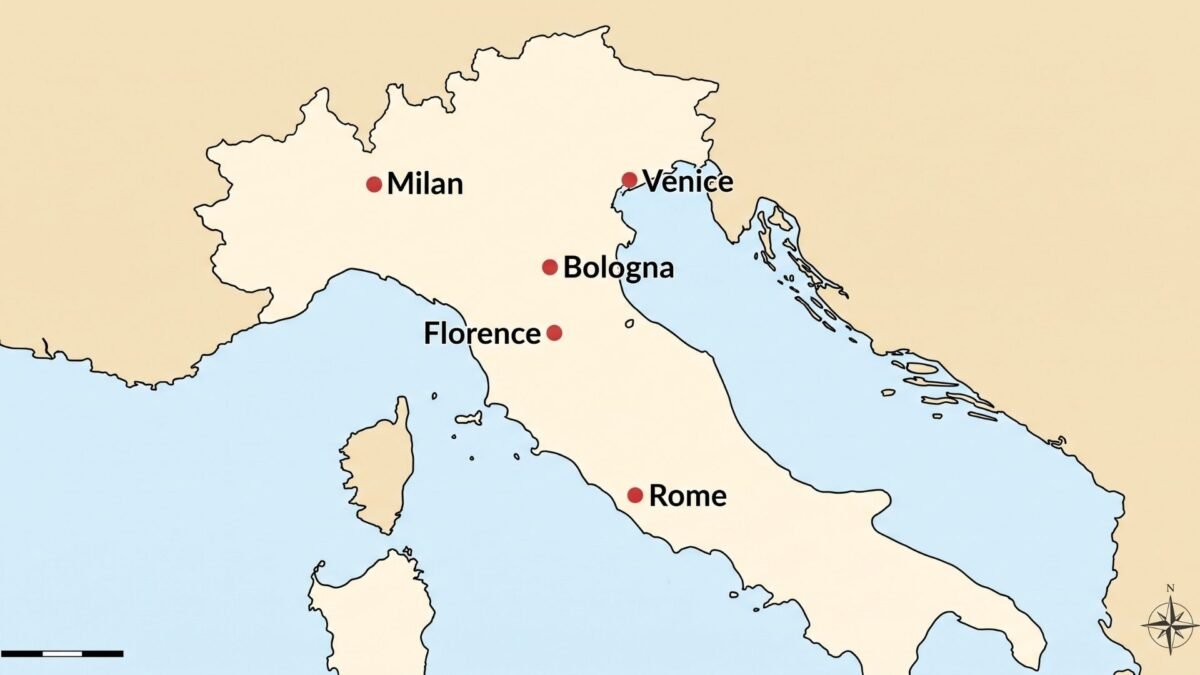
The honest answer: more than you think, spent in fewer places than you’d like.
Every move between cities costs you around half a day once you count checking out, getting to the station, travelling and checking in. A good rule is to stay at least two full nights everywhere, and three where you can.
5 days
Pick one base. Spend all five days in Rome, or split them between Florence and a couple of Tuscan day trips. Trying to fit in two cities on a five-day trip usually means seeing neither properly.
7 days
The classic first trip:
- Days 1 to 3: Rome. Ancient Rome, the Vatican, and an evening in Trastevere.
- Days 4 to 5: Florence. The Duomo, the Uffizi and sunset at Piazzale Michelangelo.
- Days 6 to 7: Venice. St. Mark’s Square, a morning getting lost, and a boat to Burano.
It’s busy but doable, because high-speed trains link all three cities in under four hours in total.
10 days
The most comfortable first trip for most people:
- Days 1 to 3: Rome
- Days 4 to 6: Florence, with a day trip to Siena and the Chianti hills
- Day 7: Bologna for a day of eating (it’s under 40 minutes from Florence by fast train)
- Days 8 to 10: Venice
14 days
Two weeks lets you add the countryside and the lakes without rushing:
- Days 1 to 3: Rome
- Days 4 to 6: Florence
- Days 7 to 9: Tuscany, based in a farmhouse or small town with a rental car
- Day 10: Bologna
- Days 11 to 12: Venice
- Days 13 to 14: Lake Como, then fly home from Milan
If you’d rather have sea than lakes, swap Venice and Lake Como for Naples, Pompeii and the Amalfi Coast, and fly home from Naples.
Best Places to Visit in Italy
For each destination below you’ll find why it’s worth your time, what to do, how long to stay and one tip that will make the visit better.
1. Rome: The Best Place to Start
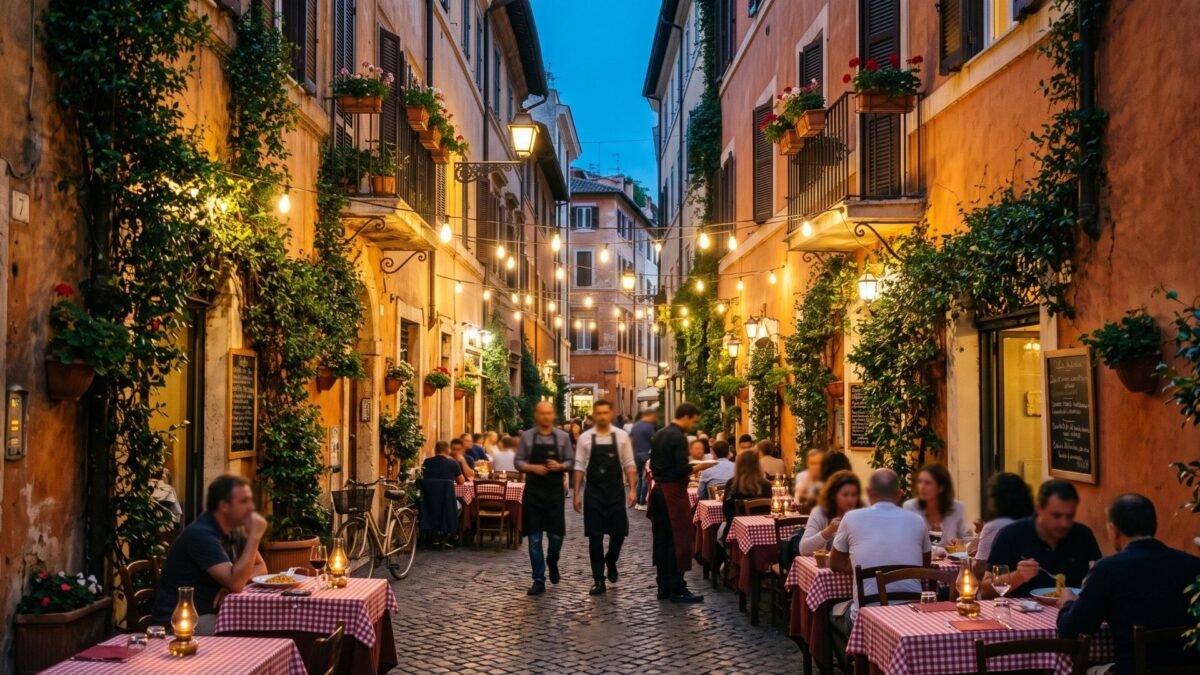
Rome is loud, chaotic, a little dirty in places and completely magnificent. Nowhere else lets you walk past a 2,000-year-old ruin on the way to buy your morning coffee.
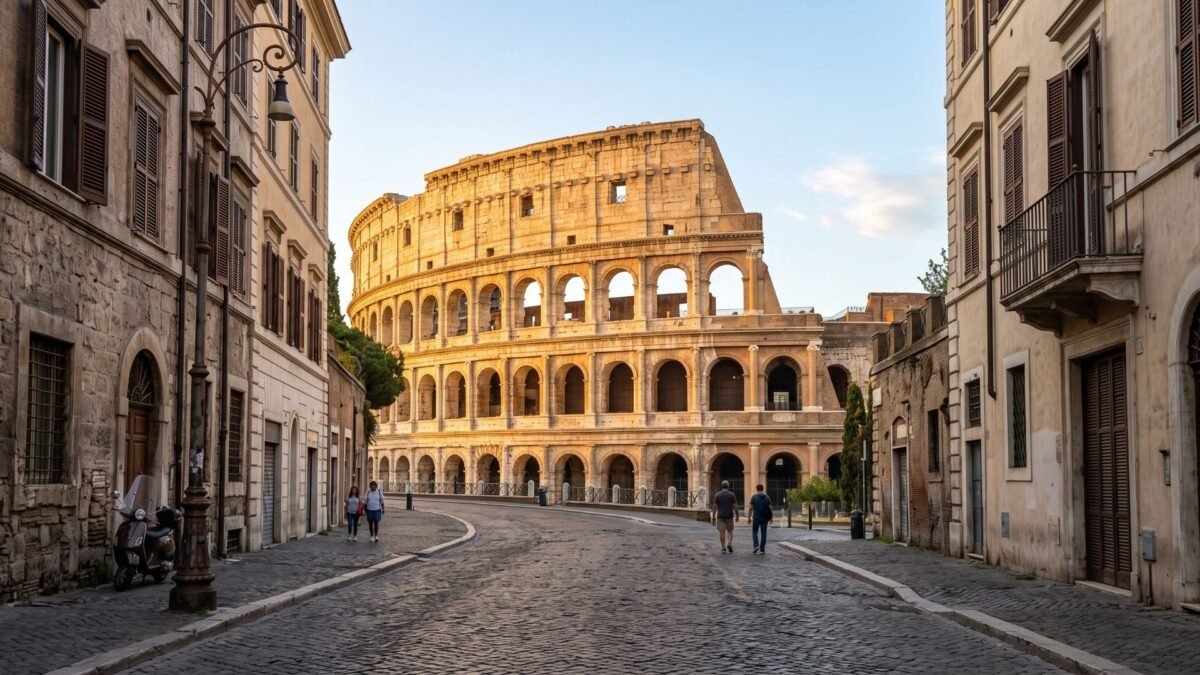
Top things to do in Rome:
- The Colosseum, Roman Forum and Palatine Hill. One combined ticket covers all three. Tickets are released about a month ahead on the official site and popular time slots go quickly, so book as soon as your dates are fixed.
- The Vatican Museums and Sistine Chapel. Book a timed entry. The museums are usually closed on Sundays, except the last Sunday of the month when entry is free and the lines are enormous. St. Peter’s Basilica is free to enter.
- The Pantheon. Now has a small entry fee, and it’s still the best value in Rome.
- The Trevi Fountain. Since February 2, 2026, visitors who aren’t Rome residents pay €2 to enter the area right beside the basin between 9am and 10pm. Viewing it from the square is still free, and early morning is still the best time to go.
- Trastevere and Monti. The two neighbourhoods where Rome feels most like a village. Go for dinner and stay for a drink.
Book your Rome tickets: Colosseum and Roman Forum tickets · Vatican Museums and Sistine Chapel tickets · Small-group Rome tours
How long to stay: 3 to 4 days.
Where to stay: The Centro Storico puts you within walking distance of almost everything. Monti is central and a bit calmer. Trastevere is charming but loud at night. Prati, near the Vatican, is quieter and good value.
Find a Rome hotel: Centro Storico · Monti · Trastevere · Prati
Rome tip: Plan one big sight per morning and leave the afternoons loose. Rome’s best moments tend to happen between the famous places, not inside them.
2. Florence: Renaissance Art in a Walkable City
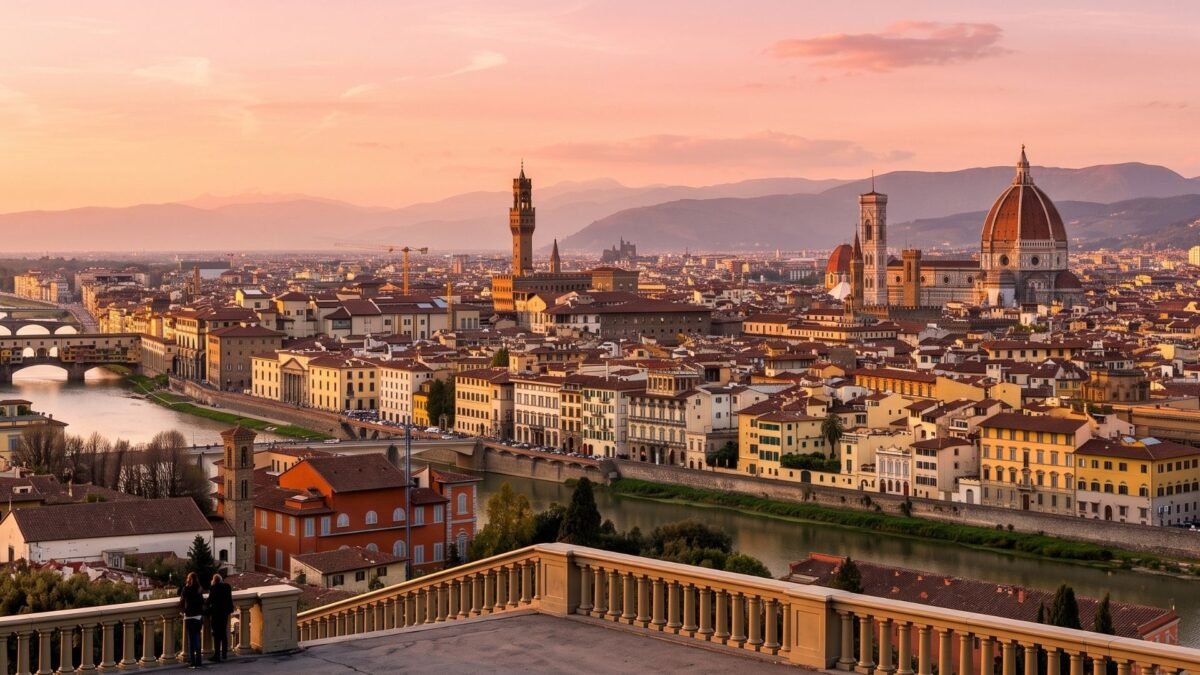
Florence is small enough to cross on foot in about half an hour, which makes it the easiest major city in Italy to enjoy. It’s also where the Renaissance started, and the city has never let anyone forget it.
Top things to do in Florence:
- The Duomo. Entering the cathedral is free, but climbing Brunelleschi’s dome needs a timed ticket. The view from the top, and the chance to walk between the dome’s two shells, is worth the 463 steps.
- The Uffizi Gallery. Home to Botticelli’s Birth of Venus and Primavera, Leonardo’s Annunciation and Michelangelo’s Doni Tondo. Book ahead and give yourself at least three hours.
- The Accademia. The main reason to go is Michelangelo’s David. Book a time slot, especially in spring and summer.
- Ponte Vecchio and the Oltrarno. Cross the old bridge to the quieter south bank, where artisans still work in small workshops.
- Piazzale Michelangelo at sunset. The classic view over the whole city. Walk up through the Rose Garden for an easier climb.
Book your Florence tickets: Duomo and dome climb tickets · Uffizi Gallery tickets · Accademia tickets to see David
What to eat: Bistecca alla fiorentina is sold by weight, usually with a minimum of around a kilo, and served rare. Share one. Try a lampredotto sandwich from a street stall if you’re feeling brave, and ribollita in cooler months.
How long to stay: 2 to 4 days, including a day trip into Tuscany.
Where to stay: The streets around the Duomo and Santa Croce put you in the middle of everything. The Oltrarno, across the river, is quieter and feels more local. Browse Florence hotels
Florence tip: Don’t drive into the centre. Florence’s historic core is a ZTL (restricted traffic zone), and cameras fine every unauthorised car that enters. The fine often arrives months later through your rental company.
3. Venice: Go Early, Stay Late, Get Lost
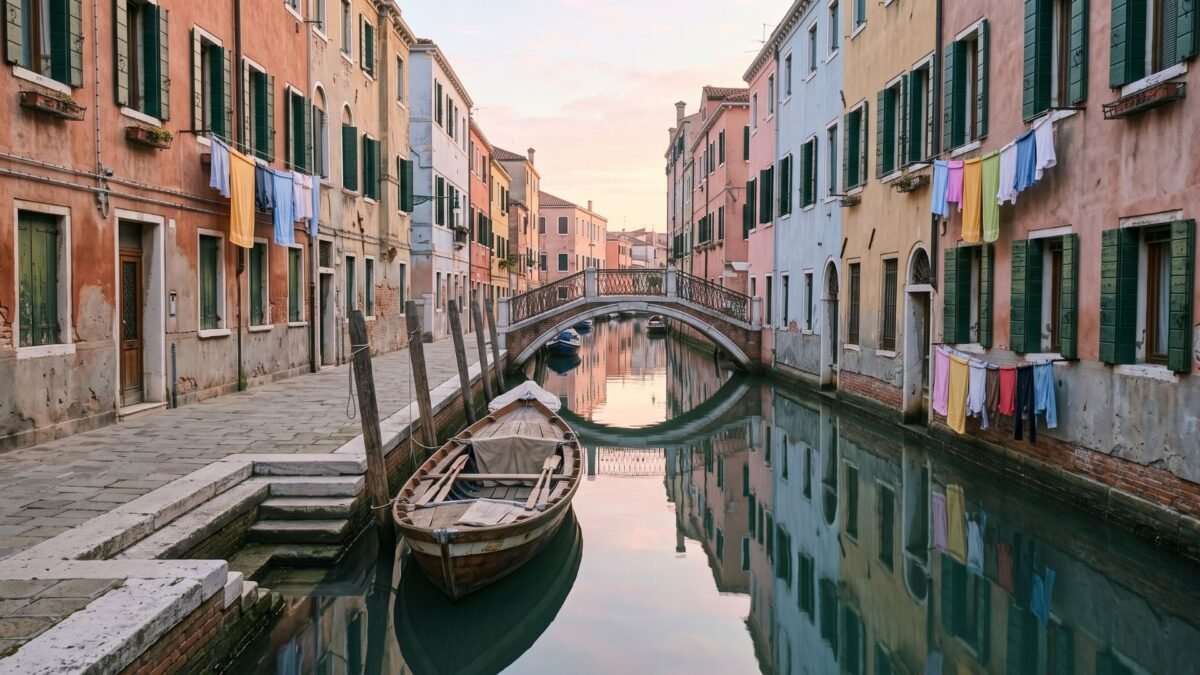
Venice is exactly as strange and beautiful as the photos suggest. There are no cars, no roads and no traffic noise. Just canals, bridges and around 120 small islands stitched together.
The trick with Venice is timing. Between roughly 10am and 5pm, the area between the train station, Rialto and St. Mark’s is packed with day-trippers. Before and after that, the city belongs to the people who are staying there.
Top things to do in Venice:
- St. Mark’s Basilica and the Doge’s Palace. Book both in advance. The Secret Itineraries tour of the Doge’s Palace is one of the best in Italy.
- A gondola ride, or a traghetto. Gondolas are expensive and very much a tourist experience, but still lovely on the quiet back canals. For a cheap taste, the traghetto ferries cross the Grand Canal for a couple of euros.
- Cannaregio, Dorsoduro and Castello. The neighbourhoods where Venetians still live, shop and drink. This is where you’ll find bàcari, the small bars serving cicchetti (Venetian tapas) with a glass of wine.
- Burano and Murano. Burano’s coloured houses are worth a half day. Murano is known for glassmaking.
Book your Venice tickets: St. Mark’s Basilica tickets · Doge’s Palace tickets and tours · Gondola rides and Burano tours
The Venice access fee: In 2026, day visitors aged 14 and over paid €5 to enter the historic centre on 60 busy dates between April 3 and July 26 (or €10 if booked less than four days ahead).
The fee applied between 8:30am and 4pm, and overnight guests had to register but didn’t pay. The 2026 trial ended on July 27, and the city hasn’t yet confirmed what happens in future years, so check the official Venezia Unica site before you travel.
How long to stay: 2 to 3 days. Staying overnight is the single best way to improve a Venice visit.
Where to stay: San Marco and Rialto are the most central and the busiest. Cannaregio and Dorsoduro are calmer and still walkable to everything. Browse Venice hotels
Venice tip: Pack light. You’ll be carrying your bag over bridges and up steps from the station or the water bus stop, and there are no taxis to rescue you. Also make sure your train ticket goes to Venezia Santa Lucia, not Venezia Mestre on the mainland.
4. Tuscany: Slow Down and Stay a While
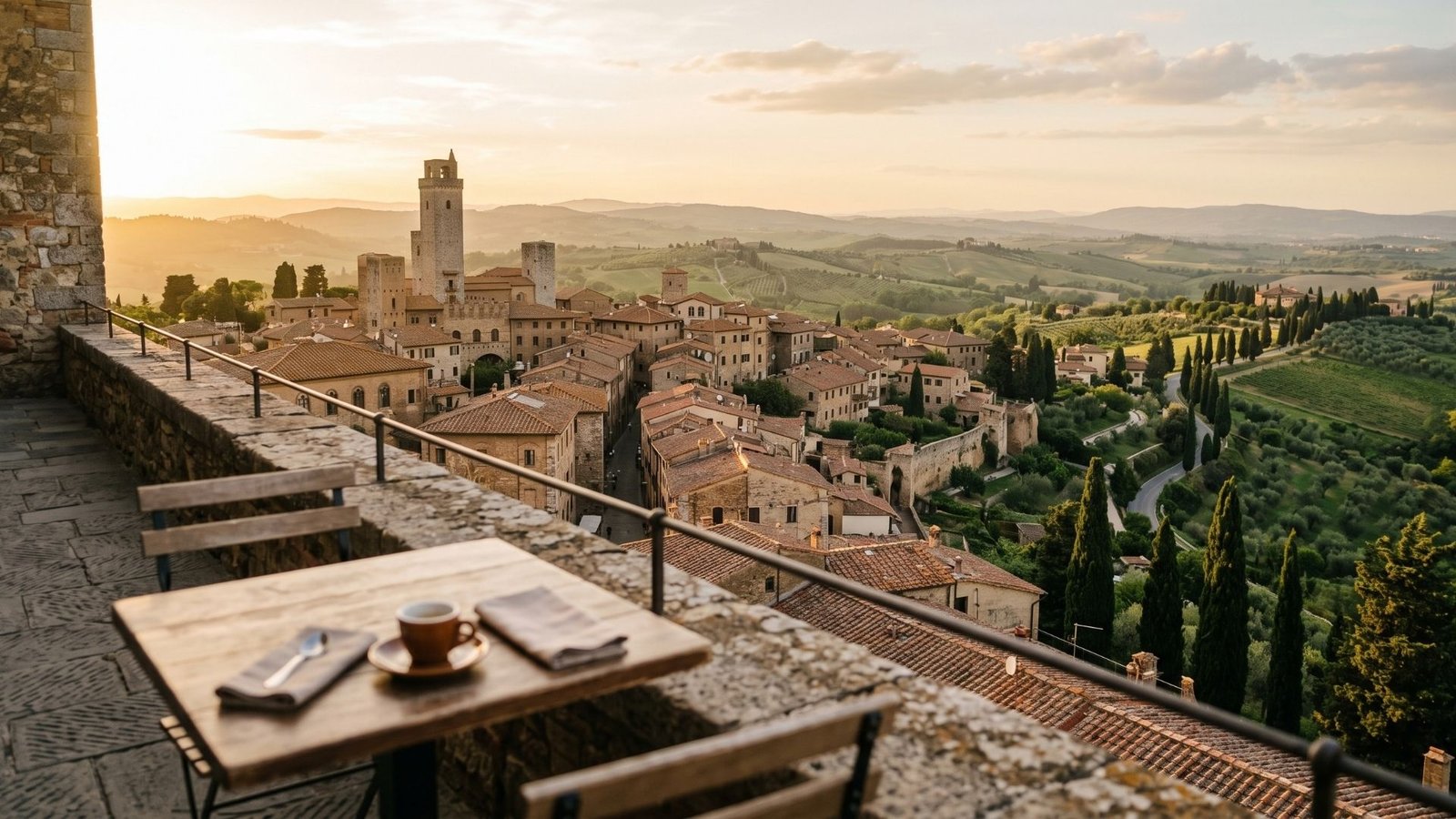
Tuscany is the Italy most people picture: cypress trees lining gravel roads, hill towns glowing in the evening light, and long lunches that turn into long dinners.
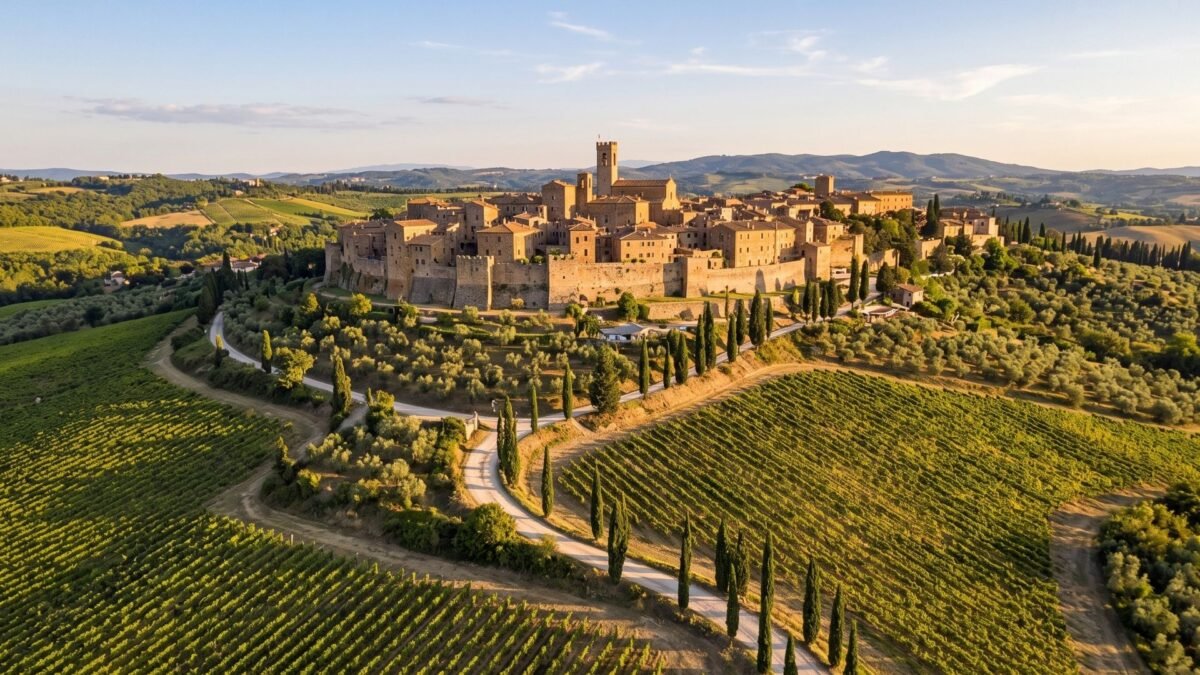
It’s also a region that punishes rushing. The best way to see it is to base yourself in one farmhouse (an agriturismo) or small town for three or four nights and explore from there.
Best places to visit in Tuscany:
- Siena. A medieval city built around the shell-shaped Piazza del Campo. The Palio horse race runs through the square on July 2 and August 16 each year.
- Lucca. Flat, relaxed and ringed by Renaissance walls you can walk or cycle all the way around.
- San Gimignano. Famous for its medieval towers and its gelato. Go early morning or late afternoon, when the tour buses have gone.
- Montepulciano and Montalcino. Hilltop wine towns producing Vino Nobile and Brunello, two of Italy’s great reds.
- The Val d’Orcia. The landscape from the postcards. Pienza, known for its pecorino cheese, makes a perfect lunch stop.
Should you rent a car in Tuscany? Yes, if you’re comfortable driving. The countryside is where Tuscany shines, and buses between small towns are slow and infrequent. Just park outside the town walls, because most hill towns have their own ZTL. If you’d rather not drive, base yourself in Florence or Siena and use day tours or private drivers.
Plan your Tuscany trip: Compare rental cars · Farmhouse and agriturismo stays · Tuscany day tours from Florence
How long to stay: 3 to 5 days.
5. Lake Como: Italy’s Most Relaxing Escape
After the crowds of Rome and Florence, Lake Como feels like exhaling. Mountains drop straight into deep blue water, villas sit on the shoreline and the main form of transport is a ferry.
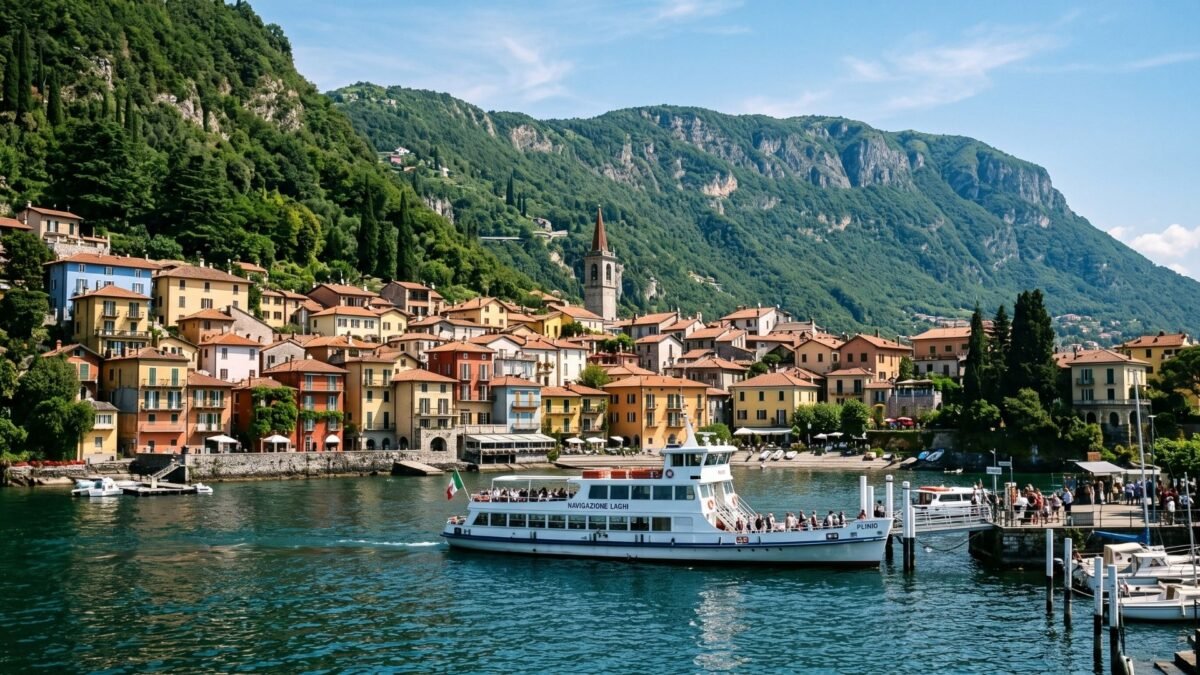
Top things to do at Lake Como:
- Ride the ferries. The central triangle of Bellagio, Varenna and Menaggio is the heart of the lake, and a day pass lets you hop between them.
- Bellagio. The best-known village, with elegant lanes and the gardens of Villa Melzi.
- Varenna. Smaller and more romantic, with a lakeside walkway and a direct train from Milan.
- The villas. Villa del Balbianello (familiar to film fans) and Villa Carlotta, with its huge gardens, are the highlights.
Getting there: Direct regional trains run from Milano Centrale to Varenna in about an hour. From there, you’re one short ferry ride from Bellagio or Menaggio.
Plan your Lake Como trip: Milan to Varenna train tickets · Lake Como hotels · Lake Como boat tours
Best time to visit: April to June and September to early October. Many hotels and some ferry routes scale back or close from November to March.
How long to stay: 2 to 3 days.
6. Bologna: Italy’s Food Capital
Bologna is the city most first-timers skip and most return visitors wish they’d seen sooner. It’s a real working university city with far fewer tourists than Florence, and it may be the best place to eat in the whole country.
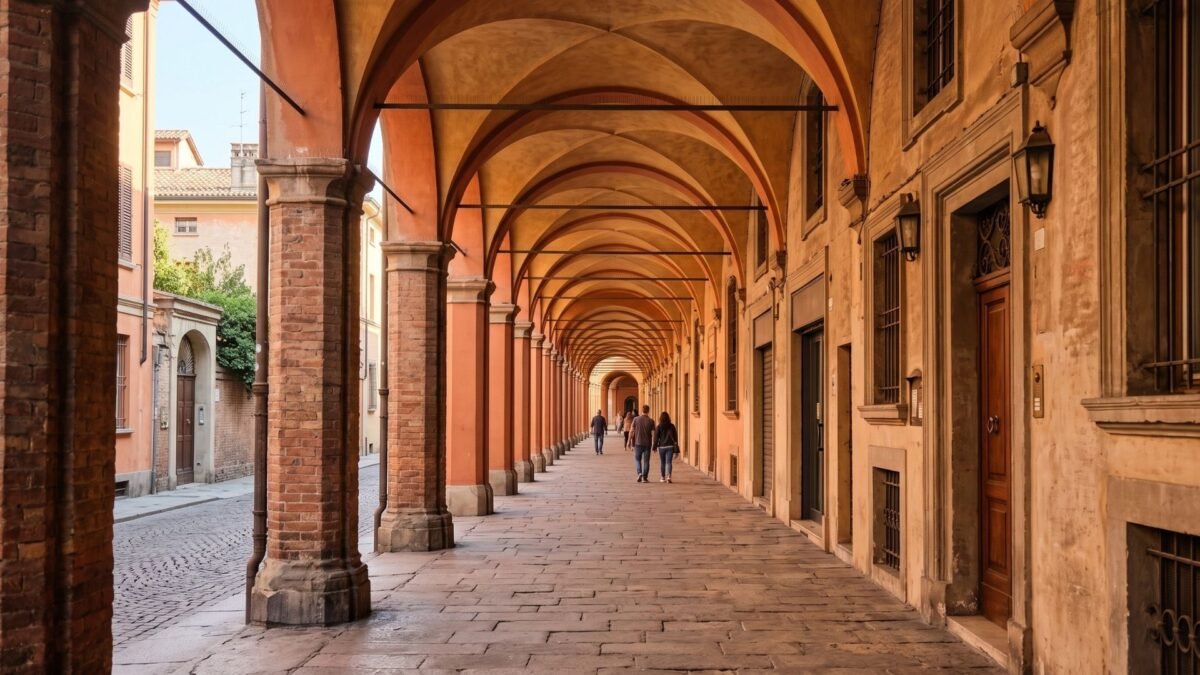
Why Bologna is worth a stop:
- The food. This is the home of tagliatelle al ragù, tortellini, lasagne verdi and mortadella. Browse the old market streets of the Quadrilatero, then eat your way through a long lunch.
- The porticoes. Around 40 kilometres of covered arcades, listed by UNESCO in 2021, mean you can walk the city in rain or heat.
- Piazza Maggiore. The main square and the best place to watch everyday Bologna go by.
- Day trips. Modena (balsamic vinegar and Ferrari) and Parma (ham and Parmigiano) are both easy by train.
How long to stay: 1 to 2 days, or longer if you use it as a base for the region.
7. Milan: Design, Fashion and Modern Italy
Milan doesn’t try to charm you the way Rome or Venice does, and that’s part of its appeal. It’s Italy’s business and design capital, with some of the best restaurants and nightlife in the country.
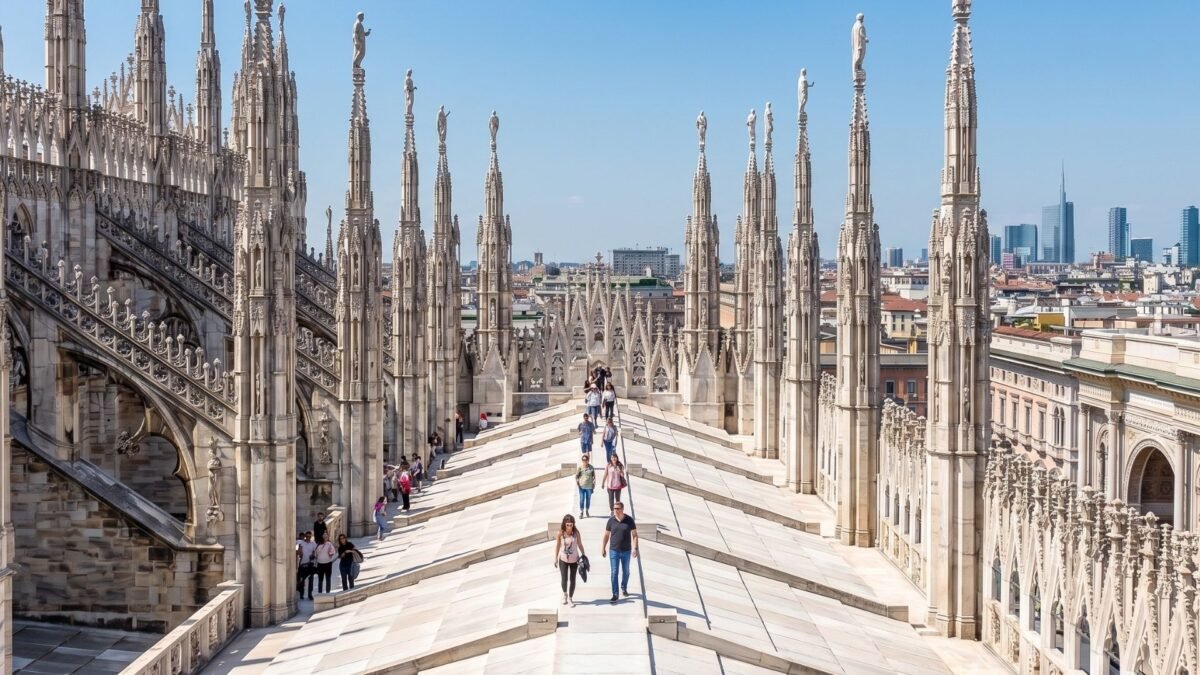
Top things to do in Milan:
- The Duomo. Go up to the rooftop terraces and walk among the spires.
- Leonardo’s Last Supper. Visits are short and strictly timed, and tickets are released in blocks months ahead and sell out fast. If you miss out, guided tours that include entry are the fallback.
- Galleria Vittorio Emanuele II. A glass-roofed 19th-century shopping arcade beside the Duomo.
- Brera and the Navigli. Brera for galleries and boutiques, the Navigli canals for the evening aperitivo.
Book your Milan tickets: Last Supper tickets and tours · Duomo rooftop tickets · Browse Milan hotels
How long to stay: 1 to 2 days. Milan also works well as your arrival or departure city, especially if you’re visiting Lake Como.
8. The Amalfi Coast: Stunning, but Plan It Properly
The Amalfi Coast is every bit as dramatic as its reputation: pastel villages stacked on cliffs, lemon groves and a winding road with the sea hundreds of metres below.
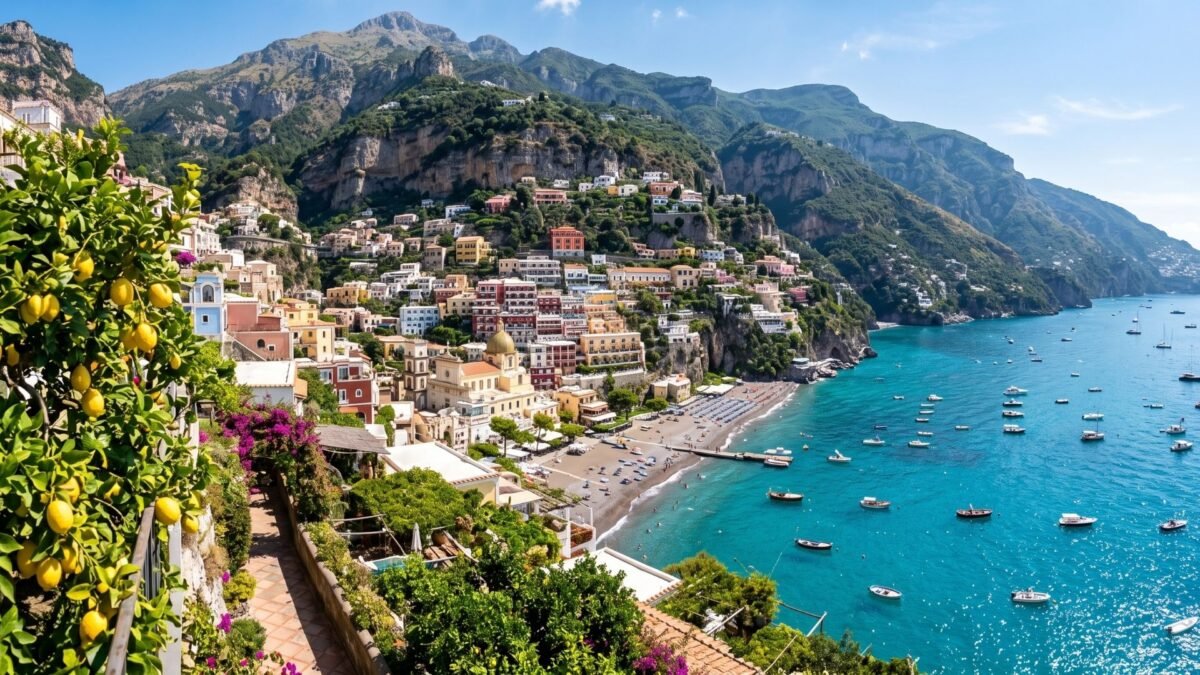
It’s also the destination that most rewards careful planning, because getting around can be hard work.
What to know before you go:
- Positano is the most photogenic and most expensive. Amalfi town is the transport hub. Ravello, up in the hills, is the quiet and elegant option.
- Transport is the challenge. The coast road is narrow and jammed in summer, the public buses are often full, and parking is scarce and expensive. From spring to autumn, ferries between the towns are usually the most pleasant option.
- Base yourself carefully. Sorrento or Amalfi town make getting around much easier, and hotels in Sorrento are often better value.
- Add Pompeii. The ruins are an easy stop between Naples and Sorrento. Go early and bring water, because there’s very little shade.
Plan your Amalfi Coast trip: Amalfi Coast ferry tickets · Pompeii tickets and guided tours · Hotels in Sorrento and Amalfi
How long to stay: 3 to 4 days.
Best time to visit: May, June and September. July and August are the most crowded and expensive months.
9. Sicily: A Different Italy
Sicily feels like its own country, shaped by Greeks, Arabs, Normans and Spaniards over thousands of years. The food, the architecture and the pace of life are unlike anywhere on the mainland.
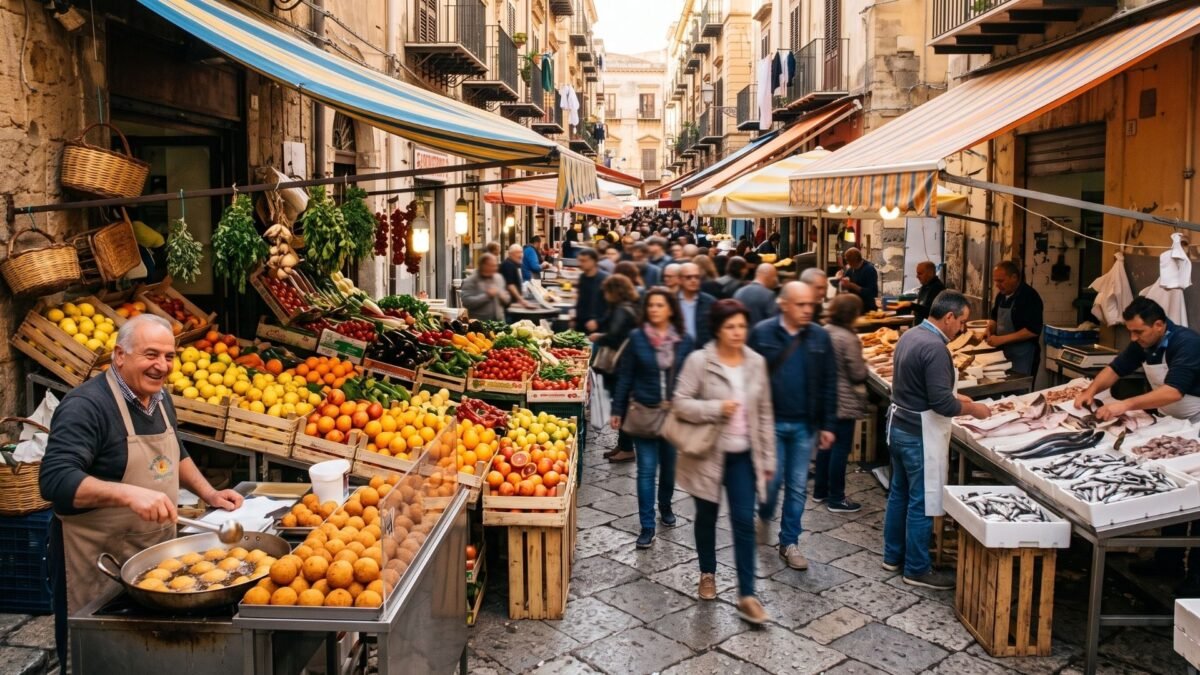
Where to go in Sicily:
- Palermo. Chaotic, gorgeous and one of Europe’s great street food cities. Try arancine and panelle at the markets.
- Taormina. A clifftop town with an ancient Greek theatre looking out to Mount Etna.
- Syracuse and Ortigia. A tiny island old town with a baroque cathedral built around a Greek temple.
- Mount Etna. Europe’s most active volcano, with guided hikes and jeep tours.
- The Valley of the Temples. Near Agrigento, some of the best-preserved Greek temples anywhere.
Getting around: A car makes Sicily much easier, since trains are slow and buses between towns can be limited.
Plan your Sicily trip: Compare Sicily car rentals · Mount Etna tours · Browse Sicily hotels
How long to stay: At least 5 days. A week or more is better.
Getting Around Italy
Trains
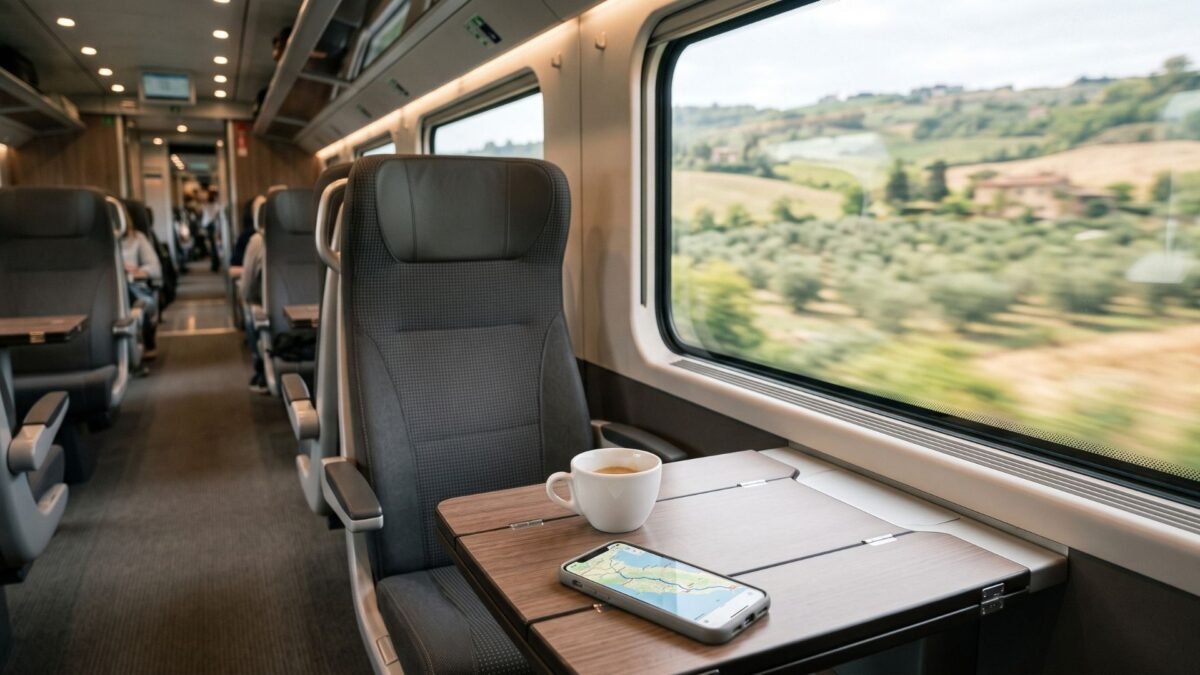
For travel between cities, trains win almost every time. They’re fast, comfortable and drop you right in the city centre.
There are two main types:
- High-speed trains from Trenitalia (Frecciarossa) and Italo connect the big cities. Seats are reserved, and prices rise as your travel date gets closer, so book early for the best fares.
- Regional trains are slower and cheaper, with fixed prices and no seat reservations. You can usually buy them on the day.
Book your trains: Compare Trenitalia and Italo fares
Typical high-speed journey times:
| Route | Approximate Time |
|---|---|
| Rome to Florence | 1 hour 35 minutes |
| Florence to Bologna | 40 minutes |
| Florence to Venice | 2 hours 15 minutes |
| Rome to Naples | 1 hour 10 minutes |
| Milan to Venice | 2 hours 25 minutes |
| Milan to Rome | 3 hours |
Train tip: Paper regional tickets must be validated in the machines on the platform before you board. If you’re caught with an unvalidated ticket, you can be fined. If you buy regional tickets in the Trenitalia app, follow the app’s check-in instructions.
Renting a car
Rent a car for rural Tuscany, Umbria, Sicily, Puglia and the Dolomites. Don’t rent one for Rome, Florence, Venice or Milan, where it will cost you money and stress for no benefit.
Things to know:
- Many drivers from outside the EU need an International Driving Permit alongside their licence. Check the rules for your country before you go.
- Watch for ZTL signs at the edge of historic centres. Cameras record every entry, and fines are sent on through your rental company.
- Motorways (autostrade) have tolls, paid at booths when you exit.
- Pick up your car on the way out of a city rather than in the centre.
Rent a car: Compare car rental prices in Italy
Guided tours
A good guide is worth it for places where context matters: the Vatican, the Colosseum underground, Pompeii and the Uffizi. Tours also make sense for wine regions if nobody wants to be the designated driver.
Look for small groups, clear inclusions and recent reviews. And always book through official sites or established companies, never through people offering “skip the line” tickets on the street.
Find a tour: Browse small-group tours in Italy
How Much Does a Trip to Italy Cost?
Costs depend heavily on where and when you go. Venice, Florence, Lake Como and the Amalfi Coast in summer are the most expensive places in the country. Southern Italy and smaller towns are far cheaper.
These are rough daily costs per person in 2026, sharing a double room and not counting flights:
| Travel Style | Daily Budget | What It Covers |
|---|---|---|
| Budget | €80 to €130 | Hostels or simple guesthouses, casual meals, regional trains, a few paid sights |
| Mid-range | €180 to €300 | 3 to 4 star hotels, sit-down dinners, high-speed trains, main attractions |
| Luxury | €450 and up | Boutique or 5-star hotels, private tours and drivers, fine dining |
Costs people forget:
- City tourist tax, paid per person per night at your hotel. It’s usually a few euros, and higher in Rome, Florence and Venice.
- Coperto, a cover charge on many restaurant bills, usually a couple of euros per person.
- Booking fees on museum tickets.
- Luggage storage on travel days.
Ways to save: Eat your main meal at lunch, when many restaurants offer set menus. Stand at the bar for coffee, which is cheaper than sitting at a table. Book high-speed trains early. Travel in shoulder season. And refill your water bottle at public fountains, which are safe to drink from in Rome and most Italian cities.
Practical Tips Before You Go
Entry rules. Italy is part of the Schengen area, and most visitors from outside the EU can stay up to 90 days in any 180-day period. The EU’s Entry/Exit System now records non-EU travellers’ fingerprints and a photo at the border, so allow extra time on arrival.
The ETIAS travel authorisation for visa-free visitors isn’t running yet, and its start date has moved several times, so check the official EU travel site shortly before your trip and ignore any unofficial site asking you to pay for one now.
Money. Cards are accepted almost everywhere, but keep some cash for small cafés, markets and rural areas. Use ATMs attached to real banks rather than standalone machines in tourist areas.
Meal times. Lunch runs from roughly 12:30pm to 2:30pm and dinner rarely starts before 7:30pm. Many restaurants close between lunch and dinner.
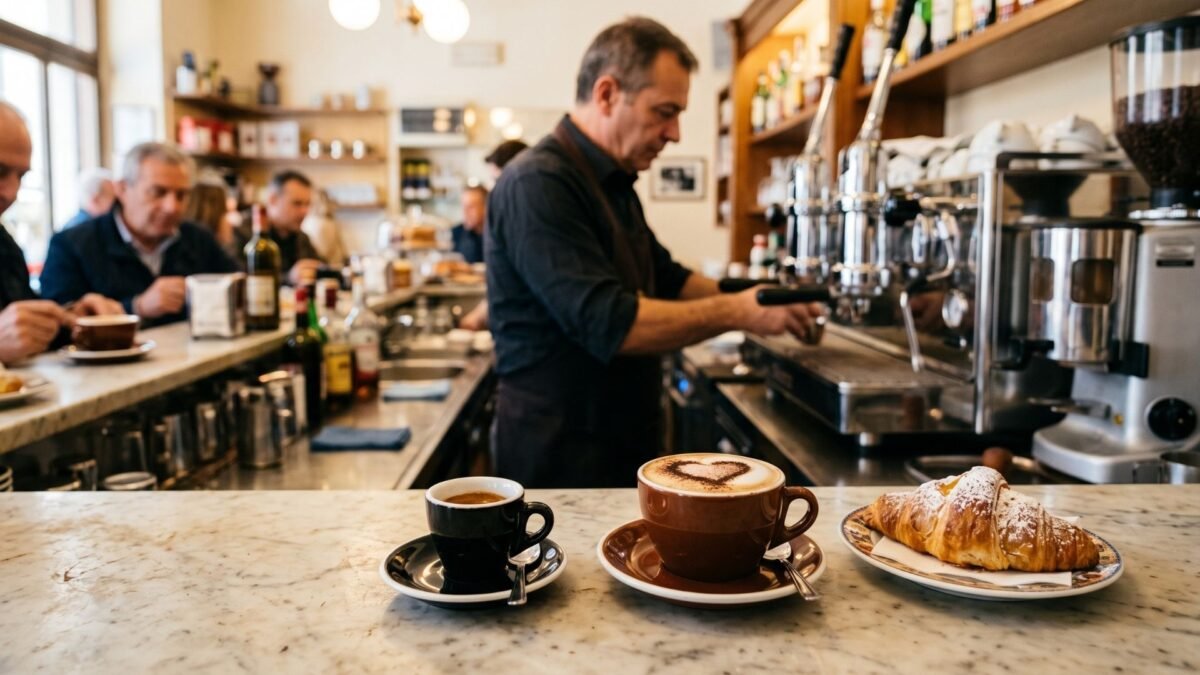
Coffee rules. Cappuccino is a morning drink. Order one after dinner and nobody will stop you, but you’ll get a look. Ask for “un caffè” and you’ll get an espresso.
Churches. Cover your shoulders and knees. This is strictly enforced at St. Peter’s and many major churches, so carry a light scarf in summer.
Scams and pickpockets. Watch your bag on crowded buses and metros, especially in Rome, and around the big sights. Politely ignore anyone trying to tie a bracelet on your wrist, hand you a “free” rose or get you to sign a petition.
Common Mistakes to Avoid in Italy
1. Trying to see everything
Five cities in seven days sounds efficient on paper. In practice it means packing, travelling and unpacking every other day. Pick fewer bases and use day trips instead.
2. Staying too far from the centre
A cheap hotel 40 minutes from the sights costs you hours every day and makes it hard to go back for a rest. In Rome, Florence and Venice, location is worth paying for.
3. Not booking the big sights
The Vatican Museums, the Colosseum, the Uffizi, the Accademia and the Last Supper all sell out in busy months. Book as soon as your dates are set.
4. Driving into a ZTL
It’s the most expensive souvenir in Italy, and it can arrive months after you’ve flown home.
5. Eating next to the landmarks
Restaurants with picture menus and staff calling you in from the pavement are rarely good. Walk two or three streets away from the main sights and the food and prices improve fast.
6. Bringing the wrong shoes
Italian streets are cobbled, hilly and hard on your feet. You can easily walk 20,000 steps in a day in Rome.
7. Only visiting the famous places
Some of the best days in Italy happen in towns you’ve never heard of. Leave space in your plan for at least one.
Italy Packing List: What You’ll Actually Use
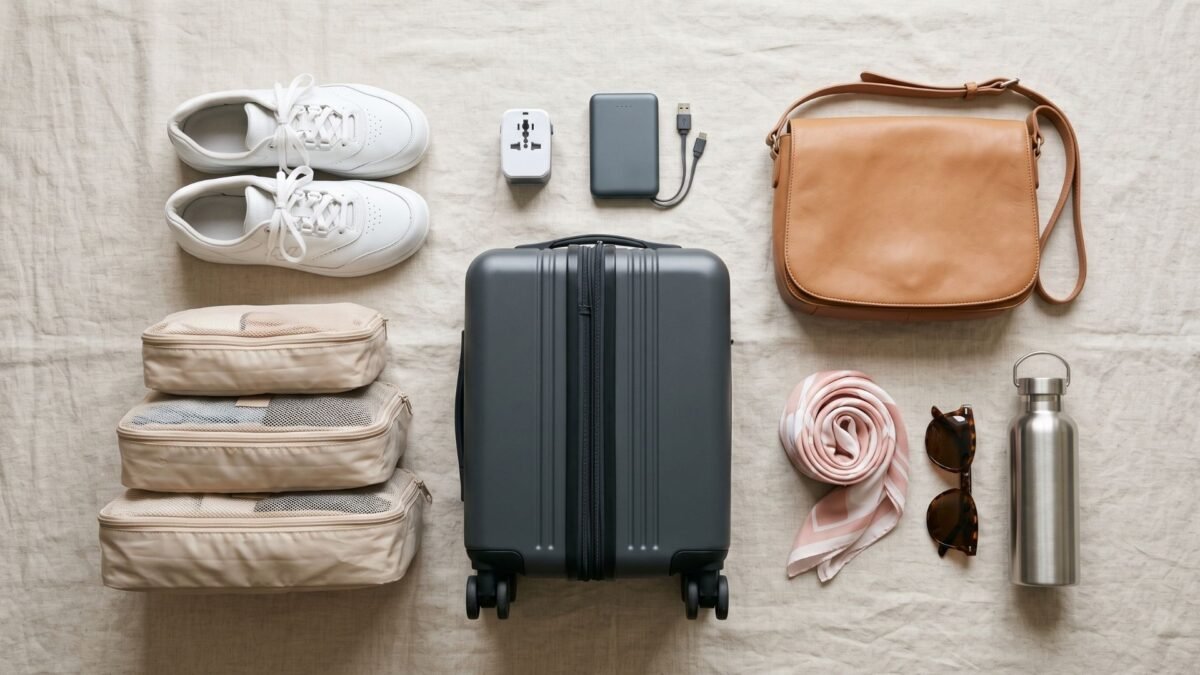
1. Comfortable walking shoes
Bring shoes you’ve already broken in. Supportive trainers or walking shoes from brands like Brooks and New Balance are popular with travelers because they handle cobblestones and long days well. Leave brand-new shoes at home.
Shop comfortable walking shoes
2. A light, easy-to-carry suitcase
You’ll be lifting your bag on and off trains, up hotel stairs and over bridges in Venice. A carry-on size spinner with a strong handle, from brands such as Samsonite or Travelpro, makes life much easier than a large checked case.
See lightweight carry-on suit case
3. A Type L or universal plug adapter
Italy uses Type C, F and L sockets. A universal adapter covers all of them, and one with USB ports saves you packing extra chargers.
Get a universal travel adapter
4. A portable charger
Your phone is your map, train ticket and museum ticket. A power bank means you’re never stuck with a dead battery at the station.
5. Packing cubes
They make it much quicker to pack and unpack when you’re moving between cities.
6. A crossbody or anti-theft bag
A bag that zips closed and sits in front of you is the simplest protection against pickpockets on crowded streets and transport.
Shop anti-theft crossbody bags
7. A reusable water bottle
Italy’s public fountains mean you’ll rarely need to buy water.
8. A light scarf or cover-up
Useful for church dress codes, cool evenings and sun protection.
Frequently Asked Questions About Italy Travel
What is the best month to visit Italy?
May and September are the best all-round months. The weather is warm, the crowds are lighter than in summer and everything is open. April, June and October are close behind.
How many days do you need in Italy?
Seven days is enough for two or three cities. Ten to fourteen days lets you add the countryside or the coast without rushing.
Is Italy expensive?
It can be, especially in Venice, Florence and the Amalfi Coast in summer. Southern Italy, smaller towns and the shoulder seasons are much more affordable, and eating well doesn’t need to cost a lot if you follow local habits.
Do you need a car in Italy?
Not for the major cities, where trains are faster and easier. A car is worth it for rural Tuscany, Sicily, Puglia and the Dolomites.
Is Venice worth visiting?
Yes, but stay at least one night. Venice in the early morning and evening, after the day-trippers leave, is a completely different city.
Rome or Florence: which is better for a first trip?
If you can only choose one, Rome has more to see. Florence is smaller, calmer and easier to explore on foot. Most first trips include both, since they’re only about 90 minutes apart by train.
Do people speak English in Italy?
In hotels, restaurants and tourist areas, usually yes. In small towns, less so. Learning a few words like buongiorno, grazie and per favore goes a long way.
Is Italy safe for tourists?
Italy is generally very safe. Pickpocketing in crowded tourist areas is the main thing to watch for.
Final Thoughts: Plan Less, Enjoy More
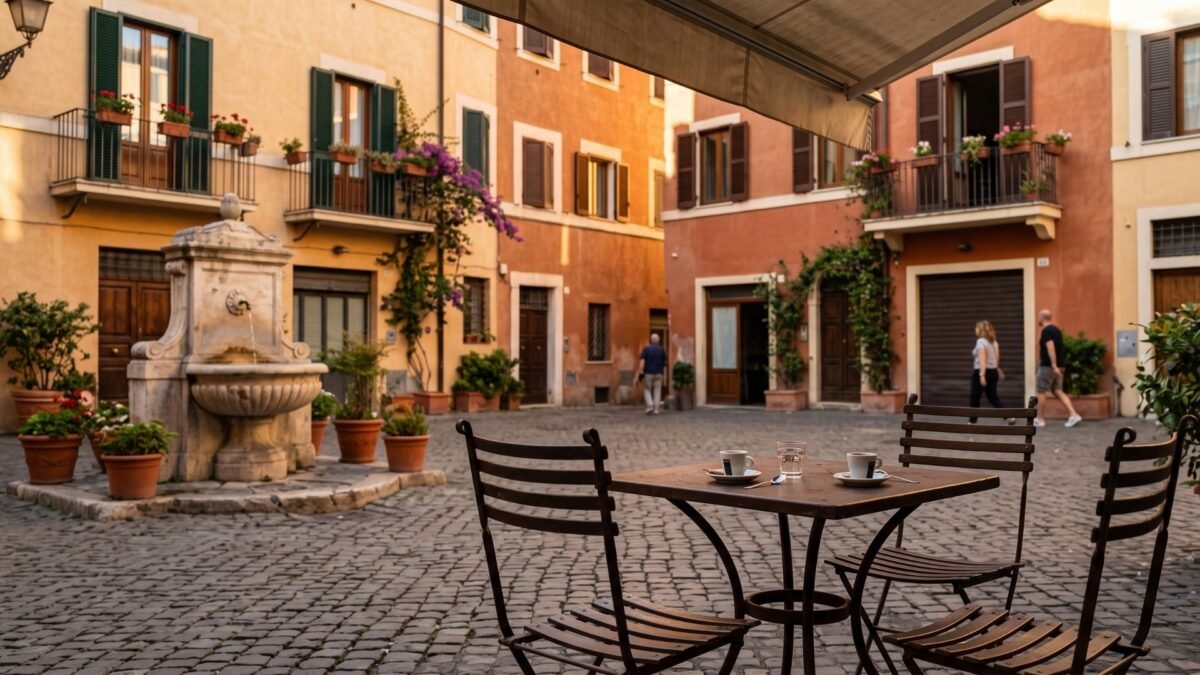
The travellers who come home happiest from Italy usually aren’t the ones who saw the most. They’re the ones who had time for a second coffee in a quiet square, who let lunch run long, and who said yes when someone suggested a village they’d never heard of.
So book the big things early, pick fewer places, pack comfortable shoes and leave some room in your plan for Italy to surprise you. It almost always does.
Planning your trip? Start with the 10-day route above, lock in your trains and the big museum tickets, then build the rest of your days around what you most want to eat.