
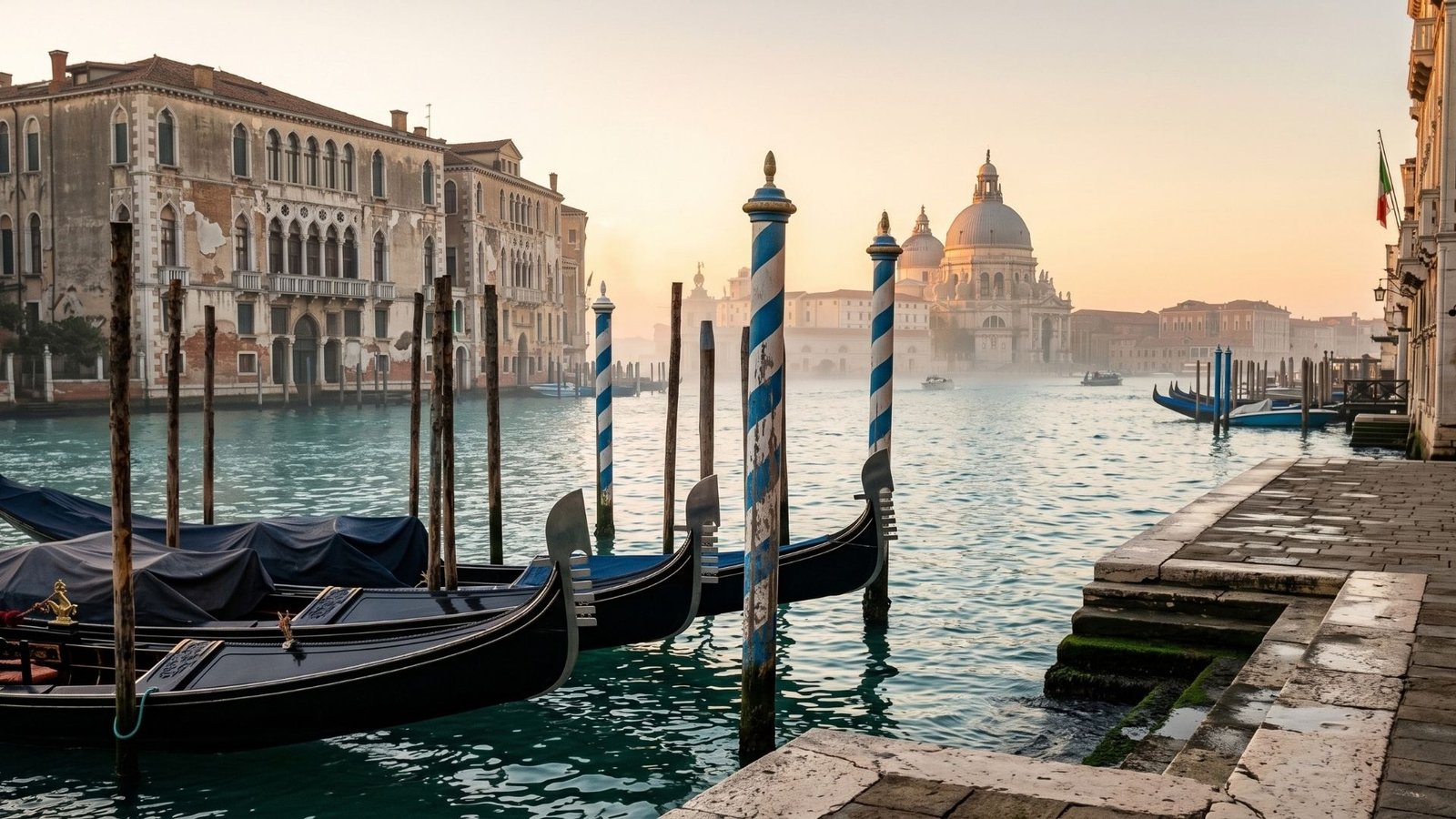
This comprehensive Venice travel guide is designed to help you experience Italy’s iconic floating city with complete confidence, steering you past tourist traps and straight into the authentic magic of the Venetian lagoon.
There are places in the world that feel structurally impossible, and Venice sits firmly at the top of that list. Built across 118 small islands separated by over 150 canals and connected by more than 400 stone footbridges, this floating marble masterpiece defies modern urban design. There are no buzzing mopeds, no delivery vans idling on curbs, and no honking taxis.
Instead, the soundtrack of Venice is defined by water lapping against ancient palace foundations, the low hum of vaporetto engines, the rhythmic clack of luggage wheels crossing arched bridges, and the quiet chatter of locals enjoying their morning espresso at neighborhood counters.
For centuries, Venice (Venezia) has served as an endless muse for poets, painters, and travel photographers. Yet, navigating the Queen of the Adriatic for the first time can easily feel overwhelming. Without a grounded strategy, visitors frequently run into congested transit corridors, overpriced dining, confusing canal routes, and unexpected logistical fees.
From navigating the six historic sestieri and riding public water buses to discovering secluded bacari wine bars, colourful outer islands, and crowd-free sunrise viewpoints, this guide balances iconic bucket-list sights with the quiet rhythms of authentic Venetian daily life.
Venice at a Glance: Essential Trip Facts
| Travel Category | Quick Summary & Practical Recommendation |
|---|---|
| Best Time to Visit | April to May and September to October (pleasant weather, comfortable walking, lower humidity) |
| Ideal Trip Length | 3 full days (covers major landmarks, quiet sestieri, and lagoon islands) |
| Primary Sestiere to Stay | Dorsoduro (charming and artistic) or Cannaregio (authentic and local) |
| Primary Transit | Walking and ACTV Vaporetto (public water bus system) |
| Must-Try Culinary Item | Cicchetti paired with an Ombra (house wine) or Select Spritz |
| Venice Access Fee (Contributo) | €5 on designated peak-season day-trip dates (registered via the official city portal) |
| Luggage Advice | Pack carry-on only; carrying heavy roller bags over stepped stone bridges is exhausting |
Why Venice Deserves a Spot on Your Italy Itinerary
Within an Italian journey spanning Rome’s ancient monuments, Florence’s Renaissance galleries, and Tuscany’s rolling countryside, Venice represents a completely unique cultural and geographic chapter.
- An Architectural Wonder on Water: Venice was constructed atop millions of petrified wooden pilings driven deep into the mud of the Venetian Lagoon during the 5th century. Experiencing Gothic palazzi rising directly out of turquoise tidal waters is unlike any other urban landscape on Earth.
- The Epicentre of Car-Free Living: The total absence of cars allows you to slow down completely. Without traffic lights or street crossings, wandering becomes the primary mode of travel, offering a rare sense of peace once you step off the main pedestrian routes.
- A Distinct Culinary and Wine Identity: Venetian cuisine is shaped by fresh Adriatic seafood, lagoon market produce, and centuries of spice trade with the East. The social ritual of standing at a wooden wine bar (bacaro) with bite-sized cicchetti offers a refreshing alternative to standard sit-down dining.
- A Diverse Island Ecosystem: Beyond the main pedestrian island lies a cluster of outer islands, including the glassmaking workshops of Murano, the vibrant rainbow houses of Burano, and the quiet, ancient basilica grounds of Torcello.
🇮🇹 Planning a broader Italian adventure? Venice is the final stop in Italy’s classic golden route. If you are linking Venice with Rome, Florence, and the Tuscan countryside, explore our comprehensive Italy Travel Guide for multi-city train itineraries, budget breakdowns, and season-by-season route planning.
Best Time to Visit Venice
Venice changes character dramatically across the seasons. Choosing the right time of year directly impacts crowd levels, weather comfort, and overall travel costs.
Spring (March to May): The Sweet Spot
Spring offers comfortable daytime temperatures averaging 15°C to 22°C (59°F to 72°F), blooming wisteria hanging over private canal courtyards, and manageable visitor volumes before summer peak arrivals. April and May are arguably the two finest months for walking the city from dawn until dusk.
Summer (June to August): High Energy, High Heat
Summer brings long golden daylight hours and lively waterfront dining, but it also carries heavy challenges. Temperatures frequently exceed 30°C (86°F) with intense lagoon humidity, packed bridges around Saint Mark’s, and elevated peak-season hotel rates. If visiting during summer, schedule landmark visits for early morning and retreat indoors during the midday heat.
Autumn (September to November): Atmospheric and Serene
September and October offer warm waters, golden lagoon sunsets, and cooler breezes. Crowds thin significantly following the Venice Film Festival in early September.
November introduces the phenomenon of acqua alta (seasonal high tides that cause brief flooding in low-lying zones such as Piazza San Marco), which can be managed easily with portable waterproof shoe covers and elevated wooden walkways (passerelle).
Winter (December to February): Mystical Fog and Carnival
Winter transforms Venice into a moody, atmospheric wonder. Cold mist (la gala) settles over empty canals, street lamps glow through winter fogs, and accommodation prices drop to annual lows.
The major exception is February, when the world-renowned Venice Carnival fills the alleys with elaborate historical costumes, porcelain masks, and private ballroom celebrations.
How Many Days Do You Need in Venice?
1 Day: Rushed transit stop; covers Saint Mark’s and Rialto, misses authentic local life.
2 Days: Solid introduction; landmark highlights plus one scenic canal wander.
3 Days (Recommended): The gold standard; landmarks, quiet sestieri, and outer lagoon islands.
5 Days: Immersive slow travel; museum deep-dives, lagoon sailing, and mainland day trips.
1 Day in Venice
Visiting Venice as a rapid day trip from Florence or Milan is possible, but it limits your experience to congested transit corridors between the train station, Rialto, and Saint Mark’s. You see the postcard sights, but miss the serene morning and evening hours when the city truly shines.
2 Days in Venice
A weekend getaway allows you to see the core highlights: Saint Mark’s Basilica, Doge’s Palace, a Grand Canal vaporetto ride, and an evening cicchetti crawl through San Polo.
3 Days in Venice (Ideal for First-Timers)
Three days provides the perfect balance. Days 1 and 2 cover major cultural monuments and quiet, atmospheric neighbourhoods like Dorsoduro and Cannaregio. Day 3 allows for a full morning excursion to Burano and Murano, returning for an unhurried farewell dinner along the Zattere.
5 Days in Venice
Five days transitions your trip into genuine slow travel. You can spend uninterrupted hours exploring the Peggy Guggenheim Collection, take a vaporetto to the sandy shores of the Lido, wander Torcello’s quiet gardens, and enjoy daytime excursions to nearby Treviso or Padua.
Where to Stay in Venice: Neighbourhood (Sestiere) Breakdown
Venice is divided into six historic districts called sestieri, along with the outer islands. Selecting the right base affects how much walking you do with your luggage and how peaceful your nights will be.
              [ CANNAREGIO ]
             (Local & Dining)
                    |
[ SANTA CROCE ] --- [ SAN POLO ] --- [ CASTELLO ]
(Transit Hub) (Markets) (Quiet & Green)
| | |
[ DORSODURO ] --- [ SAN MARCO ] ------------+
(Art & Students) (Central & Busy)
| Sestiere | Best For | Atmosphere & Character | Notable Landmarks |
|---|---|---|---|
| San Marco | First-timers & short stays | Bustling, iconic, premium pricing | Piazza San Marco, Basilica, Doge’s Palace |
| Dorsoduro | Art lovers, couples, relaxed travel | Bohemian, elegant, artistic vibe | Peggy Guggenheim, Gallerie dell’Accademia, Zattere |
| Cannaregio | Budget-conscious & foodies | Authentic, lively canal bars, residential | Historic Jewish Ghetto, Fondamenta dei Ormesini |
| San Polo | Food lovers & market shoppers | Historic, central, culinary focus | Rialto Bridge, Rialto Fish Market, Campo San Polo |
| Santa Croce | Practical transit logistics | Functional, quiet backstreets | Piazzale Roma (bus terminal), Tronchetto parking |
| Castello | Solitude & slow travellers | Expansive, authentic laundry-strung alleys | Arsenale, Giardini della Biennale, Via Garibaldi |
1. San Marco: Iconic Heart of the City
San Marco is the postcard centre. Staying here puts you steps from Saint Mark’s Basilica, the Doge’s Palace, and luxury designer boutiques. The trade-off is higher hotel rates, crowded streets between 10:00 AM and 5:00 PM, and fewer authentic, low-cost dining spots.
2. Dorsoduro: Artistic, Relaxed, and Youthful
Located directly south of the Grand Canal, Dorsoduro is the cultural and university heart of Venice. It houses world-class galleries, picturesque canal bridges, and lively open plazas like Campo Santa Margherita. It offers an ideal balance of quiet residential alleys and charming waterside dining along the Fondamenta delle Zattere.
3. Cannaregio: Authentic Venetian Living
Home to the historic Jewish Ghetto, Cannaregio occupies the northern section of the city. Here you will see local residents shopping at greengrocers, children playing football in quiet campos, and young Venetians gathering along Fondamenta della Misericordia for spritz cocktails. It provides some of the best-value accommodation and dining in Venice.
4. San Polo: Food Markets and Central Access
San Polo is one of the oldest sectors of Venice, anchored by the lively Rialto trading district. It is packed with historic bacari, artisan leather shops, and bustling produce stalls. It is wonderfully central, though streets nearest the Rialto Bridge remain busy throughout the day.
5. Santa Croce: Convenient Transit Connections
Santa Croce borders the bus depot at Piazzale Roma and sits near the Santa Lucia train station. It is the easiest area to navigate if you have larger luggage, as it requires crossing fewer arched bridges. The eastern pocket of Santa Croce remains peaceful and delightfully local.
6. Castello: Quiet Alleys and Green Spaces
Spanning the eastern wing of Venice, Castello is the largest sestiere. Near Saint Mark’s, it is bustling, but as you walk eastward toward the Arsenale and the Biennale Gardens, the streets turn quiet and residential. Wide avenues like Via Garibaldi offer casual pizzerias, neighborhood bakeries, and genuine community life.
Top Attractions and Experiences in Venice
1. Piazza San Marco (Saint Mark’s Square)
Napoleon famously called Piazza San Marco “the drawing room of Europe.” This magnificent travertine square is framed by the Procuratie buildings, the historic Torre dell’Orologio clock tower, and the towering Campanile.
- Insider Tip: Visit before 8:00 AM. Standing alone in the square as the morning light illuminates the marble flagstones and the Campanile bells ring is one of the most memorable travel experiences in Italy.
2. Saint Mark’s Basilica (Basilica di San Marco)
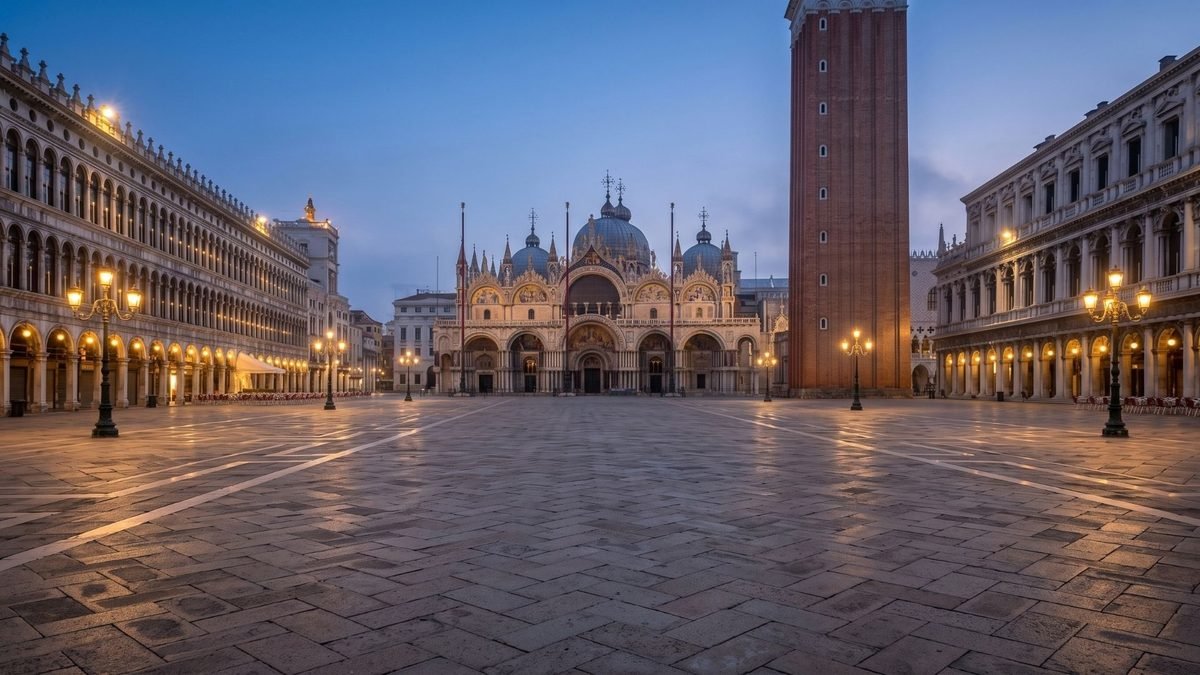
Known as the Chiesa d’Oro (Church of Gold), this cathedral reflects Venice’s deep Byzantine roots. The interior contains over 8,000 square metres of luminous gold glass mosaics spanning biblical histories.
- Key Highlights: Admire the Pala d’Oro, an astonishing Gothic altarpiece studded with thousands of pearls, emeralds, sapphires, and garnets. Step out onto the upper Loggia dei Cavalli for sweeping views across the piazza.
- Planning Rule: Modest dress covering shoulders and knees is strictly enforced. Pre-book timed-entry tickets online weeks in advance to avoid multi-hour queues.
3. Doge’s Palace (Palazzo Ducale)
For over a millennium, this Venetian Gothic palace served as the seat of government, the supreme court, and the residence of the elected Doge. Its exterior features delicate open arcades carved from Istrian stone and Verona marble.
- Key Highlights: The Chamber of the Great Council (Sala del Maggior Consiglio) contains Tintoretto’s massive canvas Il Paradiso, one of the largest oil paintings in the world. Walk through the historic government rooms and across the Bridge of Sighs into the New Prisons.
4. The Bridge of Sighs (Ponte dei Sospiri)
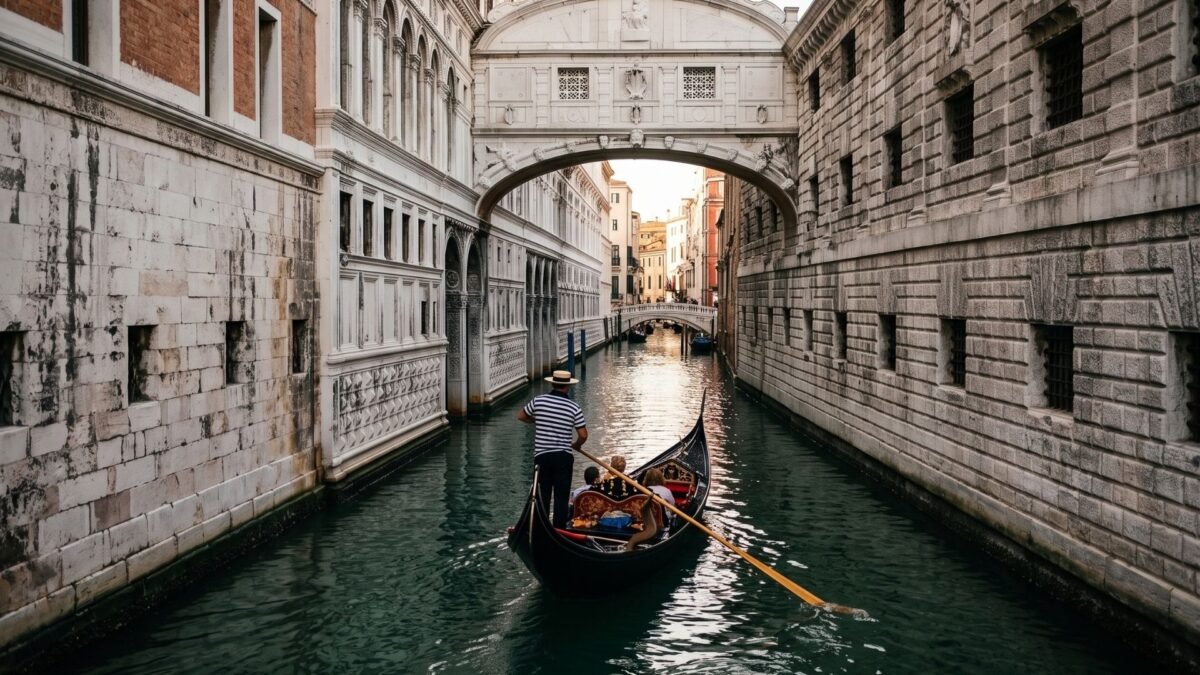
Designed by Antonio Contino and built in 1600, this enclosed white limestone bridge arches over the Rio di Palazzo. It connected the interrogation rooms of the Doge’s Palace to the historic prison cells. Legend says prisoners would sigh as they took their final glimpse of the Venetian lagoon through the stone window grates before being led away.
- Best Viewpoint: The Ponte della Paglia, located along the waterfront promenade just outside the Doge’s Palace, offers the classic photography angle.
5. The Rialto Bridge (Ponte di Rialto)
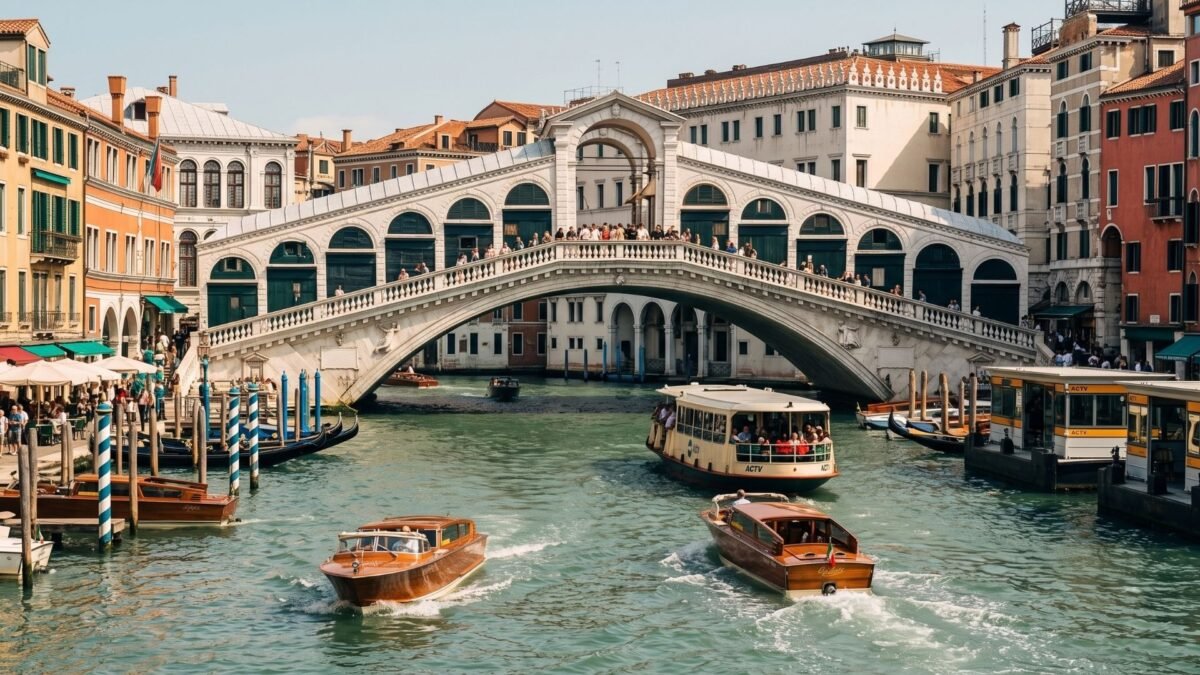
The oldest of the four bridges spanning the Grand Canal, the Rialto Bridge was designed by Antonio da Ponte and completed in 1591. Built entirely of stone to replace earlier wooden structures that repeatedly collapsed or burned, it features an elegant single-span arch with two rows of boutique stalls running up its centre.
- Nearby Highlight: Walk two minutes past the bridge at 7:30 AM to explore the Rialto Fish Market (Mercato di Rialto), where local fishmongers arrange fresh monkfish, cuttlefish, clams, and prawns beneath neo-Gothic arcades.
6. The Grand Canal (Canal Grande)
The Grand Canal is the primary arterial waterway of Venice, sweeping through the city in a graceful, two-mile S-curve. It is lined with more than 170 historic palaces dating from the 13th to the 18th century, showcasing Byzantine, Gothic, Renaissance, and Baroque architectural facades.
- How to Experience It on a Budget: Board the public ACTV Vaporetto Line 1 at Piazzale Roma or Santa Lucia station just before dusk. Grab an outdoor seat at the back or front, and cruise down to San Marco as palazzo chandeliers illuminate along the water.
7. The Classic Gondola Experience
Few travel rituals are as iconic as gliding through quiet residential canals aboard an asymmetric, hand-crafted wooden gondola steered by an experienced gondolier in striped attire.
- Official Rates: Gondola fares are officially regulated by the city. A standard daytime ride costs €90 for up to 5 people for a 30-minute private ride. After 7:00 PM, the evening rate increases to €110 for 35 minutes. Always confirm the duration and route directly with the gondolier before stepping onto the boat.
- Smart Route Strategy: Avoid boarding directly at the busy Saint Mark’s piers, where traffic creates canal jams. Instead, board near quieter stations in San Polo, Dorsoduro, or Cannaregio to enjoy peaceful residential canals before swinging out onto the Grand Canal.
🛶 How to Book in Advance: If you prefer having your route and fare locked in without negotiating on the pier, reserve a [GetYourGuide: Shared or Private Grand Canal Gondola Ride]. It guarantees the standard regulated rate and includes a route through quieter residential back-canals.
8. Teatro La Fenice
Venice’s premier opera house, La Fenice (“The Phoenix”), has famously risen from the ashes after devastating fires throughout its storied history. It hosted world premieres for masterpieces by Rossini, Bellini, Donizetti, and Verdi. Daytime audio-guided tours allow you to admire its gilded stuccoes, grand chandeliers, and royal box.
9. Gallerie dell’Accademia & Peggy Guggenheim Collection
Venice offers a remarkable spectrum of art history:
- Gallerie dell’Accademia: Located at the foot of the Accademia Bridge, this museum houses an exceptional collection of Venetian painting spanning the 14th through 18th centuries, including works by Bellini, Carpaccio, Giorgione, Titian, and Veronese.
- Peggy Guggenheim Collection: Housed in the unfinished 18th-century Palazzo Venier dei Leoni directly on the Grand Canal, this museum features an extraordinary modern art collection encompassing Cubism, Surrealism, and Abstract Expressionism, showcasing masters such as Picasso, Pollock, Dalí, and Kandinsky.
10. Basilica di Santa Maria della Salute
Positioned dramatically at the entrance of the Grand Canal in Dorsoduro, this colossal octagonal Baroque church was constructed in 1631 as a votive offering of gratitude by surviving citizens after a devastating plague wiped out nearly a third of the city’s population. Its vast dome and swirling spiral buttresses dominate the skyline.
Exploring the Venetian Lagoon Islands
A trip to Venice is not complete without taking a boat journey out into the wider lagoon. Each major outer island preserves a distinct identity and centuries-old artisan craft.
+—————————————————————–+
| VENETIAN LAGOON |
| |
| [ TORCELLO ] |
| Ancient Cathedral & Quiet Greenery (Vaporetto Line 12) |
| ^ |
| | |
| [ BURANO ] |
| Lace-Making & Rainbow-Coloured Houses (Vaporetto Line 12) |
| ^ |
| | |
| [ MURANO ] |
| Glassblowing Factories & Canal Studios (Vaporetto Line 4.1/12)|
| ^ |
| | |
| [ VENICE MAIN ISLAND ] |
+—————————————————————–+
🚤 Recommended Tour: If you have limited time and want to skip the crowded public ferry queues, book the [GetYourGuide: Murano & Burano Half-Day Lagoon Boat Tour]. It includes round-trip boat transit directly from Saint Mark’s, a live glassmaking demonstration in Murano, and ample free time for photos in Burano.
1. Murano: The Glassmaking Island

In 1291, all glass furnaces in Venice were forcibly relocated to the island of Murano to eliminate the risk of catastrophic fires among Venice’s predominantly wooden residential buildings, and to closely guard the trade secrets of Venetian glassblowing.
- What to Do: Visit authentic working furnaces (fornaci) to watch master glass artisans shape molten silica into intricate vases, chandeliers, and figurines. Explore the Museo del Vetro (Glass Museum) to see delicate Roman artifacts and Renaissance chalices.
- How to Reach It: Take Vaporetto Line 4.1, 4.2, or Line 12 from the Fondamente Nove pier on the northern side of Venice (roughly 10 minutes transit).
2. Burano: The Island of Vibrant Colours
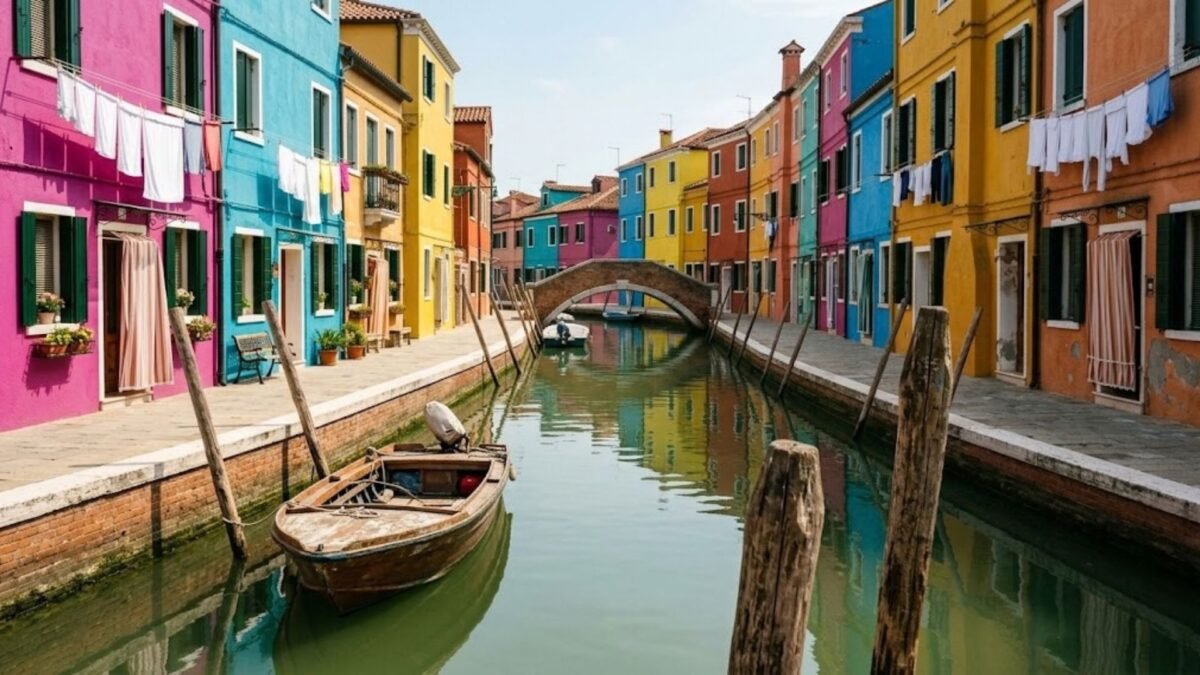
Burano is one of the most vibrant spots in all of Europe. By local tradition, fishermen originally painted their small homes in brilliant contrasting hues of cobalt blue, emerald green, terracotta orange, and bright magenta so they could spot their properties when navigating back through dense lagoon winter fogs.
- What to Do: Wander the picture-perfect canals, sample traditional butter cookies called bussolà, and visit artisan lace studios where elderly women preserve the delicate art of needle lace (merletto di Burano).
- How to Reach It: Take Vaporetto Line 12 from Fondamente Nove (approximately 45 minutes scenic journey through the salt marshes).
3. Torcello: Ancient Roots and Quiet Reflections
Torcello was settled as early as the 5th century and once housed a thriving population long before Venice itself was built. Today, fewer than 20 permanent residents live among its quiet fields, pomegranate trees, and tranquil brick footpaths.
- What to Do: Visit the Cathedral of Santa Maria Assunta (founded in 639 AD) to stand beneath its breathtaking 12th-century Byzantine mosaic depicting the Last Judgment. Climb the ancient bell tower for panoramic views across the lagoon wetlands.
- How to Reach It: Take Vaporetto Line 9 from Burano (a quick 5-minute crossing).
Hidden Gems in Venice Most Tourists Miss
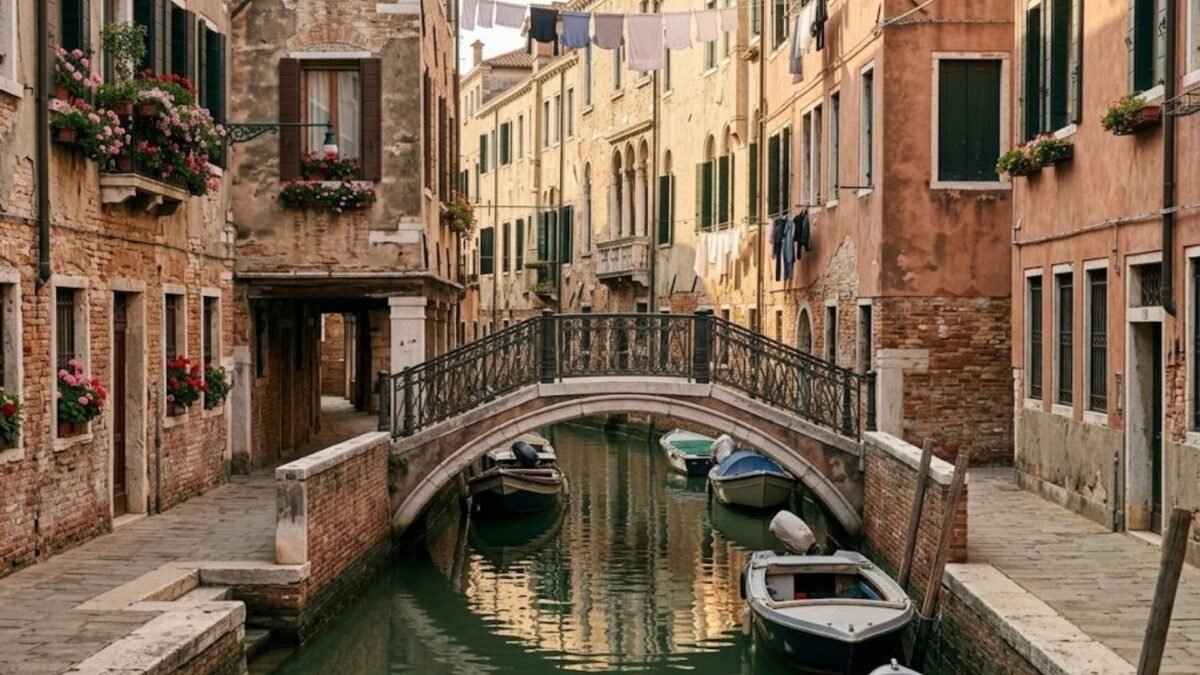
- Libreria Acqua Alta: A charmingly eccentric bookshop where paper volumes, vintage prints, and classic comics are piled high inside real full-sized gondolas, bathtubs, and canoes to protect them from high-water tides. At the rear, climb a whimsical staircase built from discarded water-damaged encyclopedias to look out over a quiet canal.
- Scala Contarini del Bovolo: Tucked away in a quiet courtyard between Campo Manin and Saint Mark’s, this striking 15th-century multi-tiered spiral staircase resembles a snail shell (bovolo in Venetian dialect). Climb the open-air brick arches for a unique rooftop panorama overlooking Venice’s bell towers.
- The Jewish Ghetto (Campo di Ghetto Nuovo): Established in 1516 within Cannaregio, this was the world’s first legally mandated ghetto. Because Jewish residents were confined to this small perimeter, buildings here were constructed upward to six or seven stories, creating Venice’s only historic “skyscrapers.” Visit the Jewish Museum and the historic synagogues (scole).
- San Giorgio Maggiore Bell Tower: Skip the multi-hour elevator lines at Saint Mark’s Campanile. Instead, take a quick 3-minute vaporetto ride on Line 2 across the basin to the island of San Giorgio Maggiore. Take the elevator up Palladio’s church bell tower to enjoy an uninterrupted, postcard-perfect view of Piazza San Marco and the Doge’s Palace across the water.
- Giardini della Biennale & Via Garibaldi: Take a walk past the crowds in Castello out to the public gardens created under Napoleon. Here, tree-lined walking paths, park benches, and local waterfront cafes provide a welcome break from the stone corridors of the city centre.
Venice Food Guide: What to Eat and Where to Eat
Venetian food is distinct from the hearty meat ragù of Bologna or the tomato-rich pasta dishes of Southern Italy. It is driven by the sea, marshland produce like Sant’Erasmo violet artichokes, creamy polenta, and trade-era spices.
The Art of Cicchetti and the Bacaro Crawl
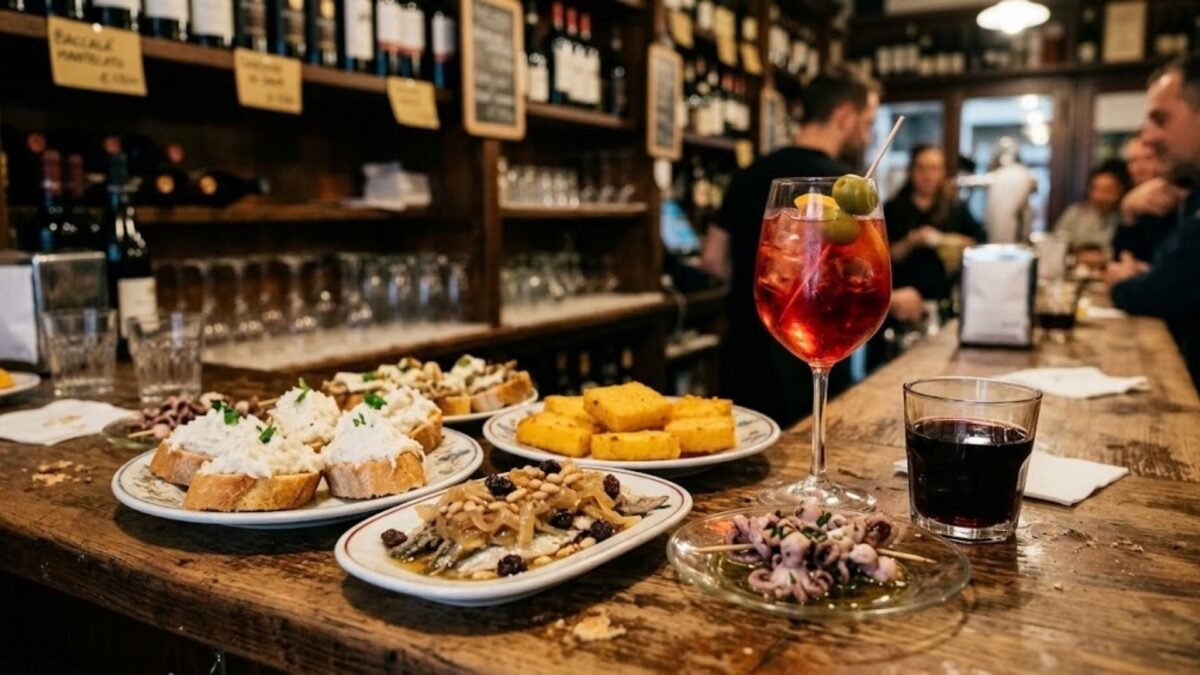
The quintessential culinary ritual of Venice is the giro d’ombra, an afternoon or early evening bar hop between traditional wood-paneled wine bars called bacari.
Instead of sitting down for a formal meal, patrons gather at the glass counter, pointing to bite-sized snacks called cicchetti (typically €1.50 to €3.50 each) and pairing them with a small glass of local wine known as an ombra (costing around €1.50 to €2.50) or a refreshing Venetian Spritz made with Select bitter, Prosecco, and a green olive.
🍷 Taste Venice with a Local: The quickest way to decode Venetian wine bar culture is joining a [GetYourGuide: Venice Cicchetti & Wine Tasting Tour in Cannaregio]. You’ll visit 4–5 historic bacari, sample regional bites like baccalà mantecato and sarde in saor, and learn how locals order wine by the ombra.
┌─────────────────────────────────────────────────────────────┐
│ TOP CICCHETTI VARIETIES │
├─────────────────────────────────────────────────────────────┤
│ • Baccalà Mantecato: Whipped, creamy salt cod on crusty │
│ baguette or grilled polenta squares │
│ • Sarde in Saor: Fried sardines marinated with sweet onions, │
│ vinegar, sultana raisins, and toasted pine nuts │
│ • Polpette di Carne: Fried beef or pork meatballs │
│ • Folpetti: Tender baby octopus boiled with parsley, lemon, │
│ and olive oil │
│ • Crostini con Prosciutto & Fichi: Bread topped with aged │
│ cured ham, Gorgonzola, and sweet figs │
└─────────────────────────────────────────────────────────────┘
Essential Venetian Main Dishes
- Bigoli in Salsa: Long, thick, whole-wheat Venetian pasta tossed in a rich, slow-simmered sauce of sweet onions and melted salt-cured anchovies. Simple, savory, and deeply traditional.
- Risotto al Nero di Seppia: Carnaroli rice cooked slowly with cuttlefish and its natural dark ink, yielding an intense, savory seafood risotto that is jet black in color.
- Fritto Misto della Laguna: A light, crisp paper cone loaded with flash-fried calamari, lagoon shrimp, small whitebait, and vegetables, finished with a fresh lemon wedge.
- Fegato alla Veneziana: Thinly sliced calves’ liver flash-sautéed with generous amounts of caramelized white onions, served alongside warm slices of yellow or white polenta.
Authentic Venetian Desserts
- Tiramisù: Although claimed across the Veneto region, Venice crafts some of the finest interpretations of this classic dessert, layering espresso-soaked savoiardi ladyfingers with rich mascarpone cream and dark cocoa powder.
- Baicoli: Thin, crispy, twice-baked biscuits designed centuries ago for Venetian naval journeys; traditionally dipped into morning espresso or sweet dessert wines like Vin Santo.
- Frittelle Veneziane: Pillowy, sugar-dusted fried dough balls studded with pine nuts and raisins or filled with rich zabaione or pastry cream; the signature street sweet during Carnival season.
Venice Transportation Guide: Navigating the City
Getting around Venice is refreshingly straightforward once you grasp the basics. Motorised wheeled vehicles are strictly barred beyond the edge of Piazzale Roma and the Santa Lucia train station.
1. Exploring on Foot
Walking is your primary way to travel. Always keep to the right on narrow bridges to allow residents to pass, step aside when checking phone maps, and wear supportive, broken-in footwear. High heels and rigid flat soles are impractical on damp flagstones, steps, and uneven paving.
🧳 Arrival Upgrade: For the quintessential movie-style arrival, book a [GetYourGuide: Venice Airport Shared Water Taxi]. It picks you up directly at Marco Polo Airport’s boat dock and drops you within walking distance of your hotel pier at a fraction of the cost of a private charter.
You will easily log 15,000 to 22,000 steps per day across uneven stone flagstones and stepped bridges. Leave stiff fashion boots at home and pack breathable, cushioned options like [Amazon: On Cloud 5 Walking Sneakers] or [Amazon: Hoka Clifton Running Shoes] with high-traction outsoles to handle slick canal steps.
2. The ACTV Vaporetto (Water Bus Network)
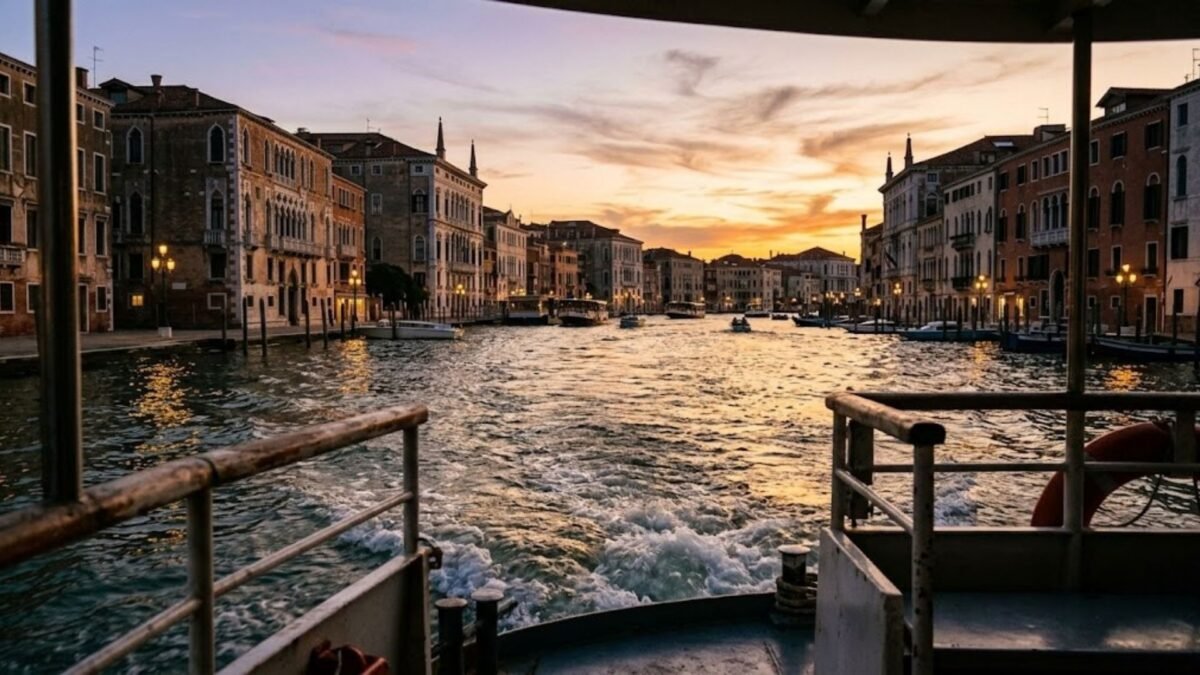
The vaporetto network acts as Venice’s water-borne subway. It is managed by ACTV and runs reliably along the Grand Canal and out to surrounding lagoon islands.
Vaporetto Ticketing Options:
- Standard Single Ticket (valid 75 minutes): €9.50
- 24-Hour Pass: €25.00
- 48-Hour Pass: €35.00
- 72-Hour Pass: €45.00
- 7-Day Pass: €65.00
- Vaporetto Line 1: The slow, scenic cruiser. Stops at every single station along the Grand Canal between Piazzale Roma, Rialto, San Marco, and the Lido. Ideal for leisurely sightseeing.
- Vaporetto Line 2: The express route. Skips minor stops along the Grand Canal and swings rapidly around the Giudecca Canal.
- Vaporetto Line 12: The express outer-lagoon boat running from Fondamente Nove out to Murano, Burano, and Punta Sabbioni.
- Important Rule: Always validate your magnetic travel pass on the electronic card reader at the boarding gate before stepping onto the floating dock. Invalidated tickets carry heavy spot fines from transit inspectors.
3. Crossing the Grand Canal: The Traghetto
Need to cross from one bank of the Grand Canal to the other without walking 15 minutes to the nearest bridge? Look for the small wooden signs labeled Traghetto. These are stripped-down, historic gondolas rowed by two oarsmen that ferry locals directly back and forth across the canal for just €2.00 in cash. It offers an authentic mini-gondola experience for a fraction of the price.
4. Arriving in Venice
- By Train (Venezia Santa Lucia): Arrive on Frecciarossa or Italo high-speed trains directly into the historic centre. Stepping through the front doors of Santa Lucia station immediately puts you face-to-face with the Grand Canal.
- By Plane (Venice Marco Polo Airport – VCE): Located on the mainland. You can reach the historic centre via:
- ATVO Airport Bus or ACTV Bus #5: Budget-friendly option (€10 one-way) running to Piazzale Roma in 20 minutes.
- Alilaguna Water Shuttle: Direct water bus (Blue, Orange, or Red lines) connecting the airport boat docks to San Marco and other piers (€15 one-way).
- Private Water Taxi: The fastest, most luxurious arrival. A sleek wooden boat picks you up at the airport pier and pulls right up to your hotel’s private canal dock (typically €120 to €150).
Realistic Venice Travel Budgets
Venice has a reputation for being costly, but your daily budget depends largely on where you choose to eat and sleep.
| Budget Tier | Accommodation (Per Night) | Food & Drink (Per Day) | Daily Transport & Activities | Estimated Total (Per Person / Day) |
|---|---|---|---|---|
| Budget | €60–€100 (Hostel or Mestre guesthouse) | €25–€40 (Cicchetti bars, bakeries, markets) | €10–€15 (Walking, occasional vaporetto) | €95–€155 |
| Mid-Range | €160–€280 (3-star boutique hotel in Cannaregio/Dorsoduro) | €55–€90 (Trattorias, coffee, evening spritz) | €25–€45 (Vaporetto day pass, museum tickets) | €240–€415 |
| Luxury | €450–€1,200+ (5-star canal-view luxury palazzo) | €140–€300+ (Fine dining, private wine pairings) | €120–€250+ (Private water taxis, private guides) | €710–€1,750+ |
Practical Money-Saving Strategies
- Drink Espresso at the Counter: Like everywhere in Italy, enjoying your morning espresso or cappuccino standing at the bar counter costs around €1.20 to €1.60. Sitting down at a table inside Saint Mark’s Square can incur service charges exceeding €12 to €15 per coffee.
- Refill at Free Drinking Fountains: Venice has dozens of historic cast-iron drinking water fountains (fontanelle) flowing throughout its public squares. Download the free “Venice Tap Water” map to refill your insulated bottle with fresh municipal water.
- Dine Away from Main Thoroughfares: Avoid restaurants with multi-language picture menus displayed on easels or hosts beckoning you from the alleyway. Walk two canals away into residential Cannaregio or Castello for better quality and fair pricing.
Instead of paying €3.00 for single-use plastic bottles near Saint Mark’s, carry an [Amazon: Hydro Flask 21oz Standard Mouth Insulated Bottle]. Venice has dozens of historic public fountains (fontanelle) flowing with crisp, cold municipal drinking water all year round.
5 Common Venice Travel Mistakes to Avoid
- Treating Venice as a Brief Day Trip: Arriving at 11:00 AM and departing at 4:00 PM means sharing the city at its absolute busiest. Stay at least two nights to experience the peaceful morning mist and quiet, lamplit evening canals after day-trippers return to the mainland.
- Packing Massive Rolling Luggage: Venice’s footbridges feature stepped stone arches without wheelchair ramps. Lugging giant 30-kilo hard-shell suitcases up and down a dozen bridges under the midday sun is an exhausting way to start your holiday. Travel light with a carry-on roller or travel backpack whenever possible.
Dragging a 30-kilogram hard-shell suitcase over five arched bridges between your vaporetto dock and your hotel is the easiest way to ruin your arrival. We strongly recommend travelling carry-on only with a versatile pack like the [Amazon: Osprey Farpoint 40L Travel Backpack] or an ultralight [Amazon: Samsonite Freeform 21-Inch Carry-On] that you can easily carry up steps with one hand.
- Forgetting to Pre-Book Saint Mark’s and Doge’s Palace: The physical ticket lines for primary attractions regularly exceed two hours between April and October. Reserve your skip-the-line time slots online at least three to four weeks before departure.
- Ignoring the Venice Access Fee (Day-Trippers Only): If visiting Venice without an overnight hotel booking on specific peak spring and summer days, you must register in advance and pay the €5 Venice Access Fee (Contributo di Accesso) via the official city portal to receive your QR entry code. Overnight hotel guests are exempt, as they already pay the local tourist tax (tassa di soggiorno), but they still need to register online for an exemption voucher.
- Walking Solely Along Main Tourist Routes: Following the yellow directional signs marked “Per San Marco” and “Per Rialto” keeps you in crowded pedestrian traffic. Intentionally turn down quiet side alleys (calli), cross smaller bridges, and discover the quiet side of the city.
3-Day Venice Itinerary: The Ideal Plan
DAY 1: THE MONUMENTAL HEART
08:00 AM: Empty Piazza San Marco & Basilica di San Marco
10:30 AM: Doge’s Palace & Bridge of Sighs
01:00 PM: Cicchetti lunch near Rialto (San Polo)
03:00 PM: Rialto Bridge crossing & Grand Canal explorations
06:00 PM: Golden Hour Vaporetto Line 1 cruise
08:00 PM: Classic dinner in Dorsoduro
DAY 2: ART, ARCHITECTURE & QUIET SESTIERI
09:00 AM: Gallerie dell’Accademia or Peggy Guggenheim Collection
11:30 AM: Stroll the sunny Fondamenta delle Zattere
01:00 PM: Casual lunch at Campo Santa Margherita
03:00 PM: Explore the Jewish Ghetto & Cannaregio canals
06:00 PM: Bacaro crawl along Fondamenta dei Ormesini
08:30 PM: Quiet, lamplit evening stroll through Castello
DAY 3: THE LAGOON ISLANDS & PANORAMIC FAREWELL
08:30 AM: Ferry from Fondamente Nove to Murano (glass factory visit)
11:00 AM: Scenic vaporetto connection to vibrant Burano
01:30 PM: Fresh seafood lunch on Burano (try Trattoria da Romano)
03:30 PM: Quick crossing to ancient Torcello (cathedral mosaics)
06:00 PM: Return to Venice; elevator up San Giorgio Maggiore bell tower
08:30 PM: Celebration farewell dinner overlooking the Grand Canal
What to Pack for Venice
- Supportive, Comfortable Walking Shoes: You will easily log 15,000 to 22,000 steps per day across stone flagstones and bridges. Pack broken-in walking sneakers or supportive leather loafers with slip-resistant soles.
- Compact, Lightweight Travel Luggage: Select a lightweight suitcase or travel backpack that you can lift easily with one hand across stepped bridges.
- Modest Layers for Religious Sites: A light linen shirt or compact scarf to cover shoulders and knees when entering basilicas.
- Portable Power Bank: Between continuous phone camera photography and GPS navigation through labyrinthine alleys, your phone battery will drain quickly.
- Insulated Reusable Water Bottle: Take advantage of the city’s clean public drinking fountains.
- Waterproof Footwear Covers (November to February): Compact, slip-on silicone shoe protectors take up virtually no space in your day bag and keep feet dry if you encounter sudden seasonal high tides (acqua alta).
- [Amazon: Anker 10,000mAh Ultra-Slim Power Bank]: Navigating Venice’s winding alleys with Google Maps while taking constant canal photos will drain your phone by 2:00 PM. Keep a slim battery pack in your day bag.
- [Amazon: European Travel Plug Adapter (Type C/L)]: Italian hotel outlets use Type C and Type L sockets. Make sure your adapter has both AC outlets and USB-C fast-charging ports.
Frequently Asked Questions (AEO Reference)
How many days are best for visiting Venice?
Three days is ideal for first-time visitors. This allows two full days to tour major landmarks like Saint Mark’s Basilica and Doge’s Palace along with quiet neighbourhoods like Dorsoduro and Cannaregio, plus a dedicated third day to explore the outer lagoon islands of Murano, Burano, and Torcello.
💡 Planning Tip: General admission queues at Saint Mark’s and Doge’s Palace can easily eat up two hours of your morning. Book a combined [GetYourGuide: St. Mark’s Basilica & Doge’s Palace Fast-Track Tour] to skip the main queues, access the upper terraces, and walk across the Bridge of Sighs with an art historian.
What is the single best way to get around Venice?
Walking is the best way to travel short distances within the city. For longer cross-city journeys or trips to outer islands, use the ACTV Vaporetto (public water bus system). A standard single ticket costs €9.50, making 24-hour, 48-hour, or 72-hour unlimited travel passes the most economical choice for visitors.
How much does an official gondola ride cost in Venice?
Venice gondola rates are set by the city. A standard daytime ride costs €90 for up to 5 passengers for a 30-minute private journey. After 7:00 PM, the evening rate increases to €110 for 35 minutes. Always confirm the route and price with the gondolier before stepping aboard.
What is the Venice Access Fee and who has to pay it?
The Venice Access Fee (Contributo di Accesso) is a €5 entry fee targeted at day-tripping visitors on designated peak dates between April and July. Overnight visitors staying in registered Venice hotels do not pay this daily entry fee because they pay the nightly city accommodation tourist tax, though they must still register online to obtain an official QR exemption pass.
Is Venice safe for solo and night travellers?
Venice is one of the safest cities in Europe. Violent crime is rare. The absence of road traffic makes night walks peaceful. The primary safety concerns are minor pickpocketing around crowded transit stops like Piazzale Roma, the Santa Lucia train station, and the Rialto Bridge, along with slippery canal steps at high tide.
Venice is not unforgettable because of any single landmark on a checklist. It is unforgettable because of the quiet moments between them: waking up to soft church bells across the lagoon, taking a turn into an empty, dead-end canal courtyard, watching the laundry flutter high above narrow brick passageways, and raising a glass of sparkling Prosecco as the setting sun turns the Grand Canal to liquid gold.
Step off the beaten path, put your map away for an afternoon, and let the Queen of the Adriatic reveal her timeless magic.
While Venice is extremely safe, crowded vaporetto boarding docks and narrow bridges around Rialto are magnets for pickpockets. Keep your passport and cards secure with an [Amazon: Travelon Anti-Theft Classic Crossbody Bag] or a compact [Amazon: Pacsafe Sling Pack] featuring slash-proof straps and RFID-blocking pockets.