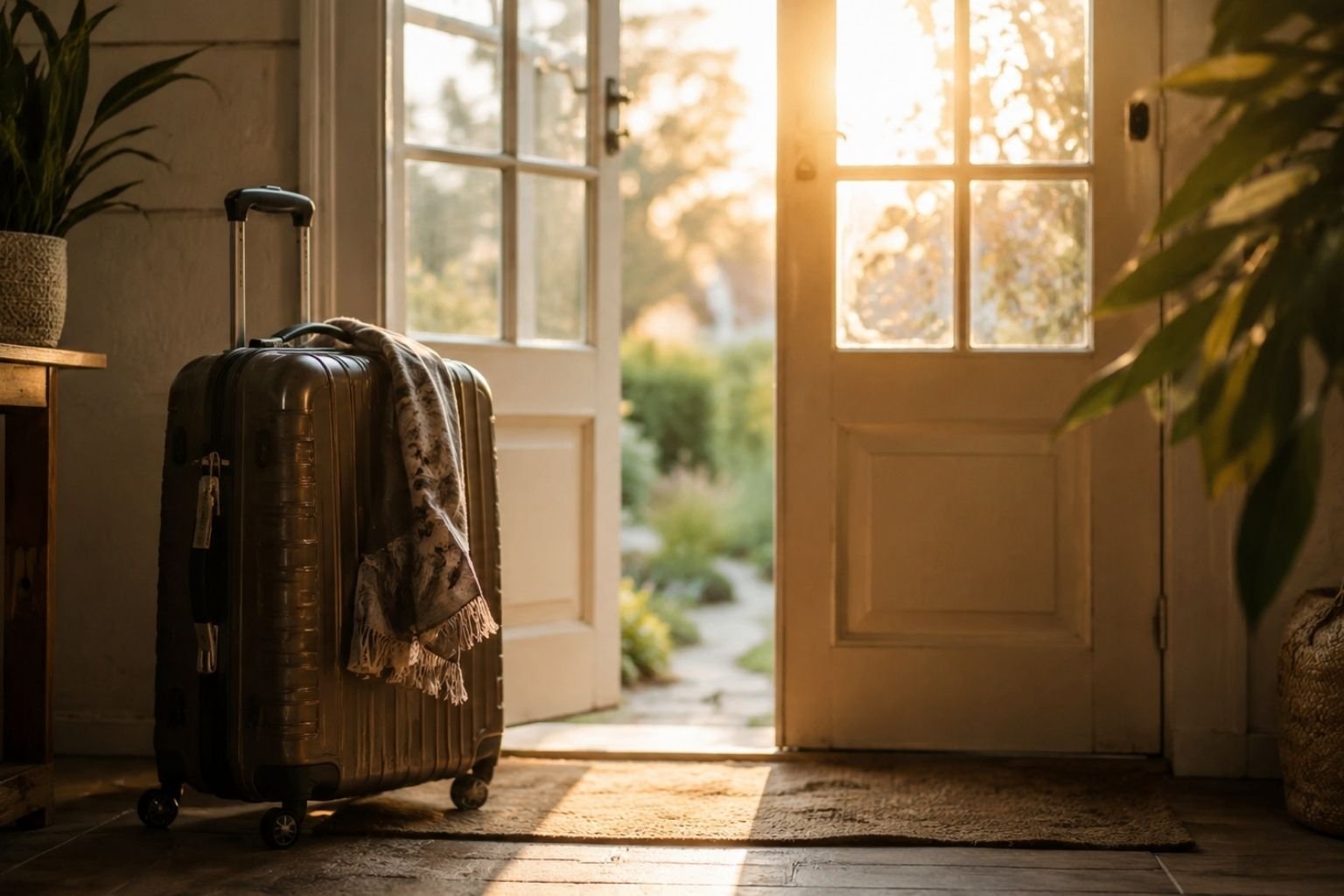
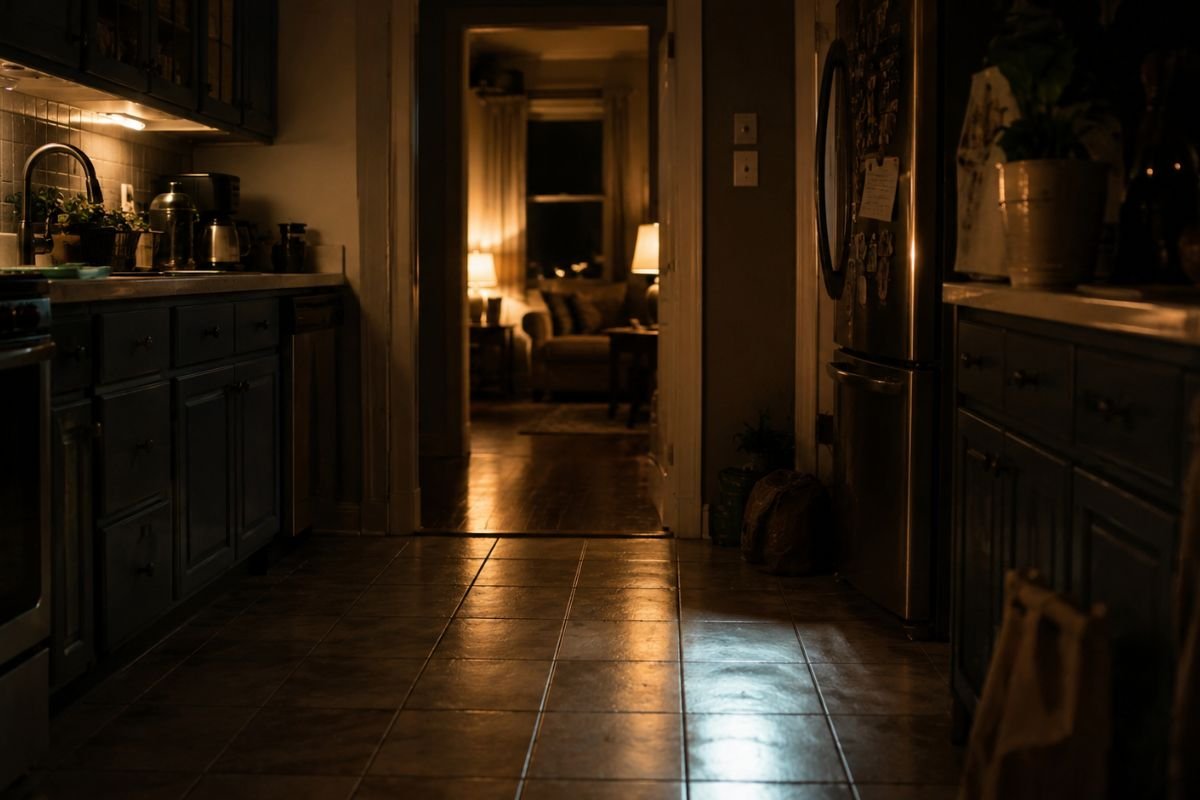
Pre travel panic attacks don’t usually start at the airport. Mine started on my kitchen floor, in socks, twenty-six hours before a flight to Lisbon, boarding pass already printed and bag already zipped by the door like a dog waiting for a walk.
My chest felt like someone had parked a car on it. My hands went cold and tingly. Some ancient part of my brain was screaming that I was about to die in my own kitchen over a beach vacation. I sat down on the tile. I remember it was cold. I remember thinking, very clearly, I am going to cancel this trip.
I didn’t cancel it. But I also didn’t understand, that night, that what I was having was a panic attack, not a sign from the universe telling me to stay home. It took two more trips, two more kitchen floors, and one memorable evening crying in a Lisbon metro station at 9pm on a Tuesday before I figured out what was actually happening to my body.
If you’re reading this at midnight with a half-packed bag and a pit in your stomach, I want to say something before any advice, before any technique: you are not broken. This is one of the most common things nobody talks about, because admitting that a vacation is what’s breaking you feels embarrassing. It felt that way to me too, for a long time. I run a travel website. I was ashamed to even type that first paragraph.
So let’s talk about it honestly. Not the highlight reel. The real one.
What a Pre-Travel Panic Attack Actually Feels Like (Not What You See in Movies)
Movies get this wrong almost every time. Someone gasps dramatically into a paper bag, and thirty seconds later they’re fine. That’s not what it’s like. It’s slower, weirder, and it doesn’t always look like panic from the outside.
The physical symptoms nobody warns you about
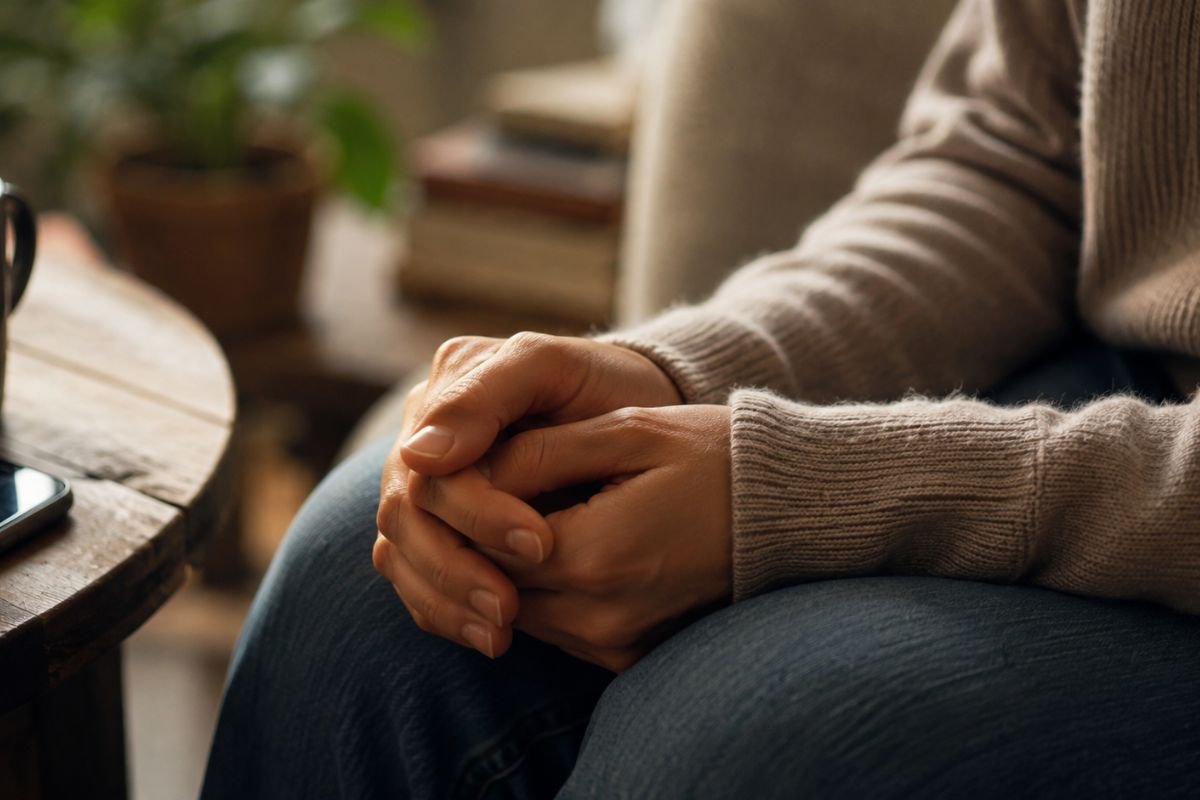
Nobody told me a panic attack could feel like a heart attack. Tight chest, racing pulse, a buzzing feeling in my arm. The first time it happened, I didn’t think “anxiety.” I thought I was having a cardiac event on the night before a flight.
My hands went cold and slightly numb, like I’d been holding ice. My vision tunneled at the edges, like the room had gotten smaller and a little too bright. A wave of nausea hit that felt specifically like carsickness, even though I was sitting perfectly still.
It lasted about twenty minutes that first time, faded, and then came back an hour later, smaller, like an aftershock.
If you’ve felt any of this before a trip, you’re not imagining it and you’re not overreacting. Your body is doing something very real. It’s just responding to a threat that isn’t actually there.
Why it feels like you’re dying when you’re actually just scared
Here’s what finally helped, once someone explained it to me plainly instead of clinically. Your nervous system can’t tell the difference between “there is a lion behind me” and “I am about to spend six hours in an unfamiliar airport.” It reads both as danger and floods your body with adrenaline either way.
Your heart races because part of you believes you need to run. Cold hands happen because blood is pulling away from your extremities and toward your major muscles, in case you need to sprint. The tight chest comes from shallow, fast breathing, which shifts the oxygen and carbon dioxide balance in your blood, and that shift is what actually causes the light-headed, unreal feeling.
Your body isn’t malfunctioning. It’s doing exactly what bodies are built to do when they believe they’re under threat. The real issue is that it’s treating “I have a 6am flight and I don’t know if I locked the back door” with the same intensity it would use for an actual bear in the room.
Understanding that made the fear a little smaller. Not gone. Smaller. I stopped being scared of the fear itself, on top of everything else.
The shame spiral: “I’m broken, I can’t even handle a vacation”
This is the part almost nobody writes about, and it might be the part you need most tonight.
After my first pre-trip panic attack, I wasn’t just scared. I was ashamed. People go to war zones and refugee camps and manage fine, I thought, and I’m sitting here falling apart over a beach vacation. What’s wrong with me.
I want to gently push back on that thought, because I carried it for two years and it never once helped me.
Panic isn’t a rational judge of danger. It’s an alarm system, and alarm systems sometimes go off for reasons that have nothing to do with logic. Comparing your fear to someone else’s situation doesn’t shrink your fear. It just stacks shame on top of it, and the shame was honestly the layer that kept me stuck the longest.
A few months into all this, I found myself reading through the Anxiety and Depression Association of America’s panic disorder resources at around 1am, the same way you might be reading this right now. What stuck with me wasn’t anything dramatic.
It was just seeing panic described plainly, by people who study it for a living, as a treatable thing with a name, not a personal failing I’d invented on my own.
If there’s one thing I wish someone had told me before that first trip, it’s this. Having a panic attack before a trip doesn’t mean you can’t travel. It means your nervous system needs a different kind of preparation than someone who packs a bag and skips out the door without a second thought. Not broken. Wired to need more support around uncertainty than some people seem to need.
I think about the people I’ve seen look completely calm at the gate, scrolling their phone, headphones in, seemingly unbothered by any of it. For a long time I assumed they simply didn’t feel what I felt.
Some of them probably don’t. But talking to enough travelers since starting this site, I’ve learned that a fair number of those calm-looking people are running their own version of a grounding technique behind the headphones, or have already had their version of the kitchen floor moment earlier that morning and are just further along in the wave than you are right now.
Confidence at an airport is often just fear that’s had somewhere to go.
Why Travel Triggers Panic Attacks (The Real Reasons)
Once the shame quieted a little, I got curious. Why travel specifically? Grocery shopping doesn’t do this to me. Work meetings don’t do this to me, not like this. So why a trip I actually wanted to take?
Loss of control: your brain hates uncertainty
Travel is basically a machine for generating unknowns. Will the flight be delayed. Will the bag make the connection. Will the Airbnb host actually show up. Will the metro signs make sense. Will I get sick somewhere with no one I know nearby.
Most days, your brain doesn’t have to think about any of that. You know your commute. You know your fridge. You know where the bathroom is at 3am in the dark. Travel strips almost all of that away at once, and a brain that already runs a little anxious tends to read that pile of unknowns as a pile of threats.
This reframes the whole problem, and it’s worth sitting with. You’re not afraid of Lisbon. You’re afraid of not knowing what Lisbon is going to ask of you. That second fear is much more workable than the first.
I noticed this most clearly the first time I traveled somewhere I’d already been. Second trip to Lisbon, same city, same metro, same panic-inducing airport from a year before, and almost nothing happened. No kitchen floor, no bathroom stall. The city hadn’t changed. What changed was that my brain already had a map of it.
It already knew what the metro machine looked like, what the ticket line sounded like, roughly what time the sun would go down. Familiarity didn’t make me a braver person. It just gave my nervous system less to guess about, and guessing, it turns out, was most of what the fear was actually made of.
That’s worth remembering the next time you’re standing in your kitchen dreading somewhere brand new. It’s not that new places are more dangerous. It’s that your brain hasn’t built the map yet, and building a map ahead of time, even a rough one from photos and reviews and street view, gives it less room to fill in the blanks with worst case guesses.
Sensory overload: airports, crowds, foreign languages
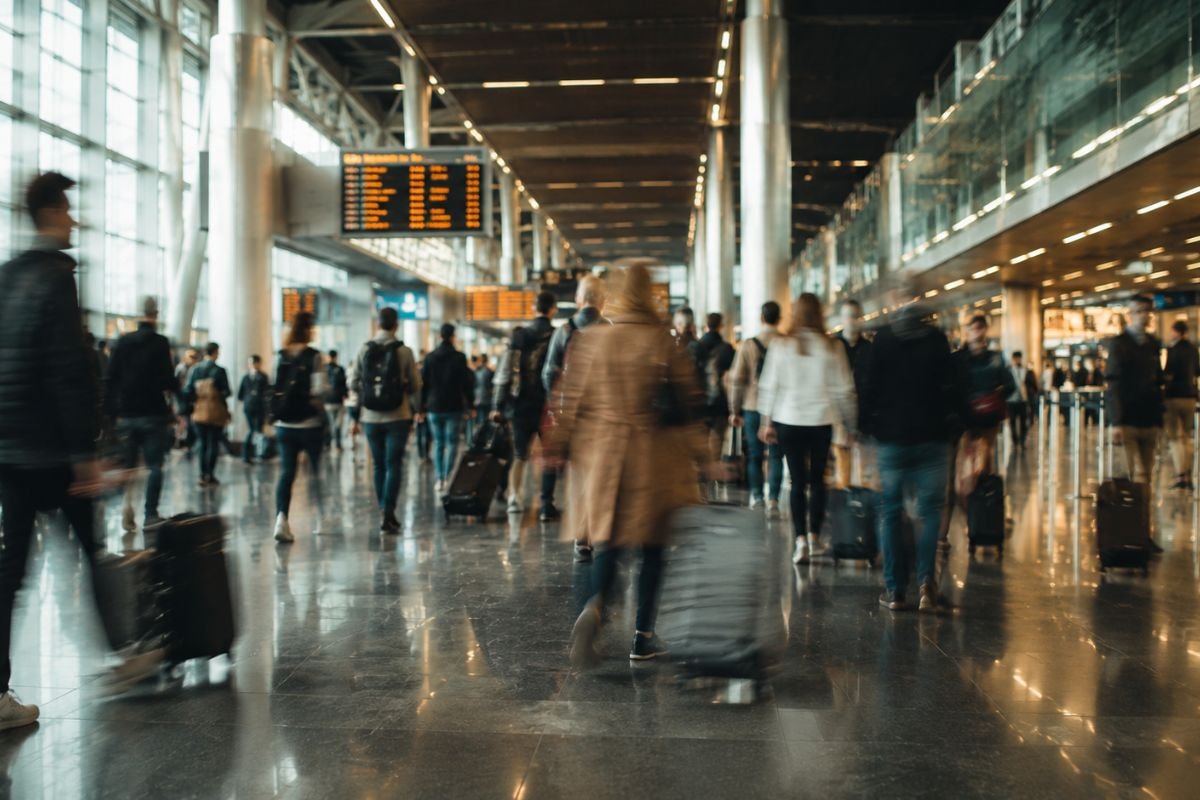
Airports are a lot, on a purely physical level. Bright lights, constant overhead announcements, crowds moving in every direction, the specific beeping of the security line, someone’s suitcase wheel that clearly needs oil, a gate change with no warning. Add a language you don’t speak fluently and a timeline you can’t control, and you’ve built something close to a sensory overload machine.
For a long time I thought I was uniquely bad at handling this. I wasn’t. My nervous system runs a little hot in unfamiliar sensory environments, and I’d dropped it into one of the most unfamiliar sensory environments humans have designed. That’s a mismatch between nervous system and environment, and mismatches can be managed.
The “performance pressure” of having a good time
This one took me the longest to name, and it might be the biggest hidden trigger of all.
You’ve told your friends you’re going. You’ve spent real money. Everyone expects you to come back with a tan and a good story. There’s a quiet, constant pressure underneath the whole trip that says this had better be worth it, you had better enjoy this, or what was the point.
That pressure is tiring even without anxiety layered on top. With anxiety, it becomes its own trigger. You start panicking not just about the trip, but about your own reaction to it. Am I panicking because something is genuinely wrong, or because I’m “ruining” an expensive vacation with my own anxiety. That thought spiraled into another panic attack for me more than once.
A trip doesn’t have a report card. Nobody is grading your vacation, including you. The trip’s only job is to happen, in whatever shape it takes, even a shape that includes a hard morning and a good afternoon on the same day.
Traveling with kids adds its own version of this pressure, worth naming separately. It’s not just your own panic you’re managing, it’s watching for theirs too, in a language they don’t have words for yet.
If your child melts down in a security line, that’s not a sign the trip is failing. Kids absorb a room’s tension fast, and a calm, even slightly rehearsed voice from you (something as simple as “this part is loud, we’re okay, we’ll be through soon”) does more to steady them than it might seem to in the moment.
What to Do in the Middle of a Panic Attack (At Home, at the Airport, on the Plane)
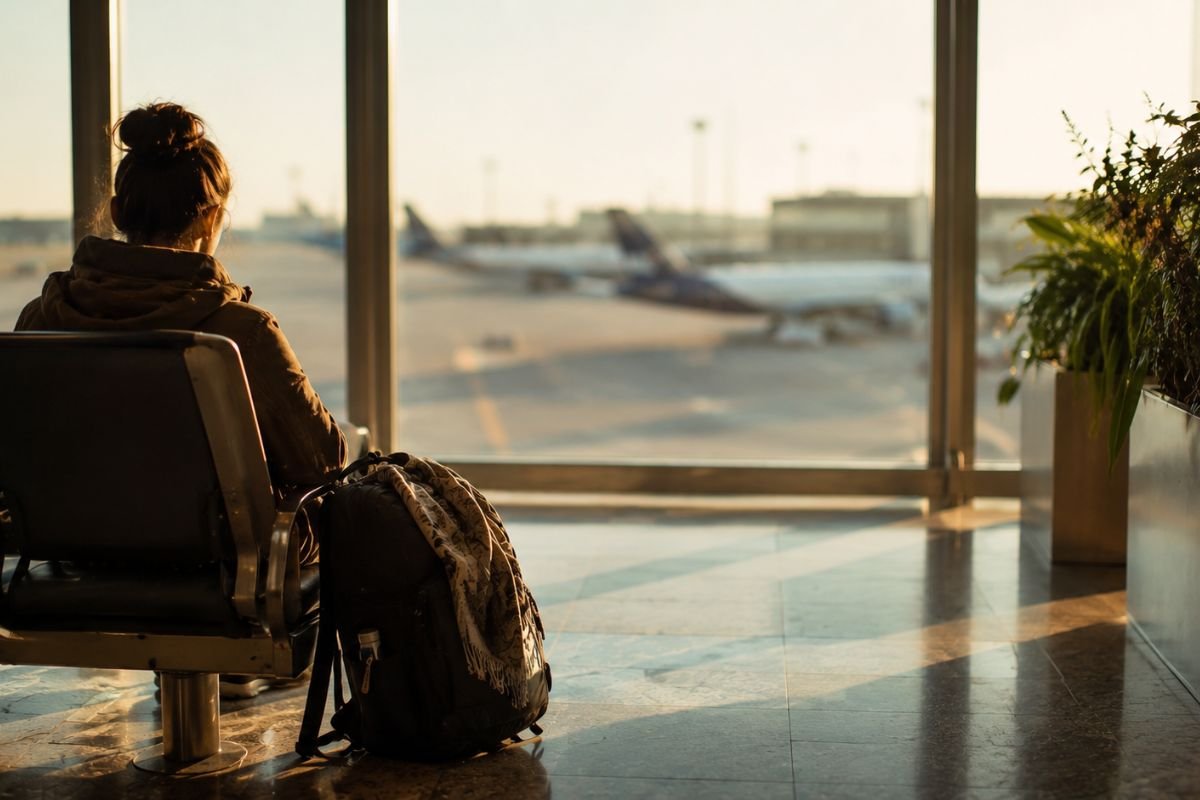
Practical section now. If you’re mid-panic right now, or you know you will be soon, here’s what actually worked for me, not what sounded good on a wellness blog.
The 5-4-3-2-1 grounding technique that works anywhere
This is the one I use most, because you can do it silently, sitting down, standing in a security line, or buckled into a middle seat without anyone around you knowing anything is happening.
Name five things you can see. Look at them for real. The specific stitching on the seat in front of you. The logo on a stranger’s water bottle.
Name four things you can physically feel. The armrest under your hand. Your feet inside your shoes. The fabric on your shoulders. The weight of your bag on your lap.
Name three things you can hear. An announcement. A conversation two rows back. The hum of the air system.
Name two things you can smell, even faintly. Coffee. Recycled air. Hand sanitizer.
Name one thing you can taste, even if it’s just the inside of your own mouth.
Panic lives in the future, in the “what if.” Grounding drags your attention back into your actual body, in an actual place, which isn’t currently in danger. It won’t stop the wave immediately. It gives you something to hold onto while the wave passes.
If you want the another of this explained by an actual doctor instead of a travel blogger, Harvard Health Publishing has a good breakdown of why grounding techniques work and how to practice them before you actually need them.
How to find a bathroom stall and survive the wave
Sometimes the best move, unglamorous as it sounds, is finding a bathroom stall, locking the door, and letting the wave happen.
You don’t have to perform calm for strangers. Find the nearest bathroom, lean against the wall or sit if there’s a bench, and let your breathing be ragged for a minute.
Panic attacks tend to peak within about ten minutes and then start to ease, even when it is endless while you’re inside it. You’re not stuck in the feeling forever. You’re stuck in it for a few minutes.
Cold water on your wrists or the back of your neck helps a lot of people interrupt the physical spiral. It’s not magic. It’s a small, physical signal to your nervous system, delivered in a language your body understands faster than words do.
If you can, breathe out longer than you breathe in. In for a count of four, out for a count of six or seven. This isn’t a trick I made up, it’s a basic way of nudging your body out of the fast, shallow breathing pattern that keeps the panic response fed.
It is almost too simple to work the first time you try it mid-panic, and it won’t stop the wave instantly, but it takes the edge off the peak faster than trying to force yourself to “just calm down,” which almost never works and usually adds frustration on top of the fear.
One more thing worth knowing. You don’t need a private bathroom stall for any of this. A quiet corner near a gate, a stairwell, the last row of an empty train car, anywhere you can stand still for two minutes without needing to explain yourself works just as well. The goal isn’t privacy for its own sake. It’s a few minutes without new inputs while your body finishes the wave it’s already riding.
What to tell the person next to you (if anything)
You don’t owe anyone an explanation. I spent a long time thinking I had to either hide it perfectly or explain everything.
Traveling with someone you trust, a simple line works: “I’m having a hard moment, I need a few quiet minutes, I’m okay.” That’s enough.
Next to a stranger on a plane, headphones and closed eyes do the job. Nobody around you can tell the difference between someone resting and someone quietly riding out a panic attack. I’ve sat next to strangers for entire flights doing exactly this, and not one of them ever noticed.
The Pre-Trip Routine That Rewired My Nervous System
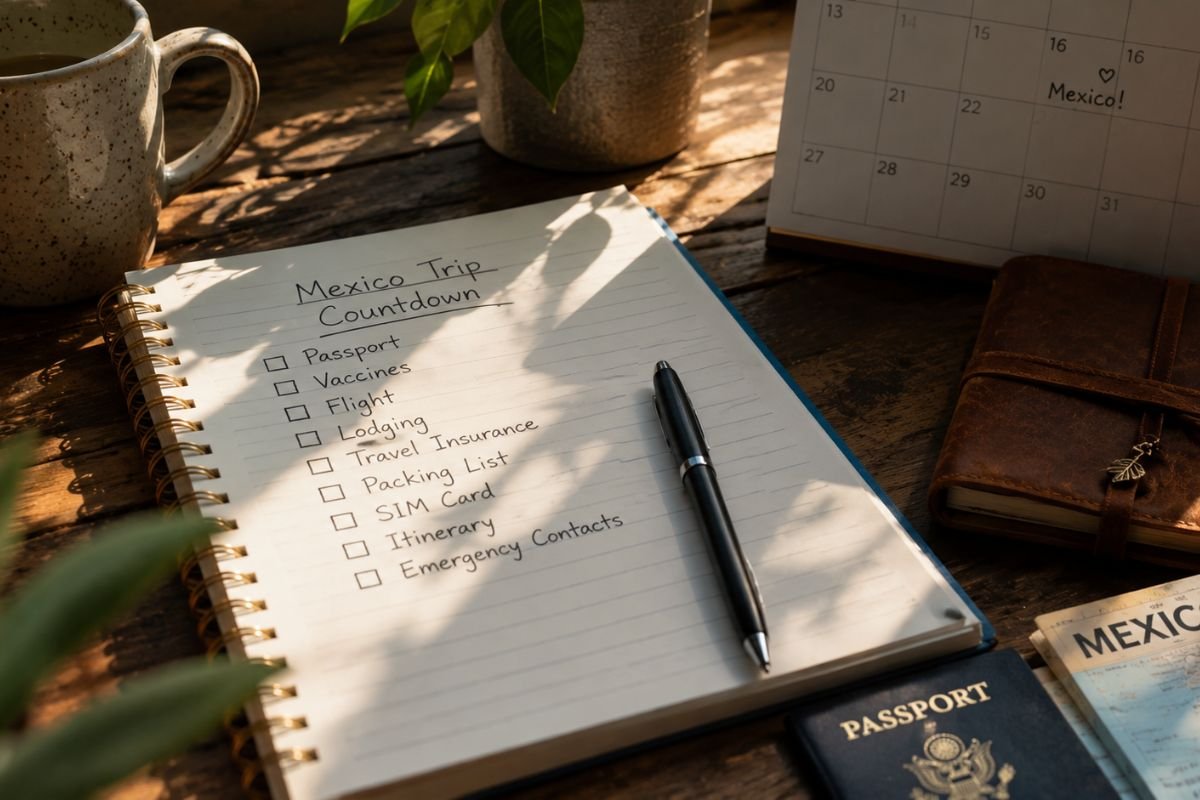
This is the part that changed things long term, more than any single grounding trick. Not one big fix. A boring, repeatable routine in the days before a trip that gave my nervous system less room to spiral.
The 7-day countdown: what to do each day before departure
I built this after my third bad pre-trip panic attack, mostly out of desperation, and I still use it.
Seven days out, I do a logistics dump: every open question about the trip, no matter how small, written down so my brain stops holding them in a loop. Where am I sleeping the first night. What time does the flight actually leave. Do I need a visa or a specific document. Getting it out of my head lowers the noise more than I expected the first time I tried it.
Six days out, I confirm the boring stuff. Hotel confirmation number. Transit from the airport. Whether my phone plan works there or I need a local SIM. Unglamorous, and it removes about a third of my “what if” thoughts in one sitting.
Five and four days out, I move my body every day. A walk, a workout, anything that lets adrenaline pass through instead of pooling. Anxiety with nowhere to go tends to get louder. Anxiety with a physical outlet tends to quiet down.
Three days out, I pack slowly, over a couple of sessions rather than one frantic hour, so it doesn’t turn into its own stress event.
Two days out, I run the worst-case-scenario exercise, explained below, timed deliberately so it’s close enough to the trip to matter and far enough that I’m not doing it in a panic.
The day before, I keep the schedule light on purpose. No big errands, no big conversations, nothing new. I let the day be boring. Boring, the day before a flight, is a gift.
The physical prep nobody mentions: sleep, caffeine, hydration
Almost everything above is mental. This part is just physical maintenance, and it matters more than it sounds like it would.
Cut caffeine earlier than usual for the two days before you fly, especially if your panic tends to show up as a racing heart. Caffeine and adrenaline produce almost identical physical sensations, and a jittery body is much faster to misread as a panicking one.
Protect your sleep the two nights before departure, not just the night right before. One good night of sleep on top of a bad one doesn’t fully undo the deficit, and a tired nervous system has less capacity to handle uncertainty calmly.
Drink more water than necessary the day before you fly. Dehydration alone can produce a mild headache and light-headedness that’s easy to mistake for the early edge of panic, and ruling that out ahead of time removes one more false alarm your brain doesn’t need to sound.
Why I stopped checking my itinerary 47 times
I used to check my confirmation emails obsessively. Flight time, hotel address, flight time again ten minutes later, flight time a third time. It felt like control. It was the opposite.
Checking something repeatedly doesn’t reduce uncertainty. It teaches your brain that the uncertainty is dangerous enough to need constant monitoring, and every “just to be sure” check reinforces the loop instead of closing it.
What helped was screenshotting everything into one folder, once, calmly, a few days out. Flight numbers, confirmation codes, addresses. Then closing the apps.
When the urge to check hit again, I’d ask: has anything actually changed in the last three hours? Almost always, no. The checking was never really about information. It was reassurance-seeking, and reassurance soothes anxiety for about ninety seconds before it wears off and asks to be fed again.
The “worst case scenario” exercise that paradoxically calms you down
This sounds like it should make things worse. For me, and for a lot of anxious travelers I’ve talked to since, it did the opposite.
Two days before your trip, sit down with a piece of paper and write your actual worst case scenario. Something specific, not a vague dread. “I miss my connection in Amsterdam and I’m stuck there overnight alone.”
Underneath it, write what you’d actually do. Not what you’d feel, what you’d do. “I’d go to the airline desk and ask for a rebooking. If they can’t help, I’d book a nearby airport hotel on my phone. I’d text my sister so someone knows where I am. I’d order food to the room and go to bed.”
Every time I’ve run this exercise, the worst case stopped being a fog and turned into a boring, solvable logistics problem. Panic thrives on vague, undefined threat, and it struggles against a concrete plan, even a plan for something bad. You’re not hoping for the worst case. You’re proving to your own nervous system that you’d survive it, and that tends to quiet the alarm faster than positive thinking ever did for me.
Medication, Therapy, and Travel: An Honest Discussion
I want to be careful here. I’m not a doctor, and I won’t pretend to be one on a travel website. But skipping this section would leave out a real part of my own story, so here it is.
When to consider anti-anxiety medication for travel
Grounding techniques and routines are enough for some people. For others, they help but aren’t the full answer, and that’s worth knowing too. It isn’t a failure if breathing exercises alone don’t fully solve this for you.
If your pre-travel panic attacks are frequent, intense, or have led you to cancel trips more than once, bringing it up with a doctor is a reasonable step, not a last resort. I won’t get into specific medications or doses here. That conversation belongs with someone who knows your full medical history, not a blog post.
What I can say is that raising it isn’t dramatic, and it isn’t giving up. For a lot of people I’ve talked to since starting this site, that conversation with a doctor was what finally let them get on a plane without dreading the weeks leading up to it.
How to talk to your doctor without feeling judged
I put this conversation off for almost a year out of embarrassment. I remember rehearsing the sentence in the car beforehand, worried it would sound silly. “I panic before vacations” felt, in my head, like a smaller problem than it deserved to be taken seriously.
It wasn’t silly, and the doctor didn’t treat it that way. If this conversation feels hard, writing it down beforehand can help, the way I eventually did. What it is like physically. When it started. How often it happens.
Whether it only shows up around travel or in other situations too. Handing over a few written sentences instead of speaking them out loud in the moment is a completely reasonable way to start. Doctors hear this far more often than you’d think.
Therapy techniques (CBT, exposure therapy) that work for travel anxiety
Two approaches came up again and again when I started asking other anxious travelers, and both matched what eventually helped me.
Cognitive behavioral therapy, usually shortened to CBT, works by helping you notice the specific thoughts that spiral into panic, something like “the flight will be delayed and everything will fall apart,” and gently testing how certain that thought really is. It doesn’t erase the fear. It shortens the spiral, so you catch it two steps in instead of twenty.
Exposure-based approaches work differently, involving small, gradual doses of travel-related triggers: sitting in a busy, airport-like space without flying anywhere, practicing a stressful transit scenario at low stakes, taking a short weekend trip before attempting a longer international one.
Leaning toward the thing that scares you sounds backwards, but done gradually and with support, it tends to shrink the fear instead of confirming it.
Neither of these has to be figured out alone from a blog post. A therapist who works specifically with anxiety, ideally one with experience in panic disorder, can shape this around your actual situation instead of a generic version of it.
The First Trip After Panic Attacks: What to Expect
It won’t be perfect, and that’s the point
My first trip after doing this work wasn’t panic-free. I had a rough hour in the Lisbon airport, the same city where I’d cried in the metro months before, and for a second I thought, here we go again, no progress at all.
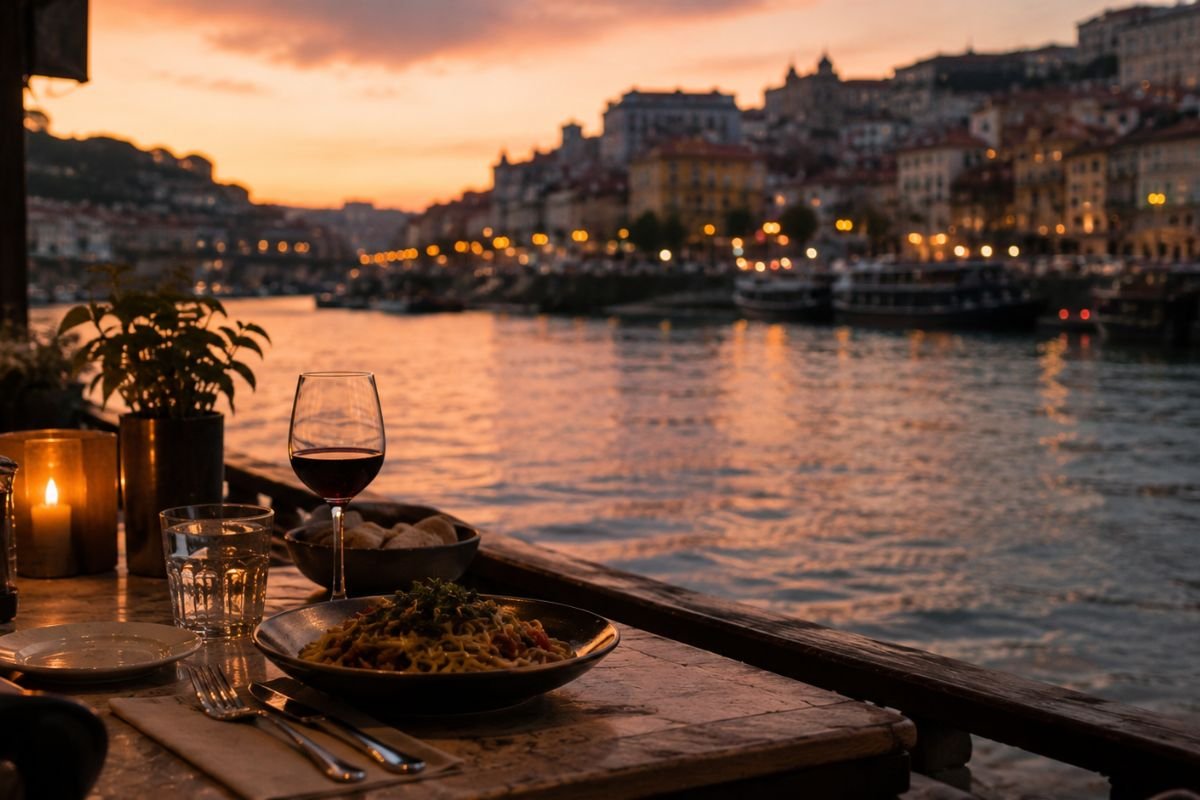
It was one rough hour, though. Not a rough two days. Not a canceled trip. I used the grounding technique in a bathroom stall, let it pass, and had a quietly wonderful dinner by the river that same night, panic attack and all, on the same day.
That’s what recovery actually looks like. Not a clean before-and-after, but a smaller, more survivable version of the fear sitting right next to an actual good time. A hard moment on your first trip back doesn’t mean the work failed. It means you got through the hard moment and kept going, which is the entire goal.
I also want to be honest about something that surprised me. The hard hour didn’t feel the same as the first one, back in my kitchen. It was shorter. It was quieter. I recognized what was happening about ninety seconds in instead of spiraling for twenty minutes wondering if I was dying. That recognition alone changed the whole texture of the experience.
I wasn’t panicking about the panic anymore. I was just riding out a wave I’d ridden out before, in a bathroom near gate B14, and then I washed my hands and went to find my gate.
If your first trip back includes a moment like that, it doesn’t erase any of the progress leading up to it. It’s actually a decent sign that the progress is real, because the old version of you might have canceled the whole trip over a feeling like that. This version got back on the plane.
How to celebrate small wins instead of waiting for the “perfect” trip
I used to think I’d know I was “better” once a trip had zero anxiety in it. That’s the wrong finish line, and it took me two years to see it.
The win isn’t a panic-free trip. It’s getting on the plane anyway. It’s having the panic attack and knowing, because it’s happened before, that it will pass. It’s booking the next trip six months later instead of swearing off travel entirely.
After your next trip, write these down honestly. Not “I wasn’t scared.” Something smaller and truer: made it through security without spiraling, told a friend I needed a quiet minute and she was completely fine with it, had a panic attack on day one and still had a good time on day three. Collect those.
They add up faster than expected, and at some point, maybe not your next trip but one down the line, the fear gets quieter without you fully noticing when it happened.
You’re not trying to become a person who never gets scared. You’re becoming a person who knows what to do when it happens. That person can still go anywhere.
Frequently Asked Questions
Is it normal to have a panic attack the night before a trip even when I’m excited to go?
Yes, and it’s more common than most people admit out loud. Excitement and fear share a lot of the same physical responses, and travel adds a pile of uncertainty on top, which is often enough to tip things into a full panic attack even when part of you genuinely wants the trip.
How do I know if this is a panic attack or if my body is warning me not to travel?
Panic attacks tend to arrive as a wave of intense physical symptoms, racing heart, tight chest, shaky hands, that peaks and then fades, usually tied to anxious thoughts rather than a specific danger in front of you. If you’re unsure, it’s worth talking it through with a doctor rather than guessing alone, especially if the symptoms are new or severe.
Can I still travel if I have panic attacks, or should I just accept that trips aren’t for me?
You can still travel. Plenty of people with panic attacks, including me, travel regularly once they build a routine and support system around it. Panic attacks mean you need more preparation and self-compassion around travel than someone without them, not that travel is off the table.
What if I have a panic attack in front of people I don’t know, like on a plane?
Most strangers won’t notice, and the ones who do generally won’t think twice about it. You don’t owe anyone an explanation, and quietly using a grounding technique with your eyes closed and headphones in is something you can do without drawing any attention at all.
Should I tell my travel companions about my anxiety before the trip?
It’s usually worth telling at least one person you’re traveling with, even briefly, so they’re not caught off guard and so you have someone who knows to give you space if you need it. You don’t need to explain everything, just enough that a quiet ten minutes alone doesn’t seem personal.
Will these panic attacks ever go away completely?
For some people they fade a lot with practice and support. For others they show up occasionally for years but become much easier to handle. Either way, the goal isn’t necessarily zero panic attacks. It’s building the tools to get through one without it stopping you from going.
Is it okay to cancel a trip because of anxiety?
Sometimes, yes, if your wellbeing genuinely requires it, and that’s worth deciding with self-compassion rather than shame. If you’re on the fence, it’s worth trying the tools in this article first.
A lot of people find the fear is more manageable than it feels at midnight, and the regret from canceling can end up weighing heavier than the anxiety of the trip itself would have.
If pre travel panic attacks are a regular part of your life, this isn’t a replacement for talking to a doctor or therapist. It’s just what actually helped one anxious traveler get back on planes. You deserve support built around your specific situation, not just a blog post at midnight. But if this is where you are right now, half-packed bag and all, I hope it helped a little. I hope you go anyway.