Here is what nobody tells you about packing list for your first trip.
The list is not actually the problem. The main promblem is that most packing lists are written by people who have been traveling for years and no longer remember what it felt like to stare at an open suitcase with zero frame of reference for what actually belongs in it.
They tell you to pack light. They show you a 30-item minimalist list that assumes you already know which 30 items those are. They leave out the things that feel obvious until 11 p.m. the night before your flight, when you are suddenly not sure if you packed your travel adapter or just thought about packing it.
This is a completely different kind of list.
It is listed for both the person who has never done this before, or those who has done it once and wants to stop making the same mistakes.
It is sorted in the way a trip actually should unfolds, not alphabetically, not by category importance, and not by what looks cleanest on a flat lay photo. It covers what to pack for a trip, why each category matters, and what to leave behind so you are not dragging dead weight through an airport at 5 a.m.
Go through it three to five days before you leave. Not the night before. Three to five days gives you time to find the things you thought you had and order the things you do not.
Before You Open the Bag, Answer These Three Questions
The biggest packing mistake is trying to skipping straight to the list without asking the right questions that has change what belongs on it.
How long is the trip?
Seven days is the magic number. For trips up to a week, you pack for exactly seven days and you are done. For trips longer than a week, you still pack for seven days, because you are going to do laundry. Quick-dry fabrics still exist for this reason. Merino wool is there for this reason. Nobody needs fourteen t-shirts for a two-week trip. You need seven and a laundromat.
What is the climate at your destination?
This sounds obvious until you pack a carry-on full of linen for a trip that starts in Bangkok and ends in the northern mountains where it drops to 12 degrees at night. Research the actual temperature range for your exact travel dates, not just the general seasonal vibe. Then pack for the coldest day, because adding layers is always easier than sweating through the only outfit you brought.
Carry-on only or checked bag?
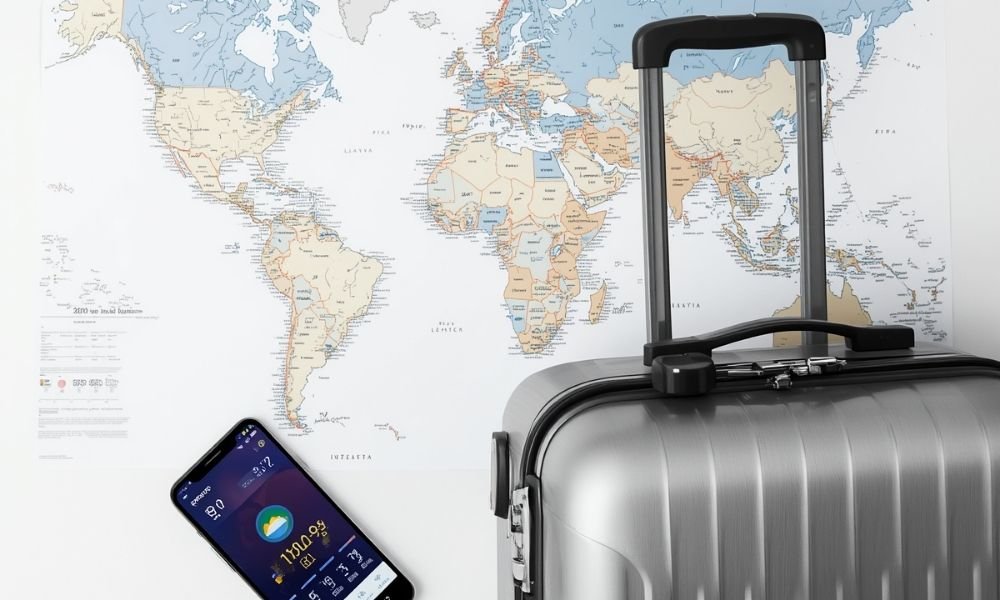
This decision controls everything else on your list. Carry-on only means you skip the baggage carousel, avoid checked luggage fees, and move faster through every airport. The trade-off is a strict size limit, usually 40 to 45 litres for most airlines, and the liquids rule for your toiletries.
If you are traveling for longer than two weeks or need specialist gear, checked luggage makes sense. For most trips under ten days, carry-on only is the smarter move.
Once you have answered those three questions, the list below applies to you.
The Documents and Money Section (Pack This First, Always)
The reason this goes first is simple. Losing your passport or your cards in a foreign country is a different category of problem from everything else on this list. These items go into your bag first, they travel in your carry-on, and they never go into checked luggage.
What to pack:
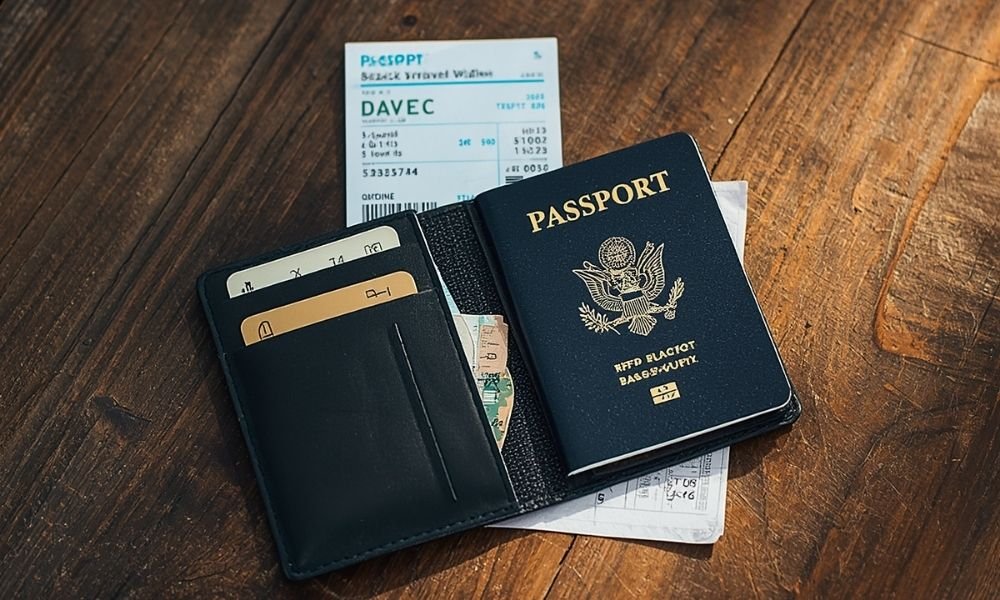
- Passport (check the expiry date right now, before you do anything else. Many countries require at least six months of validity beyond your travel dates)
- Physical copies of your travel insurance documents
- A printed copy of your accommodation address and booking reference for your first night
- Your debit or credit card, and one backup card from a different account
- A small amount of local cash for your destination (enough for a taxi and a meal when you land, before you find an ATM)
- An RFID-blocking travel wallet to protect your cards from contactless skimming in busy areas
One thing most people skip: Email yourself scans of your passport, travel insurance, and any visas before you leave home. If your bag is stolen and your phone is dead, you can pull those documents up from any device, anywhere in the world.
Clothing (The Part Where Most People Overpack)
The average first-time traveler packs for every possible version of their trip. The formal dinner that might happen. The hike they are probably not going to do. The cold snap that the forecast did not mention. They arrive with a bag they can barely lift and spend the whole trip rotating three outfits anyway.
The rule that actually works: Pack for seven days, plan to wash and repeat. Choose fabrics that dry overnight so you can wash items in the sink or at a laundromat without losing a day waiting for them to dry.
What to pack for a trip in terms of clothing:
- Five to seven pairs of underwear (merino wool if budget allows, it handles multiple wears without problems)
- Five to six pairs of socks, including at least one pair of compression socks for the flight
- Three to four tops that mix and match across your bottoms
- Two pairs of bottoms (one casual, one that can pass as smart if needed)
- One layer for warmth, a packable fleece or a lightweight down jacket depending on your destination
- One packable rain jacket that folds into its own pocket
- One outfit you would feel comfortable wearing to dinner somewhere that has tablecloths
The clothing items that earn their space every time:
Merino wool base layers are worth every penny. They regulate temperature in both hot and cold conditions, they resist odour so you can wear them multiple days without washing, and they pack down to almost nothing. If you take one upgrade from this list, take this one.
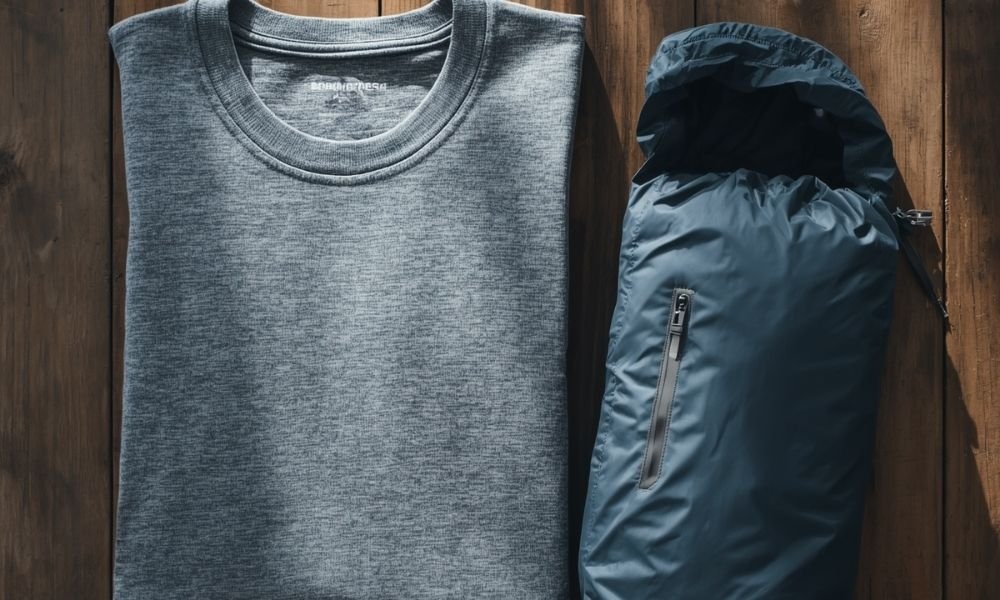
A packable rain jacket takes up about as much space as a large apple. The moment it rains and you do not have one, you will spend money on a souvenir poncho from a street vendor. Pack the jacket.
What to leave behind: The going-out outfit you brought for the one night you might go somewhere fancy. The extra pair of jeans that is basically the same as the first pair of jeans. The thick hoodie that takes up a third of your bag when a packable fleece does the same job in a tenth of the space.
Footwear (Two Pairs, Maximum)
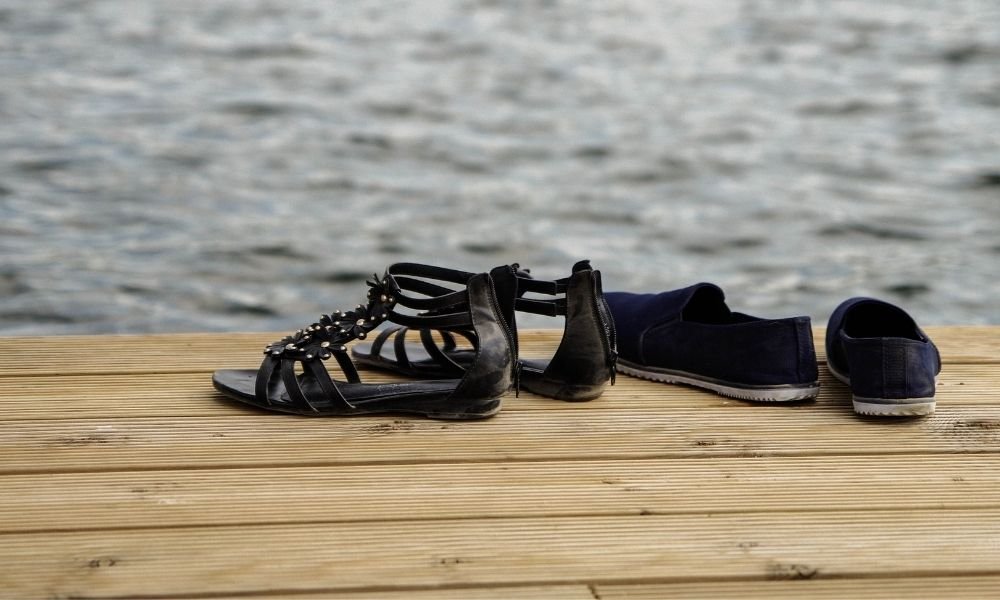
Shoes are heavy and they take up more bag space than almost anything else you own. The goal is two pairs that cover every situation you will actually face.
What to pack:
- One pair of comfortable walking shoes that you have already broken in before the trip. New shoes on a trip are a fast way to spend three days with blisters.
- One pair of sandals or light shoes that work for evenings, beaches, or places where your main shoes would feel too heavy
That is it. If you are hiking, swap the sandals for trail shoes. If your trip is entirely beach-based, swap the walking shoes for something lighter. Two pairs. No exceptions.
Tech and Power (The Category That Bites You If You Skip It)
Dead phone in an unfamiliar city is a specific kind of stress that nobody needs. This section is short because the items are straightforward, but every single one on this list matters.
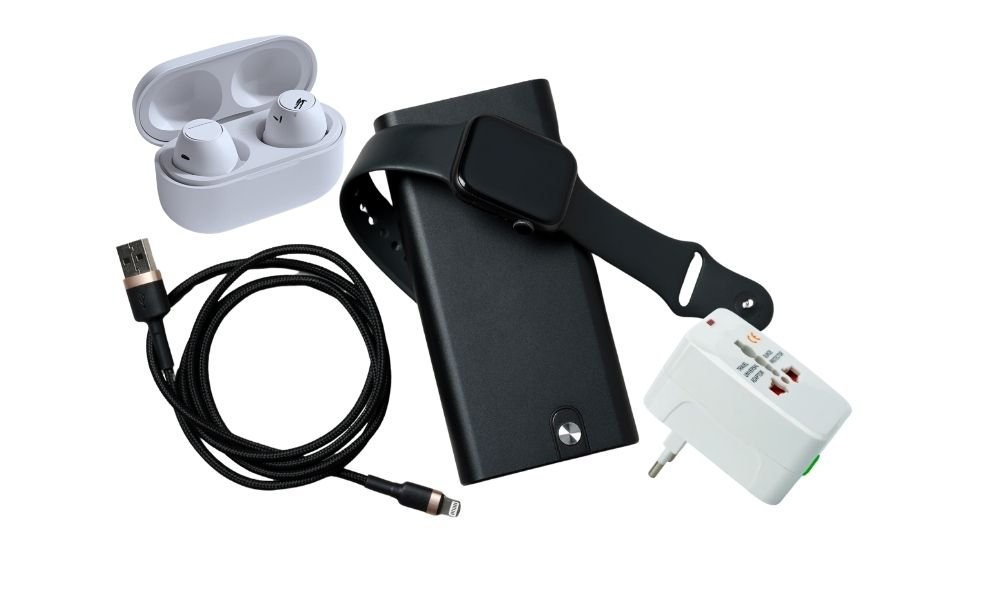
What to pack for travel in terms of tech:
- A universal travel adapter that covers your destination’s outlet type. Check this before you travel, because a lot of people assume their adapter covers everywhere and arrive in a country with a completely different socket
- A 20,000mAh power bank. Airlines allow power banks up to about 100Wh in the cabin, which sits comfortably within that range. This gives your phone four to five full charges
- A USB-C multi-port charging hub so you can charge your phone, power bank, and headphones from one socket instead of hunting for outlets
- A short USB-C cable. Short cables are dramatically easier to manage at airport seats than the full-length version
- Noise-canceling headphones or earbuds for flights, overnight trains, and any accommodation where street noise is a problem
- A waterproof phone pouch if your destination involves water activities
What to leave behind: Any gadget you bought specifically for travel but have never used at home. The probability that you use it abroad is very low and the space it takes is very real.
Health and Hygiene (The Stuff You Notice on Day Two When It Is Missing)
This is not glamorous. It is also the category that creates the most problems when people underpack it.
What to pack:
- Your regular prescription medications, with enough supply for the full trip plus a few extra days in case of delays. Keep these in your carry-on, never in checked luggage
- A small first aid kit with plasters, blister pads, antiseptic wipes, and basic pain relief. Hunting for a pharmacy in a foreign language with a blister on your heel is an avoidable experience
- Electrolyte sachets for dehydration, which hits harder when you are walking ten to twelve hours a day in a hot climate than it does at home
- Sunscreen appropriate for your destination. High-altitude and tropical locations need stronger SPF than you probably wear day-to-day
- Insect repellent if your destination is tropical or involves time outdoors near water
- A compact quick-dry travel towel. Many budget hotels and hostels do not provide towels, and this takes up almost no space
- Shampoo and conditioner bars instead of bottled product. No liquid restrictions, no leaks, and they last longer
The toiletries rule for carry-on only travelers: Liquids must be in containers of 100ml or less and fit in a single clear resealable bag. Buy travel-size versions of essentials or decant into small refillable bottles before you leave. Better option still is to switch to solid bars where possible and skip the liquids rule entirely.
Safety and Security (Do Not Skip This Section)
Most trips go fine. The travelers who have a genuinely bad experience are usually the ones who made it easy for something to go wrong. These items cost almost nothing relative to the problems they prevent.
What to pack:
- An RFID-blocking wallet or passport holder with RFID blocking. Contactless card skimming is real in tourist-heavy areas and an RFID wallet costs less than most airport meals
- A slim under clothes money belt for emergency cash and a backup card. Wear it under your clothing on travel days and in any crowded area
- TSA approved combination locks for your bag zips
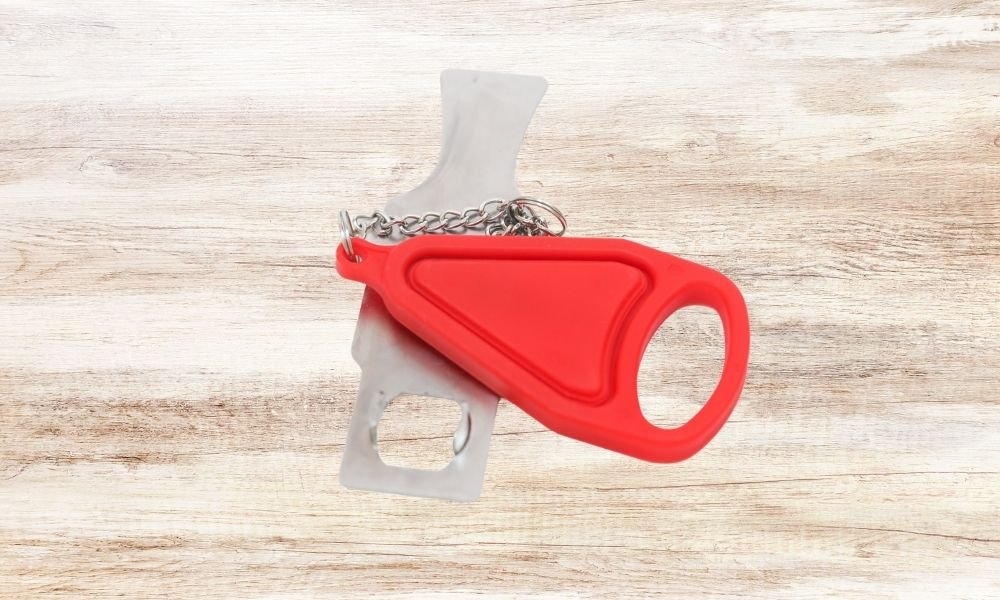
- A portable door lock for your accommodation. This item fits in your palm and prevents any door from being opened from outside, regardless of how secure your hotel claims to be. For solo travelers especially, this is non-negotiable
- A personal safety alarm, particularly for solo female travelers. It clips to a bag or keyring, pulls to activate, and creates enough noise to draw attention immediately
Sleep and Comfort (For Flights, Trains, and Budget Accommodation)
Sleep quality on a long trip is directly connected to how much you enjoy that trip. Arriving at a destination already exhausted from a ten-hour flight where you did not sleep is a rough start to any holiday.
What to pack for traveling in terms of sleep:
- A quality sleep mask that blocks light properly. The cheap eye masks from airline seat pockets do not block enough light to matter
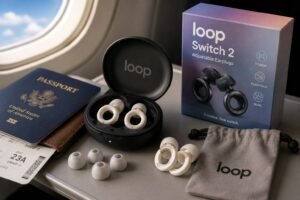
- Earplugs or noise-canceling earbuds. Hostel dormitories, street-facing hotel rooms, and overnight buses are all significantly more bearable with these
- An adjustable neck travel pillow if you are doing any overnight flights or long-haul legs. The inflatable kind packs smaller; the memory foam kind is more comfortable. Choose based on your bag space
Sleep mask plus earplugs plus a window seat is the closest most people will get to a comfortable long-haul experience without paying for business class.
Bag Organisation (The Section That Saves You Ten Minutes Every Morning)
Packing cubes changed how a lot of travelers pack, and not always for the better. The right approach to bag organisation depends on your travel style.
What actually works:
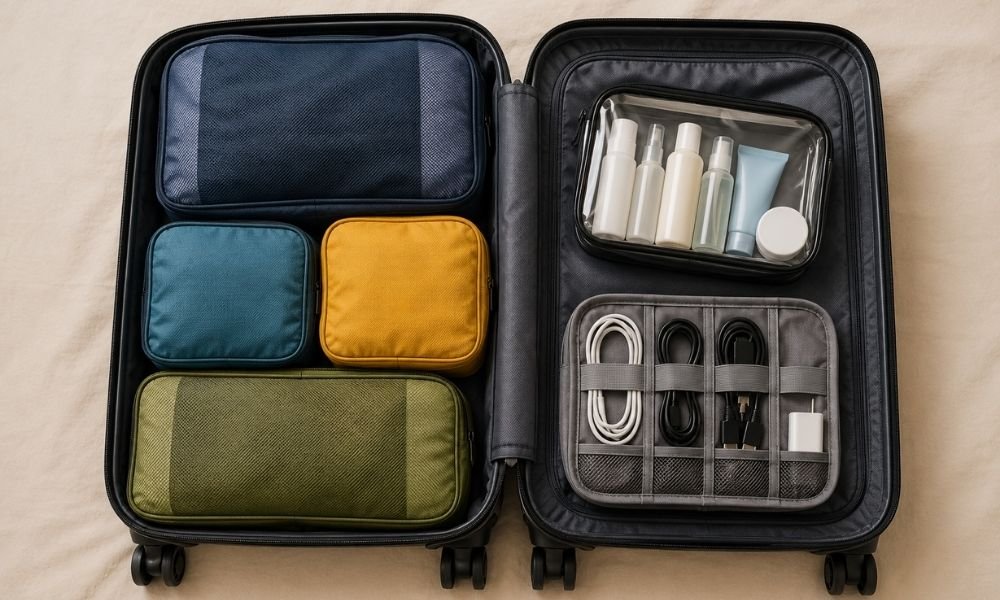
- Compression packing cubes for your clothing. These compress soft items down significantly and keep your clothes separated into categories so you can find what you need without unpacking everything
- A waterproof dry bag for electronics and documents in any destination that involves rain, water activities, or humidity
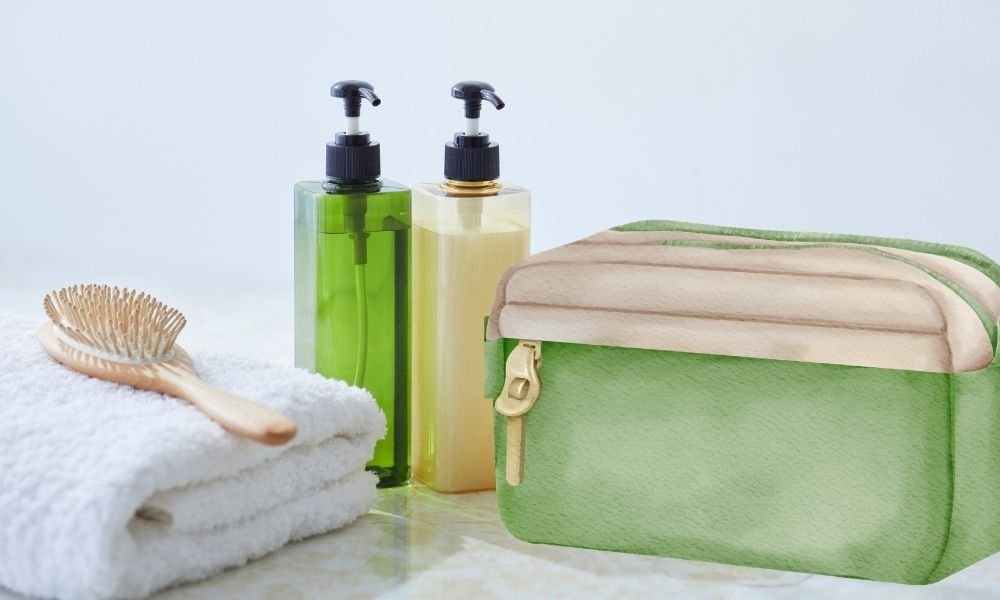
- A clear TSA-approved toiletry bag for your liquids, so security screening takes thirty seconds instead of five minutes
- A cable and accessories organiser pouch so your charging cables, adapters, and earbuds are never tangled at the bottom of your bag
Our honest take on packing cubes: They are worth using if you are moving between multiple locations on one trip. If you are staying in one place for the full trip, the organisational benefit is smaller. For multi-stop trips, they are genuinely useful.
What to Leave Behind (The Honest List)
This is the part of the packing list most guides skip. It is also one of the most useful.
Leave behind:
Full-size bottles of anything. You can buy shampoo, conditioner, and body wash at your destination. Paying airport or hotel prices once is cheaper than carrying 500ml bottles in your checked bag for two weeks.
More than two pairs of shoes. Every pair of shoes you add takes up the space that three to four clothing items would use. Two pairs covers every real-world scenario.
Physical guidebooks. They are heavy, they go out of date, and Google Maps does most of what they do better. Download offline maps for your destination before you leave home. That is free and weighs nothing.
The outfit options. Most travelers wear a fraction of what they pack. The items packed as backup or just in case are almost never used. If you are not certain you will wear it, it stays home.
The portable steamer that looked great online. If you are staying somewhere with an iron, use that. If you are not, wrinkles on a backpacking trip are not a problem anyone is trying to solve for you.
How to Actually Pack This List in Under an Hour
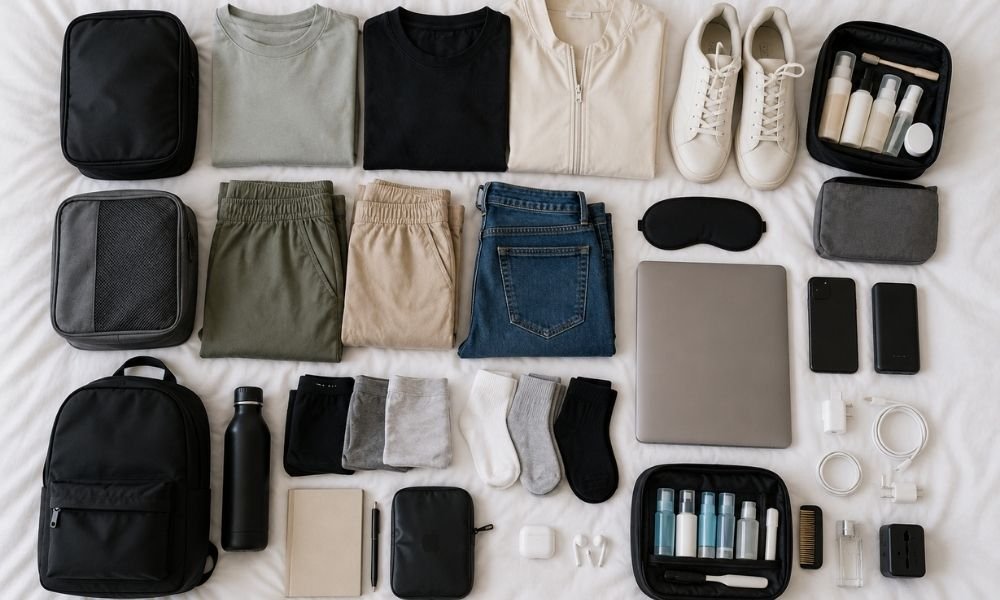
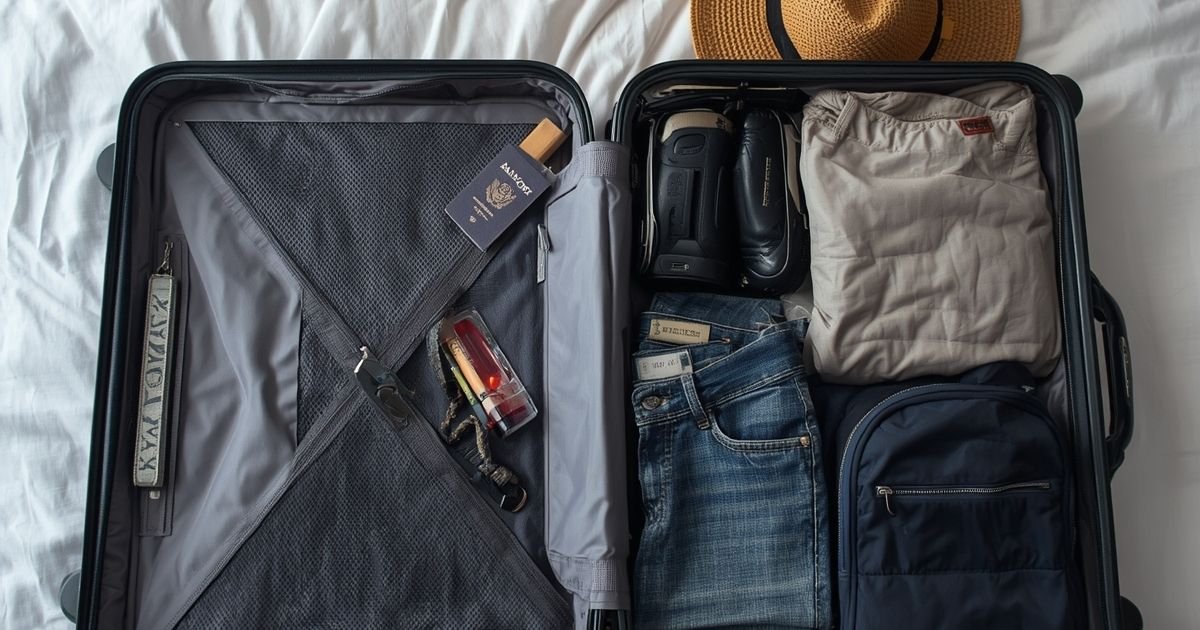
You have to start three to five days before your trip. Lay every item you plan to pack out on your bed before a single thing goes into the bag. Look at the pile. Remove anything you cannot give a specific reason for being there.
Then pack the bag.
Heavy items go at the bottom near your back. Shoes go in next, ideally in a bag to keep the rest of your gear clean. Clothing goes in compression cubes and sits in the middle. Electronics, documents, and anything you need during the journey go at the top or in an exterior pocket.
Weigh the bag. If it feels like it is going to destroy your shoulders by the end of day two, take something out. The goal is a bag you can carry for thirty minutes without stopping.
When you close the bag, run through this short check. Passport. Cards. Phone charger. Travel adapter. Power bank. Medications if applicable. Travel insurance documents. Everything else on this list is recoverable. Those seven things are not.
Frequently Asked Questions
What should I pack for a trip abroad?
The core list covers documents, clothing for seven days in quick-dry fabrics, one pair of walking shoes and one backup pair, a universal travel adapter, a power bank, a small first aid kit, your regular medications, a travel wallet with RFID protection, and travel insurance documents. Build from those and add destination-specific items like sunscreen, insect repellent, or cold-weather layers based on where you are going.
What to pack for travel in a carry-on only?
The 40 to 45 litre limit works for trips up to ten days with the right approach. Choose merino wool or quick-dry fabrics so you can wash and re-wear. Switch bottled toiletries to solid bars to avoid the liquids restriction. Use compression packing cubes to maximise the space you have. Pack shoes at the bottom and wear your bulkiest pair on travel days.
What are the most important things to pack for a trip?
In order of importance: your passport or travel ID, travel insurance documentation, your medications, a backup payment card separate from your main card, a power bank, a universal travel adapter, and offline maps downloaded to your phone before you leave home. Everything else on a packing list is easier to replace if it goes wrong. Those seven items are not.
How far in advance should I pack?
Three to five days before departure. This gives you time to identify anything missing while there is still time to order it with standard shipping. Packing the night before works if you have done this many times. For first-time and early-stage travelers, the night-before approach creates unnecessary stress and usually results in either overpacking to compensate or forgetting something important.
What to pack traveling for the first time specifically?
Everything on this list applies. The one additional thing worth noting for first-timers is to prioritise familiarity over optimisation. Pack the shoes you know are comfortable. Bring the toiletry products you know work for you rather than experimenting with travel versions. The first trip is not the moment to test unproven gear. Pack what you know, travel light, and use the experience to refine the list for every trip after this one.
As an Amazon Associate, Wandervoyant earns a small commission from qualifying purchases made through links on this page. This comes at no additional cost to you and helps keep this site running. We only recommend products we genuinely believe are worth your money.
Related reading: