
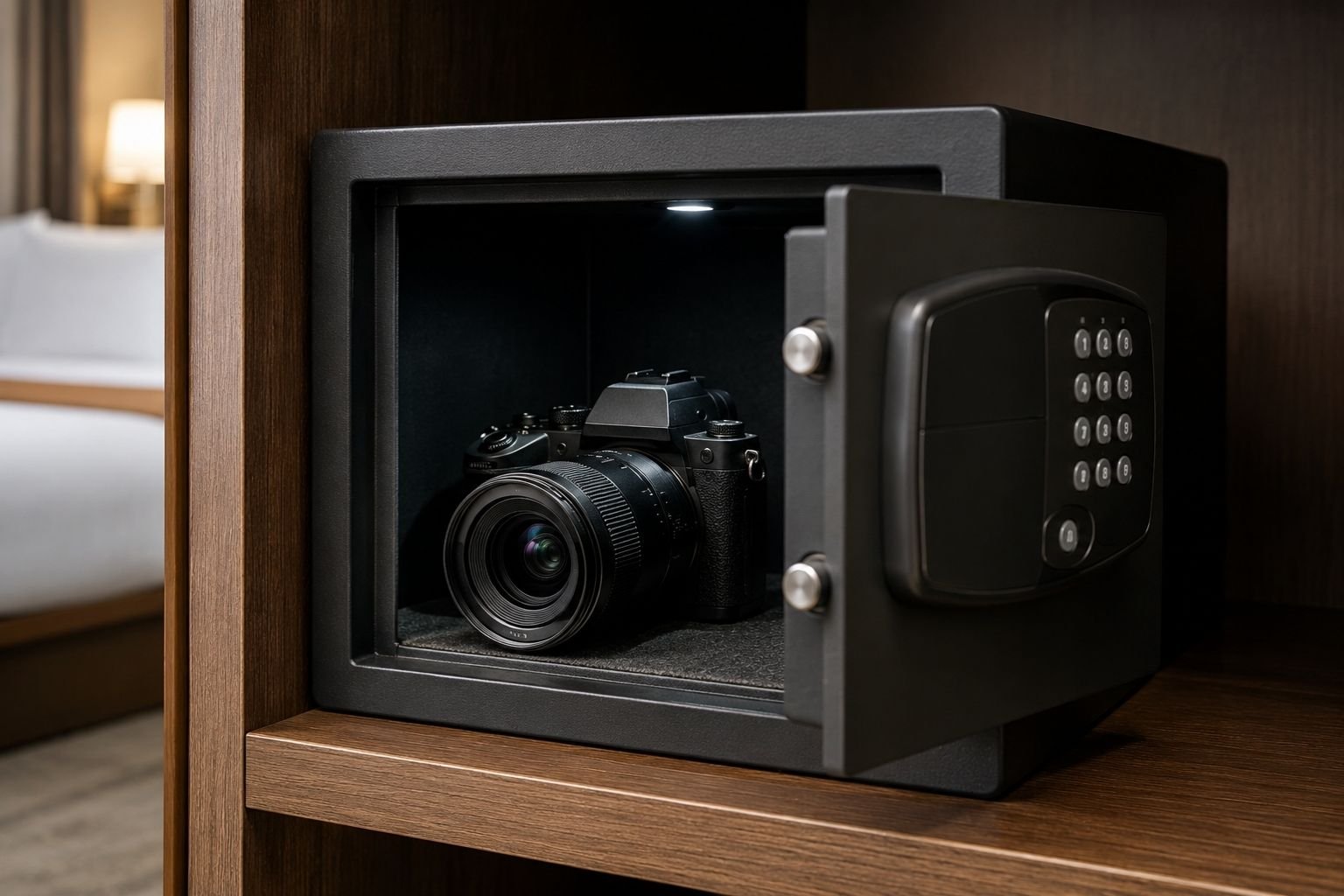
Buy the wrong ‘best travel camera for beginners’ based on a standard YouTube review, and there’s an 80% chance it spends your next vacation locked inside your hotel room safe
I know this because I have spent the last decade reviewing gear, traveling the world, and building a highly profitable business teaching people how to capture their travels. Over the years, I have watched thousands of beginners fall into the exact same financial trap.
It always starts with a fantasy. You watch a gorgeous, cinematic vlog of a creator strolling through Kyoto. They make it look so effortless. Inspired, you drop $1,200 on a highly recommended mirrorless setup, pack your bags, and fly out.
By day two of your actual trip, that is when the reality hits you. Your neck is sore from the heavy strap. Your camera bag is too bulky to fit into your daypack next to your water bottle. You find yourself constantly terrified of getting the lens wet in a sudden rainstorm, and you realize you have to navigate three levels of confusing menu settings just to take a quick photo of a plate of street tacos.
So, you make a compromise. You leave the heavy rig in the hotel room just for today. You step outside with just your phone, and you realize how much easier life is.
By the end of the trip, you have spent a thousand dollars on a very expensive, very heavy metal paperweight.
I call this the Hotel Safe Test. In 2026, almost every beginner travel camera on the market fails it.
I am writing this guide to make sure you do not buy a regret. We are going to bypass the useless spec sheets and look at how these things actually perform in the real world. I will show you why your smartphone is actually lying to you about your travel memories, and introduce you to the only three affordable cameras on the market today that you will actually look forward to carrying in your pocket.
Why Your Smartphone is Lying to You
Every smartphone manufacturer on earth spends billions of dollars to convince you that their triple-camera setup makes dedicated cameras obsolete. But if you have ever taken a photo of a breathtaking sunset only for it to look like a flat, muddy painting once you got home, you have experienced the smartphone lie.
Phones do not capture light anymore; they generate images.
Computational Fake-Outs
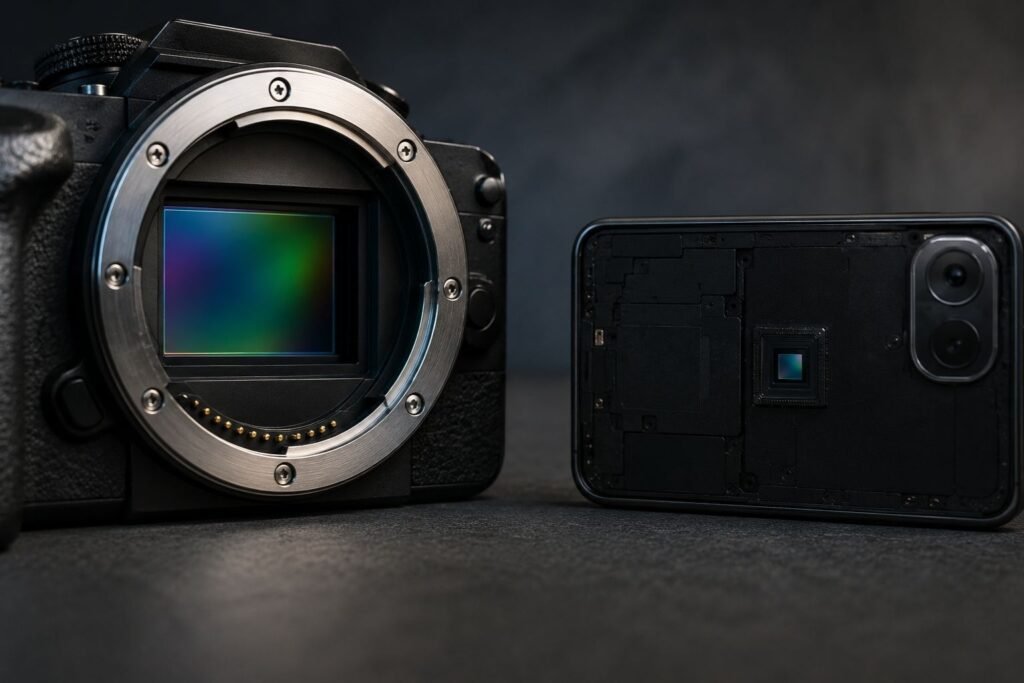
Because a phone is too thin to fit a physically large piece of glass, it has to cheat. It uses aggressive computational algorithms to artificially sharpen textures, blow out shadow details, and smooth over human skin.
When you take a picture with a modern phone, you are not getting a single raw exposure. Your phone quietly snaps a dozen rapid-fire images at different exposure levels, merges them together, and lets an AI processor decide what the scene should look like.
The result?
- The “Plastic” Face: The phone automatically detects human skin and smooths out the natural texture, leaving your travel companions looking like wax figures or video game characters.
- Aggressive Edge Sharpening: Landscapes are heavily overprocessed. Ancient brick walls in Rome or mossy forests in Kyoto get digitally outlined and sharpened until they look hyper-real, noisy, and completely artificial.
- Sterile Lighting: The software tries so hard to balance the bright sky and dark shadows that it removes all the natural mood and contrast of the moment. Everything looks evenly lit, flat, and entirely devoid of atmosphere.
The Physics Gap
Real cameras work on physics, not math.
A dedicated camera sensor is roughly ten times larger than the sensor inside an iPhone. That physical surface area allows it to gather real, organic light. This is why a real camera photo has true physical depth of field, often referred to as optical bokeh.
When you shoot a portrait on a smartphone, the phone has to use software to “guess” where your subject ends and where the background begins. The algorithm then applies a flat, digital blur to everything else.
This is why phone portrait modes constantly make glaring edge mistakes:
- Blazing right through the gaps in your hair and leaving patches of the background completely sharp.
- Accidentally blurring out your ears, eyeglasses, or the edges of your clothes.
- Creating a weird “cardboard cutout” look where your subject looks like they were poorly photoshopped onto a blurry background.
With a real travel camera, the background blur is created naturally by the lens glass bending physical light waves. The blur gently and realistically falls off as objects get further away from your camera, creating a deep, cinematic, three-dimensional image that no software algorithm can replicate.
If you want your travel memories to feel like actual cinema rather than a calculated algorithm, you need real glass and a real sensor.
The “No-Regrets” Travel Camera Grid
If you want to skip the technical deep dives and just find the exact camera that matches your travel style, use this quick-reference finder.
| The Traveler Persona | The Camera | The “Anti-Regret” Feature | Estimated Street Price |
|---|---|---|---|
| The “Zero-Editing” Aesthetic | Fujifilm X-M5 | Physical Film Simulation Dial (No editing needed) | ~$899 (Body Only) |
| The “Point-and-Shoot” Creator | Canon EOS R50 | AI Subject Tracking & Flip Screen | ~$679 (With 18-45mm kit lens) |
| The “Strict Budget” Traditionalist | Canon EOS R100 | True APS-C Sensor under $500 | ~$379 (With 18-45mm kit lens) |
A Quick Warning Before You Scroll: The prices above reflect current street pricing. In the camera world, buying the “body only” means you will not get a lens, and you will not be able to take any photos. If you are a beginner, always look for the one that includes the 18-45mm kit lens so you can start shooting the day your package arrives.
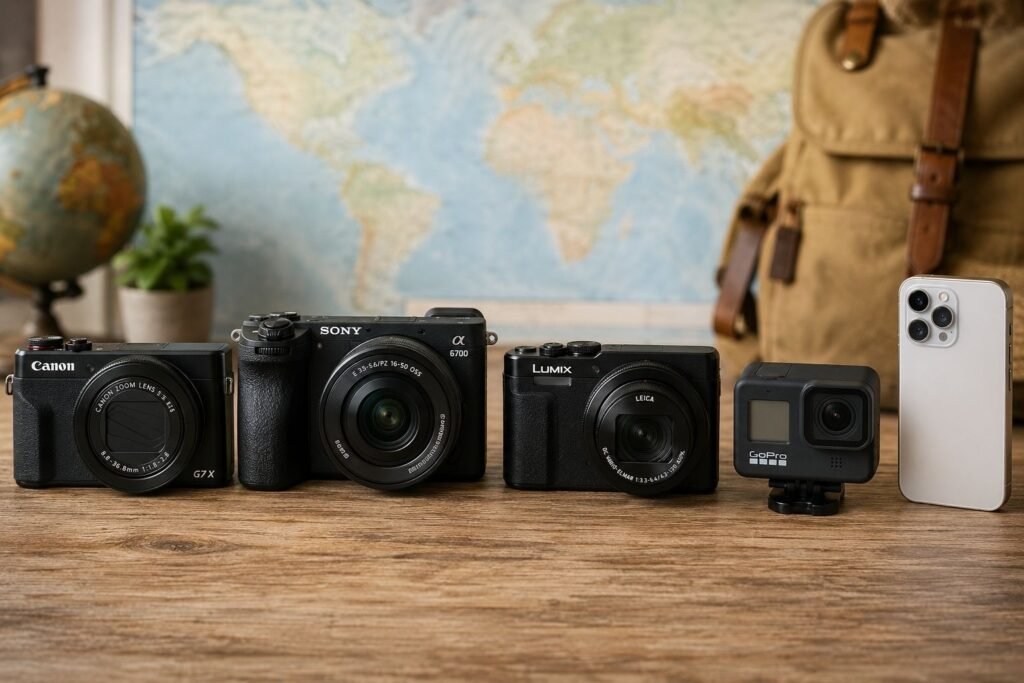
Three Travel Cameras That Actually Pass the Test
1. The “Zero-Editing” Champion: Fujifilm X-M5
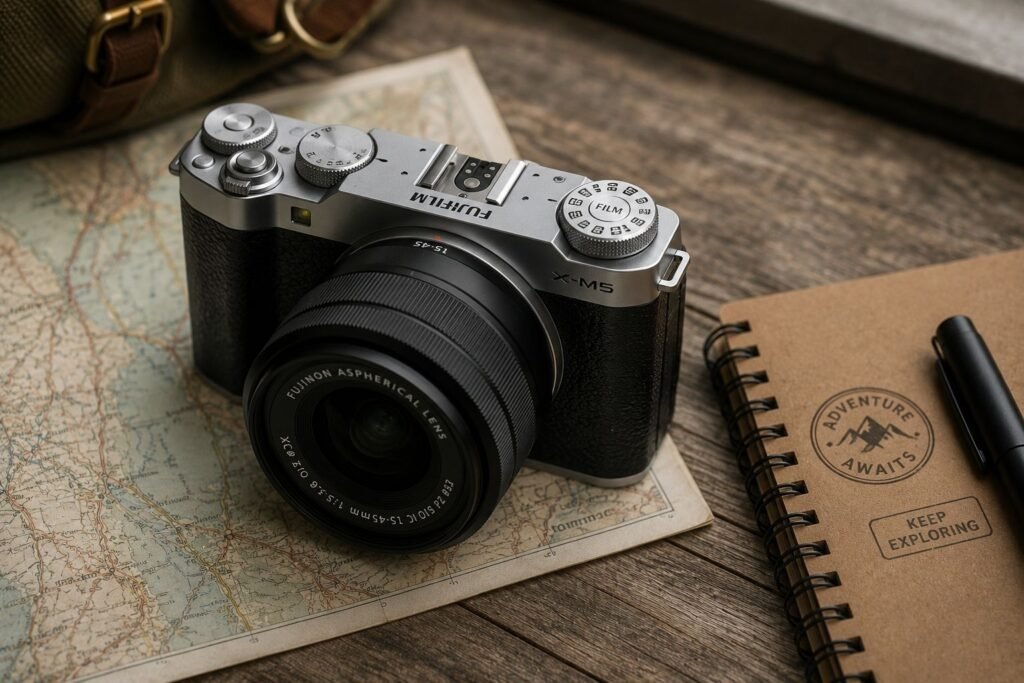
If you hate the idea of spending your vacation evenings crouched over a laptop, dragging slider bars in Lightroom just to make your photos look presentable, this is your camera.
The Fujifilm X-M5 is built entirely around speed, weight, and instant aesthetics. Weighing a mere 355 grams, this little machine is smaller than a paperback book. You can slide it into a small crossbody bag, throw on a lightweight strap, and completely forget it is there until you see something worth shooting.
The secret weapon here is the physical Film Simulation Dial built right into the top left plate.
Most camera companies make you dig through frustrating digital menus to change your color profiles. Fujifilm put theirs on a physical wheel. With a quick flick of your thumb, you can switch between twenty of Fujifilm’s legendary analog film profiles, including:
- Classic Chrome: Perfect for gritty European street photography, giving you deep, moody contrast and muted greens.
- Nostalgic Neg: Ideal for golden hour beach shots, adding a warm, amber-toned vintage look straight out of the 1970s.
- Acros: A rich, high-contrast black-and-white mode that makes old stone alleys and rainy city streets look like a classic film set.
You take the photo, transfer it wirelessly to your phone via their app, and it is instantly ready to post. No editing. No subscriptions. No wasted time in your hotel room.
The Honest Catch: To make this camera so incredibly small and affordable, Fujifilm had to cut one major feature: an electronic viewfinder. You have to compose and frame all your photos using the flip-out back screen. While the screen is bright and sharp, it can be a bit of a struggle to see clearly when you are shooting under blinding, direct midday beach sunlight.
Where to Buy:
2. The “Point-and-Shoot-Proof” Rig: Canon EOS R50
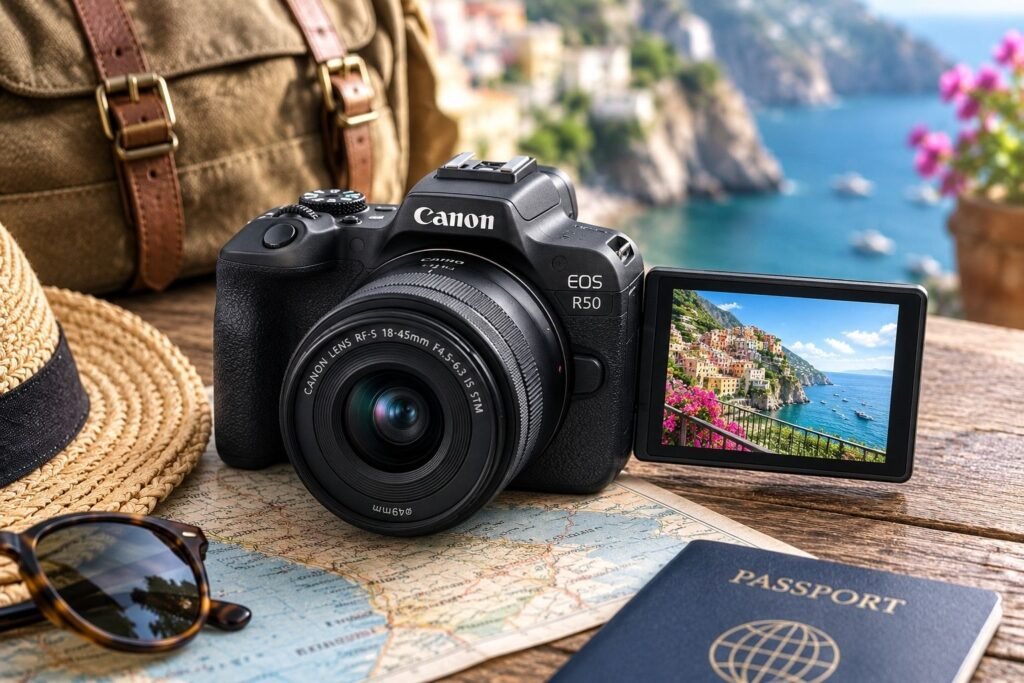
If you are terrified of manual settings, focal points, and blurry photos, the Canon EOS R50 is the closest thing to a foolproof camera.
The R50 is designed to bridge the gap between a smartphone and a professional body. It uses Canon’s highly advanced Dual Pixel CMOS AF II, an artificial-intelligence-driven autofocus system that automatically detects and locks onto eyes, faces, animals, and vehicles instantly. You do not have to worry about where to focus; you simply compose your shot, and the camera guarantees it will be tack-sharp.
It also features a fully articulating touchscreen that flips out to the side, making it incredibly easy to shoot overhead street scenes, low-angle architecture, or high-quality video of yourself for social media.
The Honest Catch: Canon’s native lens selection for this specific sensor size is still quite small. While the included 18-45mm kit lens is incredibly compact and perfect for travel, you will have fewer cheap upgrade options down the road compared to other systems.
Where to Buy:
3. The “Barebones Budget” King: Canon EOS R100
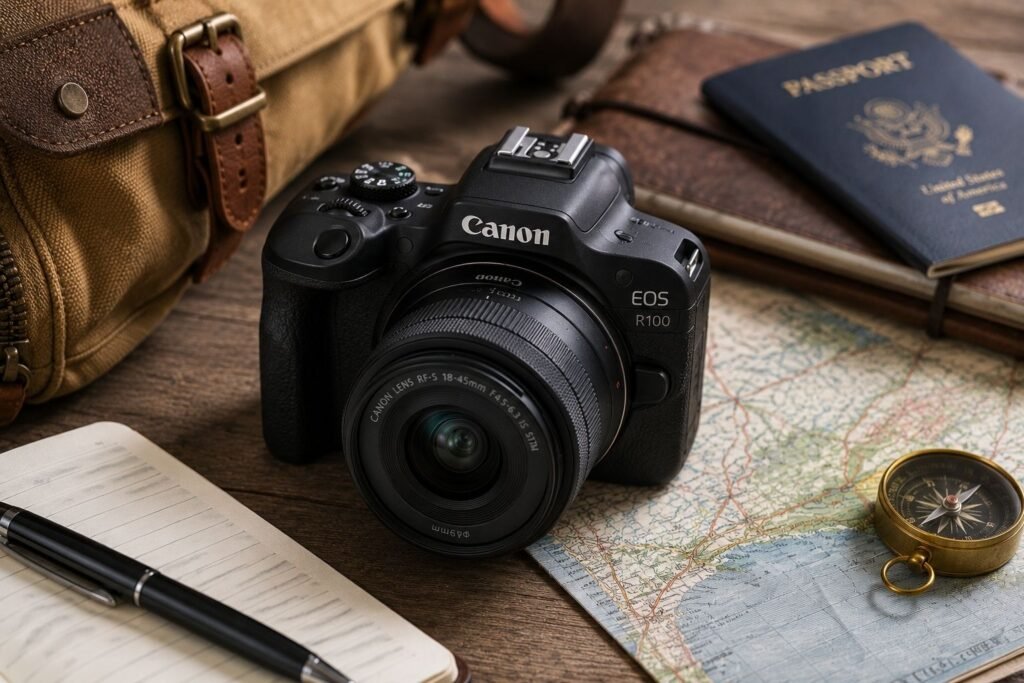
If your goal is to spend the absolute minimum amount of money possible while still getting a massive jump in photo quality over your phone, this is your entry point.
The Canon EOS R100 strips away every luxury feature to focus on one thing: delivering a massive, professional-grade 24-megapixel APS-C sensor at a budget price. Frequently selling with its kit lens for under $400, this camera captures the exact same raw image quality and light as cameras costing double the price.
It is lightweight, incredibly simple, and has a battery that easily lasts an entire day of heavy shooting. It is the perfect “no-frills” tool for learning the actual fundamentals of photography without paying for extra features you might never use.
The Honest Catch: The back screen is completely fixed—it does not tilt or flip—and it is not a touchscreen. This forces you to shoot traditionally using the electronic viewfinder. While some beginners actually prefer this for learning, it makes vlogging or taking selfies nearly impossible.
Where to Buy:
Stop Paying the “Beginner Tax” (Crucial Buying Warnings)
Before you pull out your credit card, you need to understand how the camera retail industry works. If you are not careful, you will end up spending hundreds of dollars on gear that will literally end up in a landfill.
The Amazon Bundle Scam
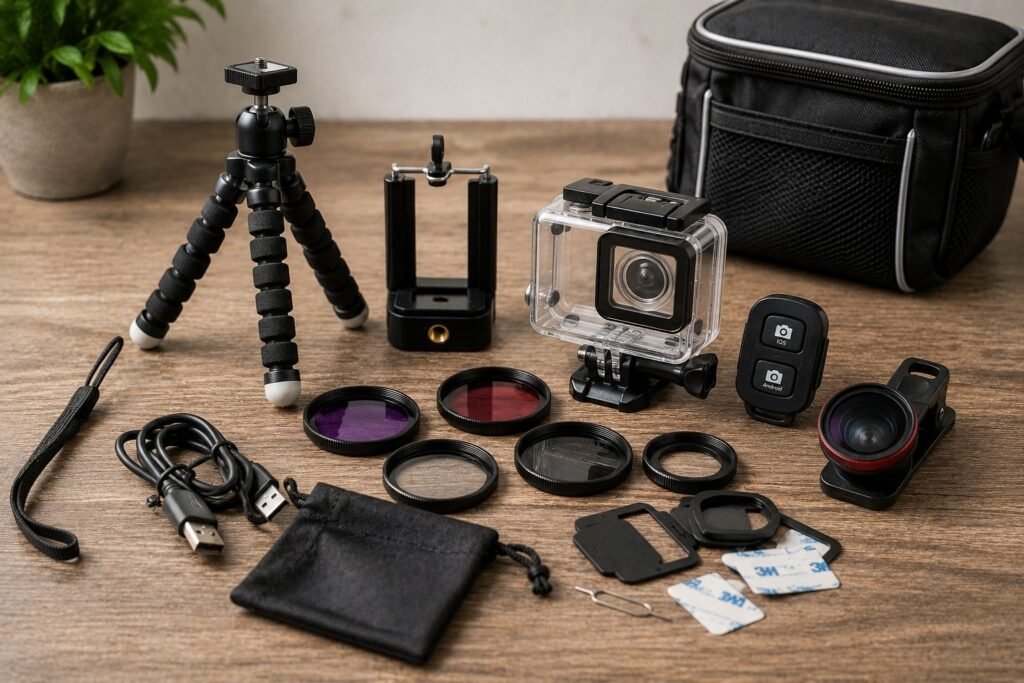
If you search for any of these cameras on Amazon or eBay, you will inevitably see listings that include the camera, a lens, and twenty different accessories for just $50 more than the camera alone. They look like an incredible deal. They will show you a bundle filled with plastic tripods, cheap colored filters, generic flash attachments, and useless cleaning kits.
Do not buy these.
These bundles are a trap designed to clear out cheap, unbranded e-waste. The tripods are so flimsy they will tip over in a light breeze, potentially breaking your new camera. The cheap glass filters will ruin the image quality of your expensive sensor, and the cleaning kits contain harsh chemicals that can strip the protective coatings off your lens. Buy the camera and the kit lens on their own from a reputable dealer. You do not need the extra clutter.
How to Actually Setup a Budget Canon EOS R100 System
If you do pick up the Canon EOS R100, you don’t need a giant backpack or expensive production equipment. To pass the Hotel Safe Test, your accessories should keep you fast, light, and low-profile. Here is the exact mini-setup I recommend to keep your R100 completely mobile:
- The Perfect Carry: Skip the giant, heavy camera backpacks that scream “rob me.” The compact design of the Canon R100 with its 18-45mm kit lens fits beautifully into a padded, weather-resistant crossbody sling.
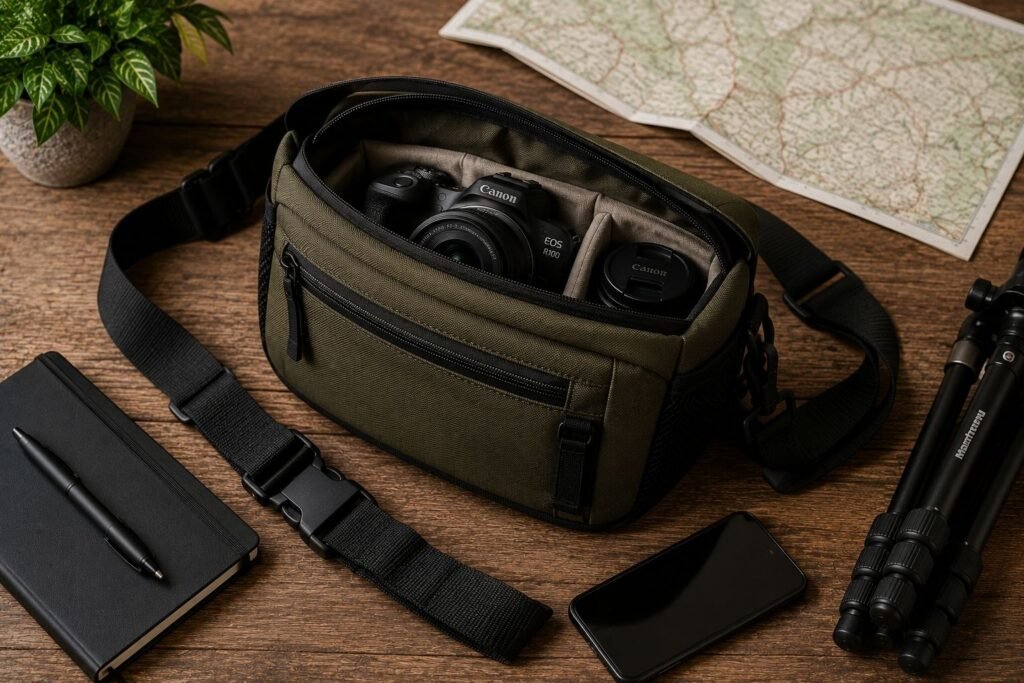
- Check Out My Favorite Travel Sling Bag for the Canon EOS R100 on Amazon
- The Ultra-Light Landscape Support: If you want to shoot crisp landscape exposures at dusk or long exposures of waterfalls, avoid heavy metal tripods. A carbon-fiber travel tripod collapses down small enough to fit inside a daypack bottle pocket.
- Check the Best Lightweight Travel Tripod for the Canon EOS R100 on Amazon
- The Vlogging & Street Setup: Since the Canon R100 doesn’t have a flip-out screen, you need an easy way to hold it stable at arm’s length if you want to shoot video or self-portraits. A solid, hand-held mini tripod doubles as a comfortable grip handle.
- Check the Best Travel Vlogging Hand Grip Tripod for the Canon EOS R100 on Amazon
The “One Lens” Rule
One of the biggest mistakes beginners make is buying a secondary zoom lens or a portrait lens at the exact same time they buy their camera. They assume they need a massive kit to get professional photos.
I tell all my students to follow the One Lens Rule: take your camera and its standard kit lens on at least one major vacation before you buy anything else.
Use that first trip to learn how the camera works. When you get home, look through your favorite photos. Are you constantly wishing you could zoom in closer? Or did you find yourself wanting a wider view for landscapes? Let your actual shooting style dictate your next purchase, not a salesman.
The Refurbished Hack
You do not need to buy brand-new gear to get a brand-new experience.
The camera world is full of hobbyists who buy expensive gear, let it sit on a shelf for six months, and then sell it to upgrade to the next shiny model. This is where you can save a fortune.
Reputable used marketplaces like MPB and KEH have teams of technicians who individually inspect, grade, and certify used camera gear. They even offer six-month warranties on everything they sell. Buying a “Like New” or “Excellent” condition camera body from these sites can easily shave 20% to 30% off the retail price, leaving you with more money to actually spend on your plane tickets.
Which One Belongs in Your Bag?
We have stripped away the marketing hype and looked at the real-world performance. When it comes down to it, the best travel camera for beginners isn’t the one with the most impressive spec sheet. It’s the one you’ll actually want to carry every day of your trip. Now it is time to make a choice.
- Get the Fujifilm X-M5 if… you want to focus entirely on the art of travel without spending a single minute editing photos on your computer. The colors are unmatched, the body is tiny, and it is built for the modern social media era.
- Buy the Fujifilm X-M5 on Amazon
- Get the Canon EOS R50 if… you want a foolproof, modern hybrid camera that guarantees sharp focus on every single shot, whether you are shooting portraits, street scenes, or travel vlogs.
- Buy the Canon EOS R50 on Amazon
- Get the Canon EOS R100 if… you refuse to let a tight budget stop you from getting professional-grade photo quality. It is simple, traditional, and the cheapest way to start shooting on a real sensor.
- Buy the Canon EOS R100 on Amazon
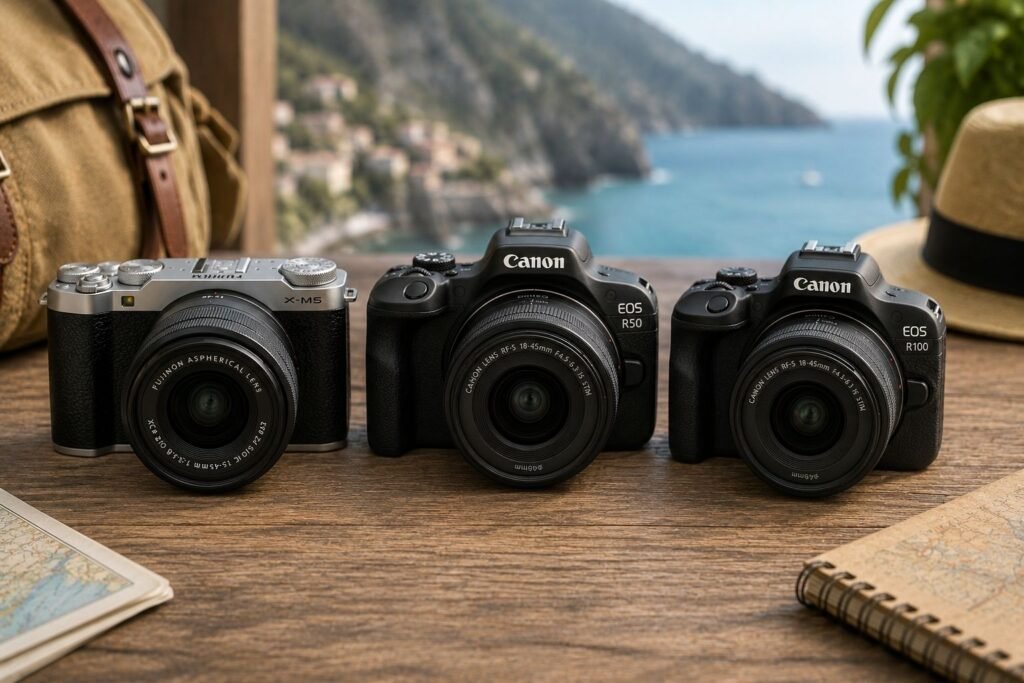
Whichever one you choose, you’ll walk away with a camera that passes the Hotel Safe Test, which, at the end of the day, is the only real measure of the best travel camera for beginners.
Links in this post are affiliate links. This means we may earn a small commission if you make a purchase through them, at no extra cost to you. As an Amazon Associate, we earn from qualifying purchases. We only recommend products we believe are genuinely useful. Thank you for your support.