Disclosure: As an Amazon Associate I earn from qualifying purchases. Links on this page may earn me a small commission at no extra cost to you.
Greek ferry tips matter more than almost any other part of island-hopping planning, because the ferry is the one thing that can break a tight schedule. Most crossings run smoothly.
But wind, port changes and a missed gate can turn a relaxed day into a scramble, and a little preparation makes all the difference.
This guide covers how Greek island ferries work, how to book, what to do at the port, how wind affects sailings and a step-by-step plan if your ferry is delayed or cancelled.
It’s written for the Cyclades, including Paros, Naxos, Milos and Syros. If you’re still choosing islands, start with my guide to the quiet Greek islands.
Quick Answer: 10 Greek Ferry Tips
- Book early in July and August, and plan flexible connections.
- Check which Athens port your ferry leaves from, and which gate.
- Arrive at the port with plenty of time, and don’t assume the gate is close.
- Keep your tickets on your phone and a backup.
- Don’t book a ferry the same day as a flight home.
- Watch the wind forecast, especially in July, August and winter storms.
- Check your operator’s updates on the morning of travel.
- Pack seasickness remedies before you board, not after.
- Know your rights if a sailing is delayed or cancelled.
- Build in buffer days at the end of your trip.
How Greek Island Ferries Work
Greek ferries come in two broad types. Conventional ferries are larger, slower and more stable, with decks, seats and cabins. High-speed boats are faster but smaller, and they tend to be more affected by rough water.
Crossing times vary by vessel and season. Athens to Paros, for example, takes roughly 3 to 5 hours depending on the boat. Ferry duration from Athens to Paros typically ranges from 3.5 to 5 hours.
Different operators run different routes, so there’s no single timetable. That’s why most travelers use a booking site or an operator site to compare options.
Which Athens Port: Piraeus, Rafina or Lavrio?
Piraeus is the main gateway for most Cyclades routes and is where you’ll usually go for Paros, Naxos, Syros and Milos. Rafina and Lavrio also have services to some Cyclades. Rafina serves islands including Naxos, Paros, Syros and Tinos, while Lavrio serves others such as Milos, Syros and Kea.
Why this matters: in strong wind, one port can be closed while another operates. In one reported case, services at Piraeus ran normally apart from one cancelled sailing, while Rafina and Lavrio were under a sailing ban. Always check the port on your ticket, not just the island name.
How to Book
- Operator websites (such as Blue Star Ferries, Hellenic Seaways and SeaJets) show their own routes and rules.
- Booking platforms (such as Ferryhopper and Direct Ferries) compare several operators in one place.
- Local agents can help with complicated routes or changes.
Compare options, check what the ticket includes and check the change and refund terms before you pay. In July and August, book as early as you can, and prefer routes with more than one daily sailing so a cancellation leaves you an alternative.
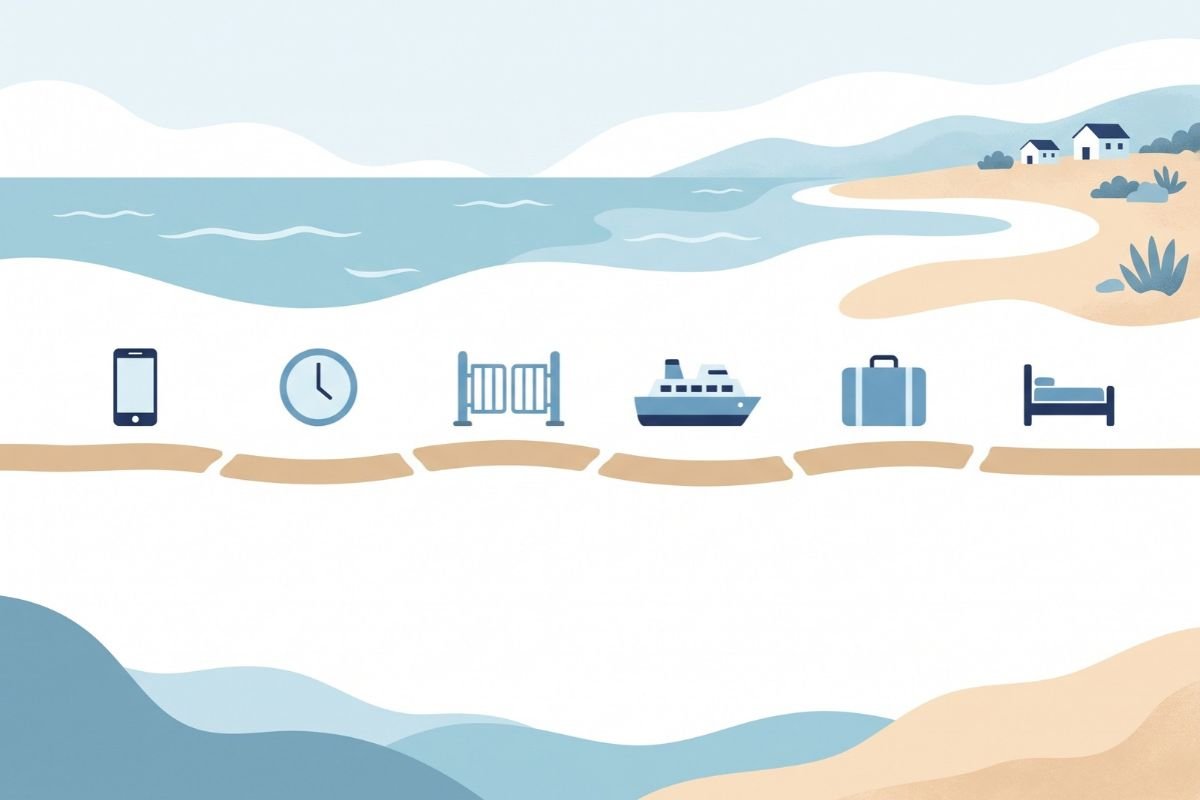
Tickets, Check-In and Boarding
Know your gate. Piraeus is huge. It can take around an hour to walk from one side of the port to the other, so confirm your departure gate before you head there. Your ticket usually names the gate, and the screens at the port show updates.
Arrive early. Foot passengers should be there at least an hour before departure, and travelers with a rental car 1.5 to 2 hours early. Rules differ by operator and vessel, so follow the time on your ticket.
Use your e-ticket. Some operators offer online check-in. Blue Star Ferries, for example, opens web check-in from 48 hours down to 2 hours before departure. Check what your operator offers, and keep a screenshot in case your signal drops.
Carry ID. Keep your passport or ID with your ticket, since you may be asked for it.
What to Carry on the Ferry
Keep a small daypack with your passport, tickets, charger, water, a snack, a light layer and any seasickness remedy. The rest of your luggage goes in the luggage area, so keep your main bag light. For the full list, see my Greek island packing list.
The Meltemi and Sailing Bans
The meltemi is a strong seasonal wind that mostly affects the Aegean in July and August. But wind can disrupt ferries at other times too. In winter, strong southwesterly winds led authorities to impose a sailing ban from the main Athens ports in January 2026.
When winds reach very high levels, port authorities can stop departures. Winds of 8 to 9 on the Beaufort scale have caused serious disruption to ferry services. Sometimes the ban isn’t total: some operators run specific routes at their own risk, as the regulations allow.
What to do: check the forecast a few days ahead, and check your operator’s updates the morning you travel. The Coast Guard advises travelers to check with their ferry company for new departure times.
If Your Ferry Is Cancelled: A Step-by-Step Plan
- Stay calm and check official updates. Look at your operator’s website or app, and your booking confirmation email.
- Confirm what has changed. Is it cancelled, delayed or moved to another port or time?
- Contact the operator or the agent you booked through. There may be no carrier staff on site, so you may need to contact them yourself to arrange re-routing or a refund.
- Decide: re-route or refund. Look at the next sailings to your island, and at routes from another port.
- Tell your accommodation. Let your next host know you’re delayed, and ask whether your current room can extend.
- Protect onward plans. If you have a flight, hire car or tour booked, contact them early.
- Keep proof. Save messages, receipts and screenshots for refunds or insurance.
- Check the next morning too. Winds can ease overnight, and extra sailings sometimes appear.
Your Rights in Brief
This is general information, not legal advice. Rules and enforcement vary, so check your operator’s terms and the official guidance.
EU rules for passengers by sea apply to most ferries. If a departure is cancelled or delayed by more than 90 minutes, passengers can choose between re-routing at no extra cost and reimbursement.
But weather changes the picture. The right to accommodation and transport doesn’t apply if the carrier shows the cancellation was caused by weather that endangers safe operation. Compensation for late arrival isn’t paid either when weather conditions are the cause.
In practice that means a refund or alternative sailing is likely, but a free hotel night probably isn’t. That’s why travel insurance and buffer days matter.
Protect Your Flight Home
- Don’t book a ferry and a flight on the same day.
- Plan to be back in Athens (or near your departure airport) at least a night before you fly.
- Check whether your travel insurance covers missed flights from ferry cancellations.
- On windy days, consider moving your travel earlier rather than later.
Seasickness
Some travelers get seasick on windy crossings, especially on smaller high-speed boats. Pick a seat in the middle of the vessel, look at the horizon, avoid heavy meals and take any remedy before boarding.
Wristbands help some people, and results vary. Ask a pharmacist if you’re prone to motion sickness. Check Amazon for the seasickness wristbands.
Notes for the Four Quiet Islands
- Syros: a well-connected hub, so it works as a first or last stop.
- Paros: an excellent hub, with onward links to nearby islands.
- Naxos: very good links, including with Paros.
- Milos: easier as its own add-on, so check connections for your exact dates before you commit.
Timetables change by season, so check the current schedule for every leg. For routes and timing, see my guide to 10 days in the Cyclades.
Sample Ferry-Day Timeline
| Time before departure | What to do |
|---|---|
| Night before | Check the wind forecast and your operator’s updates; charge your phone. |
| Morning | Check for delays; confirm your gate; eat something light. |
| 2 hours before | Leave your accommodation; take your tickets and ID. |
| 1 hour before | Be at the port; find your gate. |
| 30 minutes before | Board; find a seat; stow your bag. |
| On board | Keep your daypack close; take any seasickness remedy early. |
| Arrival | Check your accommodation transfer; confirm your return plan. |
Adjust the times to your operator’s rules.
Frequently Asked Questions
Which port should I use in Athens?
Piraeus is the main port for most Cyclades routes. Check your ticket for the exact port and gate.
How early should I arrive for a Greek ferry?
Foot passengers are usually advised to arrive at least an hour before departure. Follow the time shown on your ticket.
What happens if my ferry is cancelled because of wind?
You’ll usually be offered re-routing or a refund, but not necessarily accommodation or compensation. Contact your operator or agent as soon as you can.
Is it safe to book a flight the same day as a ferry?
It’s risky. Allow at least a night’s buffer before a flight home.
Which islands are best to combine?
Syros, Paros and Naxos are well linked. Milos works best as an add-on.
Want the Full Plan Behind the Ferries?
Ferries are only one piece. Choosing the right island, timing your trip and planning routes is where trips succeed. That’s what Quiet Greek Islands Guide: Paros, Milos, Naxos and Syros (No Cruise Crowds) covers, including a ferry cancellation playbook. Get it on Amazon.