I am writing this Mexico solo travel checklist because of one night at the Mexico City metro station I will not easily forget, 11 PM, dead phone, no pesos, and a taxi driver demanding $80 for a 15-minute ride while three other drivers watched to see if I’d cave.
I had read four blog posts about Mexico City before that trip. Not one of them mentioned what happens when your phone dies at night and you’re the only person on the platform who doesn’t know where anything is.
That night I learned the difference between researching Mexico and actually being ready for Mexico. They are not the same thing, and nobody tells you that until you’re standing in a parking lot doing math you can’t afford to get wrong.
Most Mexico travel guides recycle the same ten tips. Drink bottled water. Watch your bag. Learn some Spanish. All true, all useless when you’re the one alone at the bus station at midnight trying to figure out if the guy offering to “help” is being kind or setting you up.
This checklist covers the 47 things nobody warned me about, the specific gaps between reading a blog post on your couch and standing there panicking in real time.
It’s written for solo travelers. Not couples splitting the mental load, not families with someone else driving, not tour groups with a guide handling logistics. When you travel alone, the risks change.
The budgets change. Getting sick alone in a hostel in Oaxaca is a different problem than getting sick with someone who can find you a pharmacy. I learned that one the hard way too, curled up on a bottom bunk googling symptoms in broken Spanish at 2 AM.
Every section here connects to something you can actually do about it, including a few GetYourGuide experiences I’ve used myself to remove the guesswork on days when I didn’t have the bandwidth to figure it out solo.
That first-night airport transfer I now book without fail? It exists because of the guy who wanted $80 for fifteen minutes. A driver meets you with a sign. No haggling, no wandering around a parking lot at night with a dead phone doing currency conversion in your head.
This checklist is for first-timers, solo travelers of every kind, and anyone who wants to experience Mexico instead of just surviving it. By the end you’ll have real cost breakdowns instead of vague “Mexico is cheap” nonsense, safety habits that hold up outside the tourist bubble, and a printable one you can actually use instead of just bookmarking and forgetting.
If you haven’t nailed down the basics yet, budget, timeline, the general order to do things in, I’ve got a full walkthrough for that too: how to plan a trip step by step. This one picks up where that leaves off, once Mexico is the answer and solo is the plan.
Let’s start with the decision that determines whether the rest of this trip goes smoothly: picking the right place to be alone in the first place.
Mexico Is Not One Place, and Booking It Like One Will Wreck Your Trip
A woman I met in a CDMX hostel had four days in Mexico and had booked one night in Cancun, one in Mexico City, and one in Oaxaca. She thought she could “hit the highlights.” She spent two of her four days on planes and buses, saw nothing properly, and left convinced Mexico was exhausting. It’s not. Her itinerary was.
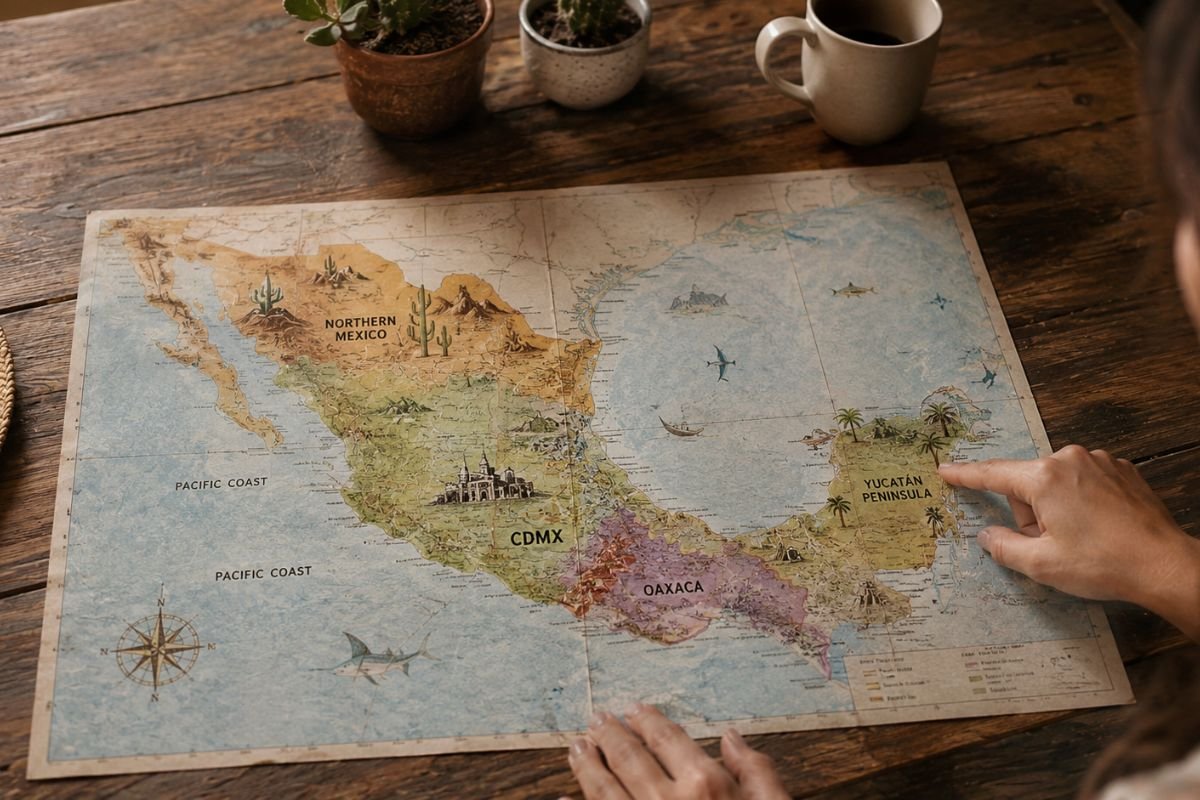
Mexico is roughly the size of Western Europe, and it feels like it once you’ve spent time in more than one region. Cancun and Tulum are beach resorts, cenotes, and Mayan ruins, built almost entirely around tourists.
Mexico City is a different country entirely: museums, food that genuinely competes with Tokyo, and altitude that will flatten you if you show up expecting sea level.
Oaxaca runs on its own timeline, English gets rarer outside the main square, and if you give it a few days you’ll understand why people talk about the mezcal and mole here the way they do.
Sayulita and the smaller Pacific coast towns are full of long-term expats and surfers who never left. Northern Mexico gets skipped by almost every guide, which means fewer crowds and a genuinely different safety calculus you need to research separately.
Solo, this decision matters more than it does for couples or groups. Solo in Cancun’s Hotel Zone is basically frictionless, everyone speaks English, the infrastructure exists entirely to serve tourists.
Solo in Oaxaca is a real test of your Spanish and your comfort navigating without a safety net. Neither is wrong. Just know which trip you’re actually signing up for before you book flights.
If you’re flying into Cancun and want the ruins without the cruise ship stampede, book the GetYourGuide Chichen Itza Early Access Tour and go before 9 AM. I did the late-morning version once, arrived to find four tour buses already there, and spent more time dodging selfie sticks than looking at the pyramid.
“Is Mexico Safe?” Is the Wrong Question to Ask
Everyone asks this before they book. It’s the wrong question, because Mexico doesn’t have one safety level, it has thirty-two, one per state, and they vary wildly.
Yucatán is at Level 2, exercise caution, same as France. Tamaulipas sits at Level 4, do not travel, same as active war zones. Lumping those together is like asking “is the US safe” and getting an answer that applies equally to Vermont and a random block in a city you’ve never been to.
Check the U.S. State Department’s Mexico travel advisory by state, not by country. Most tourist-directed crime is petty (pickpocketing, taxi overcharging, the occasional drink spiked in a party bar), not the cartel violence that dominates headlines. That violence is real and it’s targeted, and it mostly doesn’t touch the places you’ll be spending your vacation. Share your live location with someone at home.
A cheap personal safety alarm clipped to your bag does more for your peace of mind than any amount of doom-scrolling news articles the week before you leave.
Book the Shoulder Season, Thank Yourself Later
December through April is gorgeous and everyone knows it, which means you’re paying triple for a hostel bed and fighting spring breakers for elbow room at Chichen Itza. I went in July once assuming rainy season meant “ruined trip.” It meant one loud storm every afternoon around 3 PM and cenotes with nobody else in them all morning.
May and November split the difference: good weather, thinner crowds, and it’s actually easier to meet people in hostels when the hostel isn’t a zoo.
The FMM Slip That Can Ruin Your Departure
Nobody explains this one properly. You get a small paper slip on arrival called the FMM. Lose it, and you’re paying a fine and losing an hour at the airport arguing with immigration while your flight boards without you. Photograph it the second you get it. I keep mine folded inside my passport and photographed in three separate places, because I lost one in Playa del Carmen and spent ninety minutes at the airport in Cancun that I will never get back.
The 180 days everyone quotes isn’t guaranteed either. Officers can hand you 30, 60, or 90 at their own discretion, and there’s no appeal process at the counter. If you get shorted, you can exit to Belize or Guatemala and re-enter for a fresh stamp.
Insurance Is the One Thing You Won’t Regret Buying
A guy I met in a Sayulita hostel got food poisoning bad enough to need a private hospital. No insurance. The hospital wanted payment before they’d treat him, cash, on the spot, for a condition he couldn’t stand up long enough to negotiate about.
He ended up calling his mom to wire money at 2 AM while doubled over in a waiting room. SafetyWing costs less than one bad night out in Tulum, and it covered a similar situation for me after a $250 deductible, no upfront cash standoff, no calling anyone at 2 AM.
Pesos, Not Dollars, and Never Say Yes to “Charge in USD”
Tourist zones will happily take your dollars. They’ll also quietly tax you 10 to 15 percent for the privilege through a bad exchange rate. Pay in pesos. When an ATM asks if you want to be charged in USD, the answer is always no, that’s dynamic currency conversion and it exists purely to skim you. A no-foreign-transaction-fee card pays for itself in the first week.
Data the Moment You Land, Not Two Hours Later
I once landed in Mexico City at 10 PM planning to grab a SIM at the airport kiosk. It was closed. I spent the next ninety minutes trying to find my hotel with no maps, no Uber, and a taxi driver who insisted the price didn’t need negotiating. An eSIM through Airalo, loaded before you board the plane, means you land working. No kiosk hunt, no standing in an arrivals hall doing math on the fly.
Fly Into CDMX, Not Cancun, If You’re Actually Seeing the Country
Cancun looks cheap on the flight search until you’re the person paying $200 and losing twelve hours on a bus to get to Oaxaca. Mexico City is the real hub, cheapest domestic connections, most flexibility if your plans change mid-trip.
If you’re landing in CDMX, book the GetYourGuide Teotihuacan Hot Air Balloon at Sunrise for your first morning. Jet lag wakes you up early anyway. Might as well be floating over pyramids instead of staring at a hotel ceiling.
Get the region and the logistics right before you book, and everything downstream gets easier. Get them wrong, and you’ll spend your trip fixing avoidable mistakes instead of living in the country you flew here for. Next up: what actually needs to be in your bag, and the six things you’ll swear you can buy there and can’t.
The “Dress Like a Local” Myth: What Actually Matters
I packed for Oaxaca like I was sneaking into a nightclub: black jeans, going-out top, the works. Then I spent a week getting side-eyed outside a church because my shoulders were bare and everyone else’s weren’t.
Meanwhile a friend who did Tulum in board shorts and a tank top for ten straight days never got a second look. “Dress like a local” is advice that assumes Mexico is one place. It isn’t, so the rule that actually matters is where you are, not some universal tourist-proofing outfit.
In beach towns like Tulum and Sayulita, tourists outnumber locals by so much that nobody’s paying attention to your outfit. Wear what you want. In CDMX neighborhoods like Roma and Condesa, the fashion bar is genuinely high, you’ll stand out more in hiking sandals and a fanny pack than in a decent pair of jeans.
In small towns, churches, and indigenous communities, cover your shoulders and knees. That’s not about safety. It’s about walking into someone’s home turf with basic respect.
Solo female angle: the “don’t wear shorts” advice you’ll read everywhere is mostly outdated for tourist zones. The actual risk factor isn’t the outfit, it’s walking alone at night, in any outfit, in an unfamiliar area. Dress for the church, not for the catcallers, because the catcallers were never actually about the clothes.
One detail everyone leaves out: night buses run their AC like they’re trying to preserve a body. Bring a layer you’d normally consider overkill.
Shoes: The Most Underrated Safety Item
By day three in Guanajuato I had two blisters, one rolled ankle, and a growing hatred for the cobblestones that every guidebook photographs so lovingly. I’d packed flip-flops because “it’s Mexico, it’s hot.” Nobody mentioned that colonial cities are basically ankle-sprain obstacle courses, or that Mexico City alone will have you walking ten-plus miles a day on sidewalks that just end without warning.
Pack three pairs and stop overthinking it: broken-in waterproof walking shoes for cities and ruins, sandals with actual ankle straps (Tevas or Chacos, not the flip-flops that got me in Guanajuato) for cenotes and beach days, and one pair of “nice enough” shoes if you’re doing dinner in Roma Norte. Cenote rocks are slicker than they look and usually involve a jungle walk to get there. Bad shoes turn a beautiful morning into a limping afternoon.
Tech Gear: What You Actually Need vs. What Influencers Show
I once shared a hostel room with a guy carrying a drone, a gimbal, and three camera bodies for a nine-day trip. He used the drone twice. I used my one power bank every single day, because outlets in Oaxaca and Chiapas have a habit of just cutting out during rainy season storms, and a dead phone in an unfamiliar city is not a vibe.
A 20,000mAh power bank is non-negotiable, it’s the difference between a phone that dies at 4 PM and one that makes it through a full day of maps, translation apps, and Ubers. Voltage is 127V and outlets are Type A/B, so US travelers don’t need an adapter, but everyone else does.
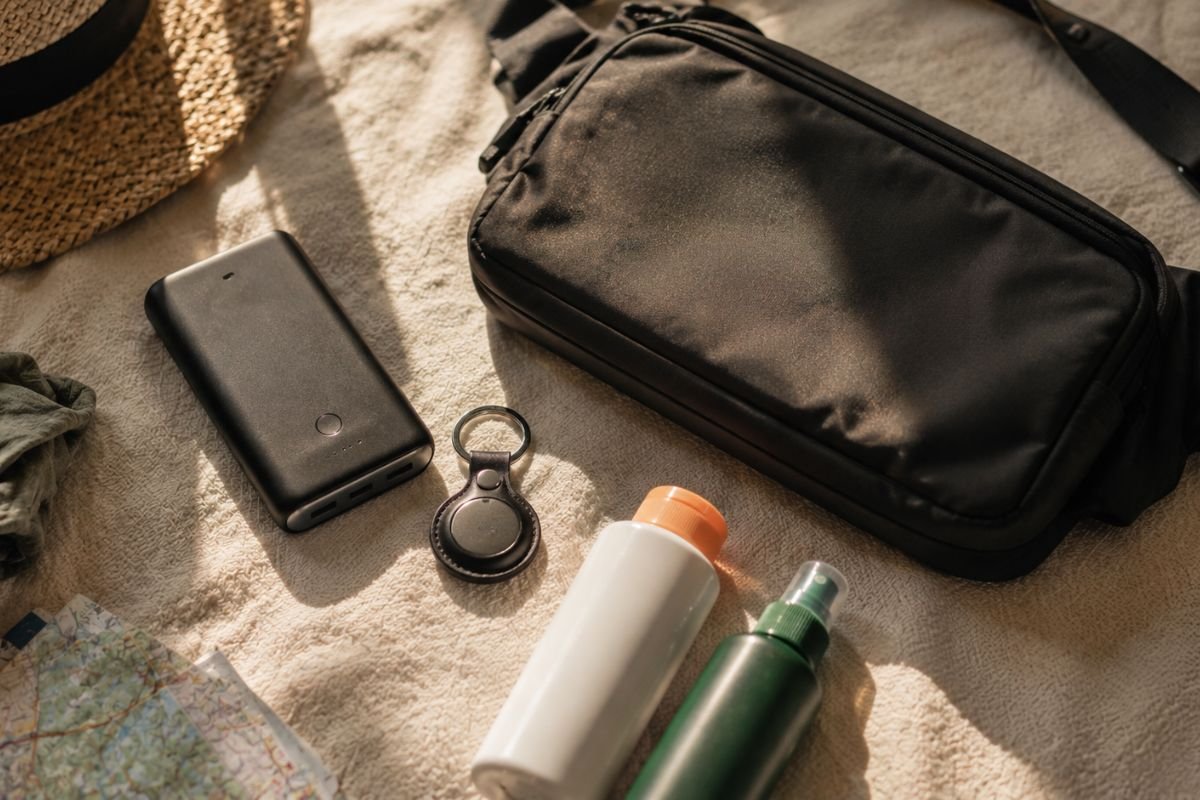
Toss a Tile or AirTag in your daypack and checked bag both. Solo, there’s nobody to help you retrace your steps if something goes missing, and that little tracker has saved me more than once. Skip the headphones, they’re a visible theft target. Noise-canceling earbuds do the same job without announcing themselves.
If you’re doing the Frida Kahlo Museum in CDMX, book the GetYourGuide skip-the-line ticket for the earliest slot and bring a Kindle for the queue anyway. CDMX museums are brutal on phone batteries between photos and maps, and even skip-the-line has a line.
If you want the full breakdown beyond what fits into a Mexico-specific list, like which packing cubes actually hold up, what to look for in a daypack, or the gear that’s worth the extra weight versus the stuff that just looks good in a flat-lay, I put everything I use across every trip into one guide: the ultimate travel gear guide.
The “I’ll Buy It There” Fallacy
“I’ll just buy it there” is true for socks and false for the six things that actually matter. Oxybenzone-free sunscreen, the kind cenotes and eco-reserves now require, is not sitting on shelves in most Mexican pharmacies.
Neither is real DEET or picaridin repellent strong enough for the dengue-carrying mosquitoes in Chiapas and Oaxaca; the local “natural” sprays mostly just smell nice. Your specific prescription probably isn’t stocked either, Mexican pharmacies carry generics, not your exact brand.
Add UV-rated sunglasses (cheap knockoffs are everywhere, actual UV protection is not), a reusable filtered water bottle (bottled water adds up fast and so does the plastic guilt), and a quick-dry towel, because hostels don’t provide them and cotton towels never actually dry in that humidity. Pack these before you land. You’ll thank yourself on day one, not day five when you’re improvising.
Documents: The “It’s on My Phone” Risk
My phone died in a Oaxaca market with zero warning, no storm, no drop, just dead. Every address, every booking confirmation, every “just in case” number lived on that phone. I stood in a market for twenty minutes trying to remember my hotel’s street name from memory.
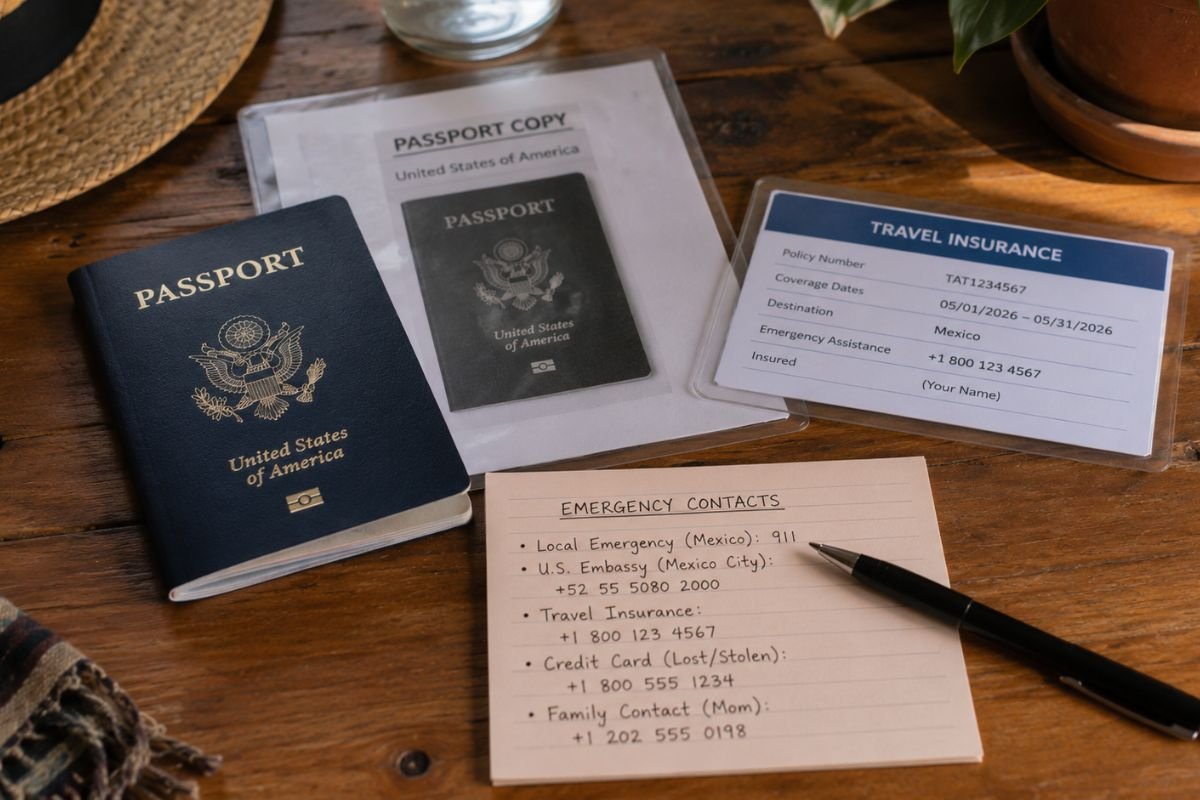
Now I keep physical backups of everything: a laminated passport copy in a bag separate from the actual passport, a printed FMM copy alongside the phone photo, my insurance card and policy number on paper, emergency contacts written down (not just saved), and my accommodation address written out in Spanish for taxi drivers who can’t read my phone screen even if it were working. Waterproof document pouches cost about the same as a coffee and solve this permanently.
Money: The “One Card” Disaster
A guy in my hostel in Cancún had exactly one debit card. An ATM ate it on day four. No backup, no cash reserve, and a bank that wouldn’t overnight a replacement outside the US. He spent three days borrowing money from strangers he’d met two nights earlier.
Notify your bank of your travel dates before you leave, or watch your very first purchase get flagged as fraud. Carry two debit cards from different banks, one in your day bag, one buried in your main pack. Bring one no-foreign-transaction-fee credit card for hotels and emergencies, and hide $200 USD cash somewhere you’d only find under real pressure. Split it all up. Never keep your entire financial life in one pocket, one bag, or one card.
Health Prep: The “I’ll Deal With It There” Mistake
Altitude in Mexico City doesn’t announce itself. It waits until day two or three, then hits you with a headache and fatigue that feels suspiciously like a hangover you don’t remember earning. Traveler’s diarrhea gets 30 to 50 percent of visitors, usually from ice, washed vegetables, or the toothbrush-under-the-tap habit nobody thinks twice about. And the sun here is closer to the equator than most people account for; SPF 30 is not the flex you think it is.
Check the CDC’s Travelers’ Health page for Mexico four to six weeks out for current vaccine recommendations and any active health notices, since these change more often than most packing lists account for. Talk to your doctor about an azithromycin prescription before you go, a “just in case” antibiotic for a bad case rather than a mild one.
Pack Imodium and oral rehydration salts for the mild part, and Diamox if you’re altitude-sensitive and heading to CDMX or higher. Reef-safe SPF 50+ covers the sun problem. Start probiotics two weeks out if you’re prone to stomach trouble; it’s a small habit that pays off the whole trip.
Altitude and a rattled stomach have a way of showing up in the same week, especially if you hit Mexico City first and somewhere lower-altitude second. Pack for both before you need either.
A friend of mine skipped the Diamox because she figured she’d be fine, and spent her first two days in CDMX with a headache bad enough that she missed the museums she’d flown in specifically to see. None of this is complicated to prevent. It’s just easy to skip when you’re packing at 11 PM telling yourself you’ll probably be fine.
Learning Basic Spanish: The “Everyone Speaks English” Lie
Tourist zones spoiled me. I got comfortable, then took a taxi outside CDMX’s centro where the driver spoke zero English and I spoke shaky Spanish. We communicated through gestures and my badly pronounced “¿Dónde está?” for fifteen increasingly stressful minutes.
You need more Spanish traveling solo than you would with a partner splitting the mental load. Learn “Estoy solo/a” (I’m alone), “Ayúdame” (help me), “¿Cuánto cuesta?” (how much), “Soy alérgico/a a…” (I’m allergic to), “¿Dónde está…?” (where is), “Llama a la policía” (call the police), and “No entiendo” (I don’t understand, useful specifically when someone’s trying to scam you and hoping you won’t catch it). Download offline Spanish on Google Translate before you land, data or no data.
The “Arrival Day” Plan: Don’t Wing It
Which brings us back to that night at the metro station. Dead phone, no pesos, a driver quoting $80 for a ride that should’ve cost $12. Every mistake in this checklist compounds on arrival day, because you’re jet-lagged, disoriented, and running on zero local knowledge exactly when you need all three most.
Pre-book your airport transfer before you land. I now use a GetYourGuide private CDMX airport transfer every single time: driver meets me with a sign, no haggling, no wandering a parking lot trying to find someone who won’t overcharge me. Screenshot your hotel address with a map pin before you lose signal.
Carry 500 pesos in small bills. Check in, drop your bags, and force yourself to walk ten minutes while it’s still light out, just enough to get your bearings before dark. Eat near your hotel that first night. Don’t explore hungry, tired, and disoriented all at once, that combination is exactly how my $80 taxi standoff happened in the first place.
Pack right and plan arrival day properly, and you’ve already dodged half the disasters in this checklist. Next up: getting around once you’re actually there, from the metro’s women-only cars to why renting a car solo might not be the freedom fantasy it looks like.
The Mexico City Metro: Cheap, Fast, and Intimidating
Rush hour on Line 2 taught me what “sardine-packed” actually means. I got shoved into a car so tight my arms were pinned to my sides, someone’s elbow was in my ribs, and I couldn’t have reached my own pocket if I’d wanted to.
Which, it turns out, is exactly the point for the person who unzipped my bag two stops later and took nothing because I’d left it empty on purpose. Lucky, not smart. I hadn’t planned that, I’d just gotten paranoid after item 15 on this list.
The metro costs five pesos and is the fastest way to move around CDMX. Line 1 (pink) and Line 2 (blue) are the busiest, and the most targeted by pickpockets, during rush hour.
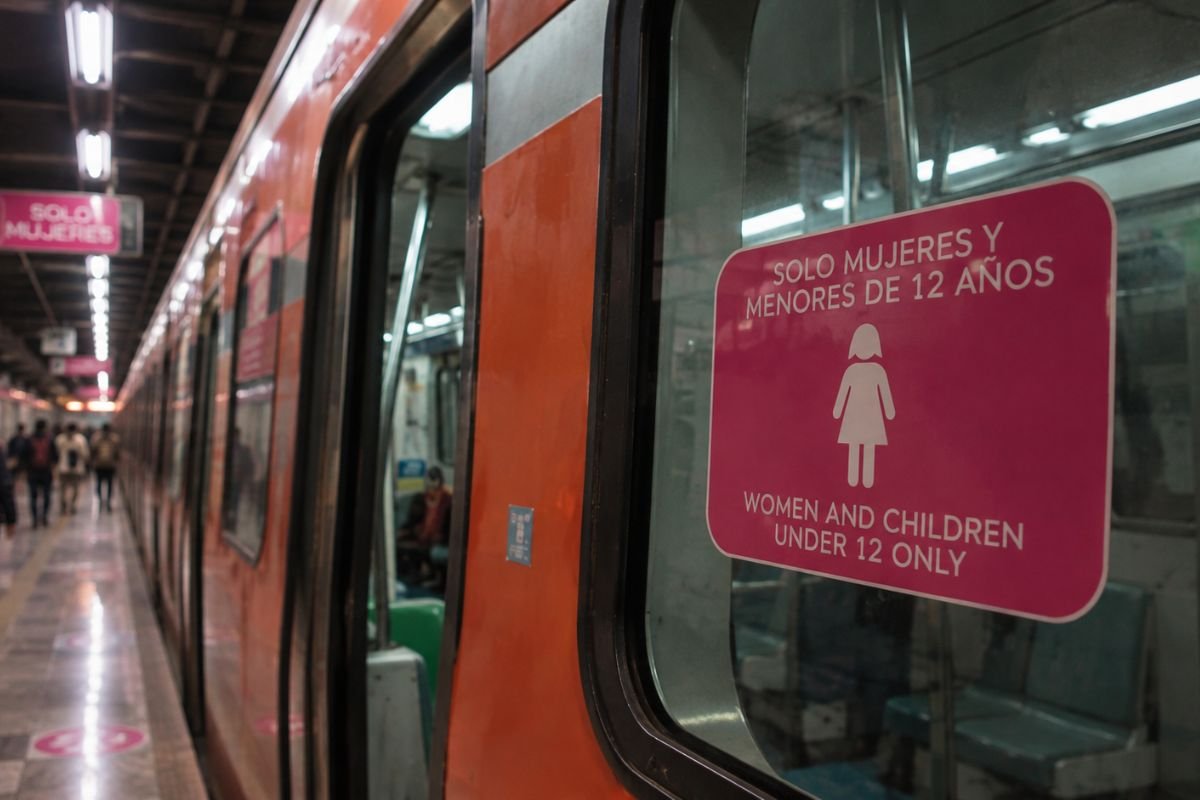
Look for the pink-marked women-only cars, they’re not a polite suggestion, they’re enforced. Men who wander in get called out by other passengers, loudly, immediately.
Use them, especially between 7 and 9 AM and 6 and 8 PM. The whole system shuts down at midnight, so plan your night out with that deadline in mind or budget for a cab home.
That empty-bag trick isn’t really a trick if a pickpocket can still unzip your bag without you noticing. What I carry now is a slash-resistant crossbody bag with locking zippers, worn across my chest, never over one shoulder where it can be lifted clean off in a crowd. It’s the single packing decision that’s done the most work of any item on this list.
If the map still looks like spaghetti to you on day one, book a GetYourGuide Mexico City Metro & Street Art Tour. A local walks you through the system once, and you navigate confidently alone for the rest of the trip. Cheaper than the three wrong transfers I made trying to figure it out solo.
Buses: The ADO vs. Local Bus Decision
“Take ADO, it’s safe” is the advice every blog gives you, and it’s true, it’s just not the whole story. ADO doesn’t run everywhere, and when it doesn’t, you’re choosing between a second-class bus with sketchy luggage storage or a colectivo with no schedule at all.
ADO is first-class: comfortable, online booking, bathrooms, movies, and worth the extra pesos on longer routes. Book two to three days ahead through ADO’s official site for popular runs like CDMX to Oaxaca or Cancun to Tulum, they sell out. Arrive 30 minutes early, because unlike everything else that runs on “Mexican time,” these buses leave exactly when they say they will.
Keep your bag with you in the cabin, don’t check anything valuable into the under-bus compartment. For overnight routes, pay the extra for “cama” or “semi-cama” seats. I once did an 8-hour night bus in a regular upright seat and arrived in Oaxaca with a neck that didn’t work right for two days. A cheap inflatable travel neck pillow would have saved me two miserable mornings of trying to turn my head like a normal person.
If six hours on Highway 150D sounds like a waste of a vacation day, it is. The GetYourGuide Oaxaca Day Trip from Mexico City handles the whole run for you, more time actually in Oaxaca, none of it spent staring out a bus window wondering if you missed your stop.
Renting a Car: The “Freedom” Fantasy vs. Reality
A friend rented a car for his first Mexico trip because road trip blogs made it sound romantic: open highway, total freedom, stop wherever you want. He hit an unmarked tope doing 50 miles an hour outside Puebla and tore out the car’s undercarriage. Nobody warns you about topes because they don’t sound dramatic in writing. They are extremely dramatic at highway speed.
Beyond the speed bumps, there’s the mordida risk (police stops that sometimes fish for bribes, and solo travelers get targeted more than groups), the gas station scam where the attendant “accidentally” resets the pump before filling your tank, and the insurance gap: your US credit card coverage almost certainly doesn’t apply here, and Mexican liability insurance is legally required regardless.
My honest verdict for a first solo trip: don’t. Buses, Uber, and tours get you everywhere you actually want to go without the topes, the mordida, or the insurance paperwork.
If you’re set on driving anyway, rent from a major company at the airport, photograph every inch of the car before you leave the lot, and never drive after dark; potholes, loose livestock, and unlit vehicles turn Mexican highways into something else entirely at night. Mount your phone with a solid dashboard phone holder and run Waze, not Google Maps, it flags police checkpoints and topes in real time in a way Google simply doesn’t.
Uber, DiDi, and Taxis: The Safe Way to Get Around
“Just use Uber” works great until you’re in a state where Uber is technically illegal and your driver is nervously watching for police the whole ride, ready to cancel if he sees a checkpoint. That happened to me in a smaller city where I didn’t even know ride-shares were in a legal gray zone until my driver explained it, mid-panic, in rapid Spanish.
In CDMX, Cancun, and most major cities, DiDi and Uber both work fine, DiDi is usually cheaper, Uber tends to be more reliable. At airports, neither can usually pull up to arrivals, you’ll walk to a designated pickup zone instead, so don’t panic when your app says the driver is “here” and you can’t find a car.
In small towns, there’s no app coverage at all; ask your hotel to call a taxi de sitio, a registered stand taxi, and agree on the price before you get in. Always sit in the back, even in an Uber. Share your trip status through the app, it takes ten seconds and means someone else knows exactly where you are.
Never hail a street taxi at night. Not in CDMX, not solo, not even if it looks fine. The GetYourGuide private transfer from Tulum to Chichen Itza solves this specific problem if you’re dreading the 2.5-hour drive: your driver waits while you explore, no rental car, no negotiating a return fare from a parking lot.
Colectivos: The Local Experience That’s Not for Everyone
Travel influencers love filming colectivos, the shared vans that leave when full instead of on a schedule. What they don’t film is the 40 minutes of standing around waiting for four more seats to fill, or the backpack-on-lap squeeze between two strangers with zero personal space and zero AC.
They’re genuinely useful for short hops, Tulum to the cenotes, Oaxaca to Monte Albán, anything under an hour. There’s no route signage, so you need to know your destination and shout “baja” when you want off, which the first time feels absurd and by the third time feels completely normal. For anything over three hours, just pay for the ADO bus or a tour. The money you save isn’t worth the discomfort at that length.
Flying Domestic: The Budget Airline Reality
Viva Aerobus quoted me $40 for a domestic flight, then charged me almost that much again at the gate because my backpack was two kilos over their absurdly strict limit. Cheap flights in Mexico are cheap right up until the baggage fees, which are enforced with a precision I’ve never seen matched by the actual departure times.
Buy your baggage allowance online before you fly, it’s roughly half the airport price. A compact packing cube set helps you actually see what you’re carrying and shave off that last kilo before you’re standing at a gate doing frantic math. Arrive two hours early even for domestic, security moves slowly and unpredictably.
Download the airline’s app, gate changes happen and the announcements are in fast Spanish with zero English backup. And always have a bus schedule as backup, because delays and cancellations happen without much explanation, especially into smaller airports like Oaxaca, Huatulco, or Tuxtla Gutiérrez, where ground transport options thin out fast if your flight falls through.
Walking: The Most Dangerous Thing You’ll Do
Nobody warns you about walking. Everyone warns you about taxis and buses and metro pickpockets, and meanwhile the thing that actually got me was a sidewalk in CDMX that simply stopped existing mid-block, dumping me into traffic with zero warning. That’s the “CDMX ankle twist” veteran travelers joke about, except it’s not really a joke when you’re the one hobbling back to your hostel.
Walk facing traffic when the sidewalk disappears, so you see the car before it sees you. Keep one earbud out, always, awareness beats music.
Before you set out anywhere new, check the route on Google Maps street view first, neighborhoods can flip from safe to sketchy within a single block, especially in CDMX, and you want to know that before you’ve already turned onto it. And don’t walk alone at night just to save the $4 an Uber would cost. That math never works out in your favor.
The “Lost” Protocol: What to Do When Your Phone Dies
Everyone plans for staying connected. Nobody plans for the CDMX metro having zero signal underground, or Oaxaca’s rural stretches dropping coverage entirely, or a phone getting lifted on a crowded bus. I found out the hard way, standing on a Oaxaca street corner with a dead phone and no idea which direction my hostel was in.
Download offline maps for every city while you’re still connected, not once you’re already lost and searching for a signal that isn’t there. Screenshot your hotel address, the nearest hospital, and your embassy’s address while you still have signal. A paper map sounds old-fashioned until it’s the only thing working.
Learn a couple of landmarks near your hostel, “the big church,” “the park with the fountain,” because that’s what you’ll be describing to a stranger if you actually get turned around. And memorize one phone number, just one, your hotel or an emergency contact, in case every device you own fails at once.
Border Crossings: If You’re Continuing to Guatemala or Belize
Blogs mention “cross at Ciudad Cuauhtémoc” like it’s a single sentence of advice and move on. What they skip is the three hours of actual chaos: exit fees that may or may not already be baked into your flight, “helpers” hovering around offering to fill out forms you’re fully capable of filling out yourself for a fee, and Guatemala’s entry requirements, which include proof of onward travel and sometimes a yellow fever certificate depending on where you’ve been.
This is where solo travelers are most exposed. You’re tired, confused, and juggling every bag you own with both hands, which is exactly the state scammers are looking for.
Don’t rush it. If the whole process sounds like more stress than you want to manage alone, the GetYourGuide Palenque to Flores border crossing tour handles the transport and the paperwork while you just keep an eye on your bags, which honestly should be your only job at a border crossing anyway.
Getting around is half the battle. Where you actually sleep each night, and whether that hostel’s “24-hour reception” is real or just a sign on the door, is the other half. Let’s get into it.
Hostels vs. Hotels vs. Airbnbs: The Solo Traveler Equation
I booked the cheapest hostel in Playa del Carmen on my first solo trip, drawn in by a five-star rating and a beachfront photo. What the photo didn’t show was the rooftop bar that ran until 4 AM directly above my dorm, or the front door that didn’t lock properly, or the fact that half the guests were there for the party, not the beach. I didn’t sleep more than four hours a night for five days straight.
“Stay in hostels to meet people” is true advice that skips the part where not all hostels are built for the same traveler. Party hostels in Cancun, Tulum, and Playa are loud by design, that’s the product they’re selling, and it’s genuinely not conducive to sleep or, honestly, safety, once things get messy at 2 AM.
Boutique hostels are the sweet spot most first-timers don’t know to look for: private rooms, real social spaces, quieter at night, more expensive but worth every extra peso. Airbnbs work well for longer stays, but remember there’s no front desk, which means no one to help if something goes wrong at 11 PM. Hotels remain the safest call for solo female travelers, especially your first night in any new city.
That front door that didn’t lock properly taught me to stop trusting hostel hardware entirely. I now travel with a portable door lock, the kind that wedges under the door and can’t be forced open from outside even if the original lock is garbage. It weighs nothing and it’s the difference between sleeping and lying awake listening for footsteps in the hallway.
My rule now: hotel or a genuinely well-reviewed boutique hostel for the first night anywhere new, no exceptions. After that, hostel if you want the social scene, Airbnb if you want quiet.
Read recent reviews specifically, not the aggregate score, because hostel management changes constantly and last year’s five-star gem can become this year’s bedbug nightmare without the star rating catching up.
Booking Platforms: Where to Actually Find Rooms
I spent an hour on Booking.com looking for hostels in Oaxaca and found almost nothing decent. Turns out a lot of Mexican hostels simply aren’t listed there, they’re on Hostelworld instead, a platform I’d been ignoring because of its booking fees.
Hostelworld is genuinely the best source for hostels despite the fees. Booking.com wins for hotels but comes up thin on hostels. Airbnb works, though booking an “entire place” solo can get isolating fast, and “private room” listings are a genuine mixed bag depending on the host. Many hostels also offer roughly 10% off if you book direct through their own site instead of through a platform, worth a quick email before you commit.
Before booking anywhere, message them directly and ask three things: is it safe to walk here at night, is reception staffed 24 hours (this matters more than you’d think if your flight lands late), and is there a locker actually big enough for a full backpack, not just a daypack. The answers tell you more than any star rating will.
The “Safe Neighborhood” List: City by City
Every blog says “stay in Roma Norte” like that solves your entire trip. It solves CDMX. It says nothing about Oaxaca, or Tulum, or Puerto Vallarta, which is where I actually got stuck googling neighborhood safety at midnight because nobody had written the exact I needed.
In CDMX, Roma Norte, Condesa, Polanco, and Coyoacán are your safe bets; steer clear of Tepito, Iztapalapa, and parts of Doctores, especially after dark. In Cancun, stick to the Hotel Zone or downtown near Parque Las Palapas.
In Tulum, Tulum Pueblo and Aldea Zama are solid; the beach road at night has no streetlights and no reliable taxis, which is a bad combination. Oaxaca City’s Centro Histórico and Jalatlaco are your zones; the outskirts thin out fast after sunset. Puerto Vallarta’s Zona Romántica and Centro are the tourist-friendly core. San Miguel de Allende is genuinely safe almost everywhere, the cobblestones are your only real enemy there.
Checking In: The “Solo Traveler” Conversation
A front desk clerk in Mexico City announced my room number out loud across the lobby, to a room full of strangers, while handing me my key. I didn’t think about it until later that night lying awake, running through exactly who in that lobby now knew which door was mine.
Solo travelers check in like they’re part of a couple, and that’s the mistake. Ask for a room near the elevator, not tucked away from it, more foot traffic means more eyes and an easier exit if you ever need one.
Tell the front desk you’re meeting a friend tomorrow, even if you’re not, it’s a small deflection that costs nothing. Ask staff to write your room number down instead of saying it out loud. And text someone, every single time you check in, your hotel name and room number. It takes fifteen seconds and means someone outside that building knows exactly where you are.
Nobody notices a solo traveler missing the way they’d notice half a couple missing. That’s not meant to scare you, it’s meant to make you build the habit before you need it.
The “Checkout Day” Problem: Luggage Storage
Checkout was 11 AM. My night bus wasn’t until 10 PM. That left eleven hours of wandering Oaxaca dragging a 40-liter backpack through August heat, sweating through every museum I tried to enjoy, because nobody had warned me that Mexican hotels generally don’t offer luggage storage once you’re technically checked out, especially if you’re not still a paying guest.
Ask about storage when you book, not when you’re standing at the front desk with your bag already on your back. ADO bus stations in major cities have lockers, worth checking before you assume you’re stuck carrying everything.
Hostel “storage rooms” are sometimes just unlocked closets, so don’t leave anything valuable in one without asking directly how it’s secured; a TSA-approved cable lock at least slows down anyone who isn’t specifically targeting your bag.
If you’ve got a late flight out of CDMX, the GetYourGuide Mexico City Layover Tour with Luggage Storage solves both problems at once, they store your bag and you spend those dead hours actually seeing the city instead of sweating through a museum with a backpack digging into your shoulders like mine did.
Where you sleep and how you store your bags might feel like logistics, but they’re really about not spending your trip exhausted and paranoid over something a little planning would’ve fixed. Food’s next, and it’s where most first-timers either fall in love with Mexico or spend three days regretting a taco they didn’t need to eat.
The Water Question: It’s Not Just “Don’t Drink the Tap Water”
I did everything right on my first trip to Oaxaca. Bottled water only, no ice in my drinks, careful about what I ate. Then I got a salad at a nice-looking restaurant, figured lettuce was safe, and spent the next two days in a hostel bathroom learning that “don’t drink tap water” leaves out most of the actual danger zones. Salad gets washed in tap water. So does the produce in that fresh-squeezed juice you’re congratulating yourself for choosing over soda.
Ice is usually fine in restaurants, most use hielo purificado, purified ice made specifically for this problem, but street vendors are a coin flip and not worth the risk. Salad and raw vegetables are the number one cause of traveler’s diarrhea, worse than street tacos, worse than questionable meat.
Brushing your teeth with tap water is genuinely fine in CDMX hotels but a bad idea in rural areas, where the plumbing infrastructure is a lot less consistent. Shower water is not a concern unless you’re actively drinking it, so just keep your mouth closed and move on.
Ask for “sin hielo, por favor” if you want to skip the ice gamble entirely. Stick to cooked, hot food for your first three days while your gut adjusts.
Peelable fruit, bananas, oranges, mangoes, is your safest snack because you’re removing the part that touched anything questionable. And a collapsible water bottle with a built-in filter solves the bottled water math permanently, no more buying 15-peso bottles three times a day and generating a small mountain of plastic by the end of the week.
Street Food: The “Will I Get Sick?” Calculation
“Eat the street food, it’s the best food in the country” is true, and it’s advice from people whose stomachs have years of built-up tolerance you don’t have yet. I learned that the hard way at an empty taco stand at 11 PM, ordering from a guy with meat sitting out under a single dim bulb because I was hungry and it was close. I was fine, actually, but I got lucky, and luck isn’t a strategy.
The real signal isn’t “street food good, restaurant food safe.” It’s turnover. A stand with a long line means the meat’s moving fast and getting replaced constantly, which is exactly what you want.
Watch them cook it: if you see the meat come straight off the trompo spit for tacos al pastor, that’s fresh. If it’s sitting in a tray under a heat lamp, walk past it.
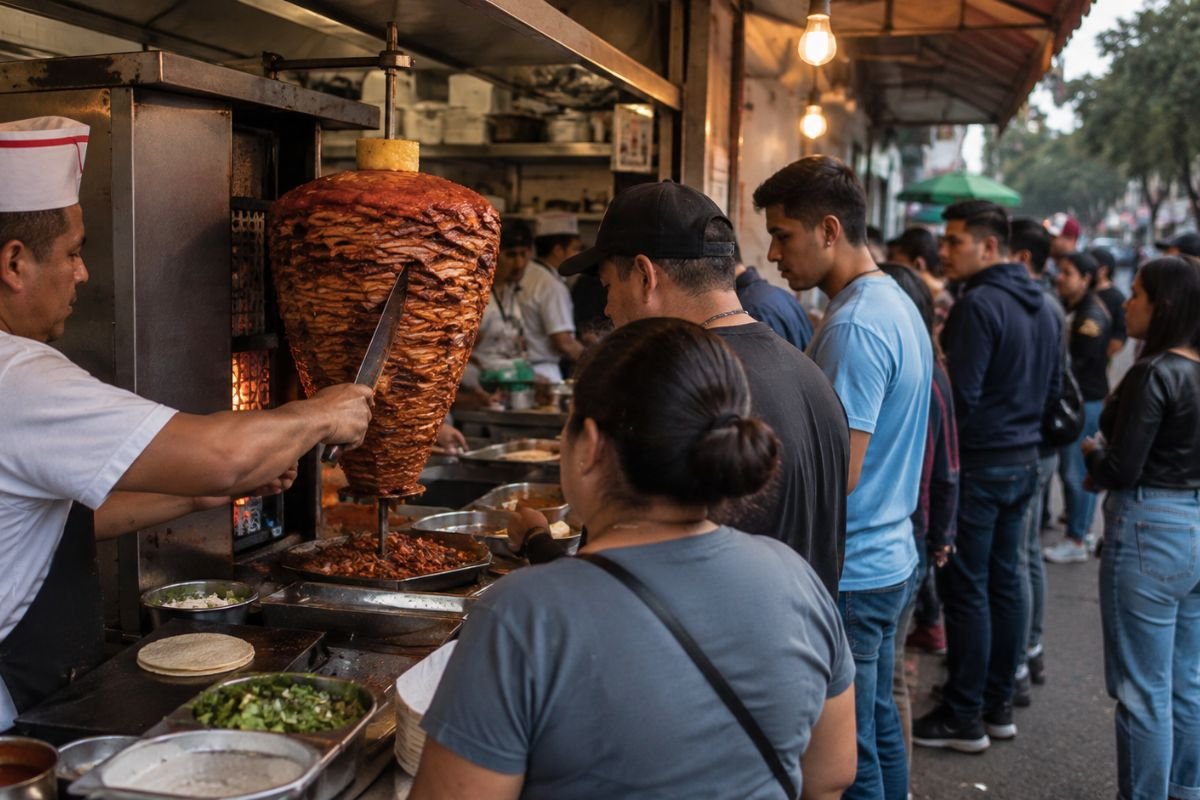
Start with hot, freshly cooked options, tacos, quesadillas, elote, and save the ceviche and aguachile for later in your trip once your stomach’s had time to adjust. Carry hand sanitizer in your pocket, there are no sinks at a street stand, and don’t experiment with anything new on a travel day when you’ll be six hours from a bathroom you trust.
If you want the experience without the guesswork, book the GetYourGuide Mexico City Street Food Tour with a Local. Your guide already knows which stands are safe, which ones locals actually eat at, and you get through 8 to 10 dishes in one afternoon instead of nervously testing one stand at a time on your own.
Tipping: The “15-20%” Confusion
I over-tipped constantly on my first trip, running US math (18 to 20 percent, non-negotiable) on top of Mexican prices, and a waiter gently corrected me at a restaurant in Oaxaca. He wasn’t complaining. He was making sure I didn’t think it was mandatory everywhere I went next.
Restaurants run 10 to 15 percent as standard, 20 is generous, not expected the way it is stateside. Street taxis don’t expect a tip at all, just round up to the nearest convenient bill. Gas station attendants get 10 to 20 pesos for filling the tank or checking your tires.
Hotel housekeeping should get 20 to 50 pesos left daily, not saved for the end of your stay, since it’s often different staff cleaning your room each day and the person who earned it won’t be the one who gets it otherwise. Tour guides run 50 to 100 pesos per person for a half day, 100 to 200 for a full one.
Tipping alone feels strange at first, like you’re performing generosity for nobody. You’re not. Mexicans notice and appreciate it, and small consistent tips buy you something more valuable than goodwill: better service, real local recommendations, and staff who are quietly looking out for you because you treated them like people, not furniture.
Dietary Restrictions: The “I’m Vegan/Gluten-Free” Reality
A vegan friend told me before her Mexico trip that she’d read it was “incredibly vegan-friendly” and landed expecting Roma Norte on every corner. She got Roma Norte in Roma Norte, and then a small town outside Oaxaca where her only real option most nights was plain rice, because lard is in the beans, chicken stock is in the rice unless you ask, and cheese shows up in dishes that don’t announce it.
Manteca, lard, is standard in refried beans, many tortillas, and tamales. Caldo de pollo, chicken stock, quietly flavors rice and sauces you’d never suspect. Flour tortillas contain gluten, corn tortillas usually don’t, which is a useful default if you’re avoiding it. Crema turns up on things that don’t need it and cheese hides in spots you wouldn’t expect.
Learn the actual phrases before you land: “soy vegano/a” for vegan, the longer “no como carne, pollo, pescado, huevos, ni lácteos” if you need to spell it all out, “sin gluten, por favor” for gluten-free, and “soy alérgico/a a…” if it’s a real allergy and not just a preference, since that phrasing gets taken more seriously in kitchens. Oaxaca, outside CDMX, is actually your best bet for restrictions, its indigenous cuisine leans vegetable-heavy in a way most regional Mexican food doesn’t.
Alcohol: The “Tequila Everywhere” Trap
A woman I met in a Tulum hostel had two drinks at a beach bar, felt suddenly and unusually disoriented, and had a friend from the hostel walk her home. She was lucky to have made a friend that fast. Drink spiking is rare in Mexico, but it’s not a myth, and it happens most in the exact tourist bars where solo travelers are most likely to be drinking alone.
Watch your drink get made, every time, and never accept an open one from someone you just met, no matter how friendly the gesture feels in the moment.
Mezcal runs 40 to 55 percent alcohol, and what gets poured as “one shot” in Mexico is frequently a full double by US standards, something that catches a lot of first-timers off guard fast.
Altitude in CDMX makes alcohol hit harder and quicker than you’re used to, so pace yourself there specifically. If you want something social without the math, “una cerveza, por favor” is slower, lower stakes, and perfectly normal to order all night.
Know your limit and respect it, because solo, there’s nobody to carry you home if you don’t. That’s not a lecture, it’s just the math of traveling alone: the safety net you’d have with a partner or a group simply isn’t there, so the margin for error gets smaller.
Eat well, drink smart, and your stomach will thank you for the rest of the trip. Next up is the section most solo travelers actually came here for: the real safety protocols, the scams that genuinely happen, and what solo female travelers specifically need to know that generic “be careful” advice never covers.
The “Tourist Police”: Who to Actually Call
A guy in my Oaxaca hostel got his bag snatched outside a bar and called 911, the way you’d instinctively do back home. He waited 40 minutes for someone to show up, in Spanish he couldn’t fully follow, describing a theft to an operator who didn’t speak English. By the time anyone arrived, he’d basically given up.
911 works in Mexico, but it’s not the 911 you know. Response times swing wildly depending on where you are, ten minutes in a neighborhood like Polanco, closer to 45 in areas with less police presence, sometimes nothing at all in rural zones. Language is a real barrier too, most operators handle Spanish only.
What most guides don’t mention is that tourist police (Policía Turística) exist specifically in major tourist areas and are usually more helpful and often bilingual, a much better first call for anything short of a genuine emergency.
Save these before you land, not after you need them: 911 for actual emergencies, 01-800-201-1554 for the tourist police on non-emergency issues, 078 for SECTUR tourist assistance where English is available, and your embassy’s number for anything involving a lost passport or serious legal trouble. Five minutes now saves you the panic of googling it one-handed while something’s actively going wrong.
Scams: The Ones That Actually Happen
“Don’t get scammed” is advice that sounds useful and does nothing, because nobody tells you what the scam actually looks like until you’re standing in the middle of one wondering if this friendly stranger is being kind or working an angle.
The free tour scam starts with a smiling “I’m a student, I practice English, let me show you around,” and ends with a demand for payment once you’re three streets deep and don’t know the way back.
The gas station scam has an attendant “accidentally” reset the pump before filling your tank, so you pay for more than you got; get out of the car and watch the numbers yourself, every time.
The airport taxi scam is the one that got me personally, “official taxi” counters quoting $80 for a ride Uber would run for $12, banking on you being too tired and disoriented to question it.
The closed attraction scam has someone telling you the pyramid’s shut today, they know a better one, follow them; you check official hours online and you never, ever follow a stranger anywhere.
The friendship bracelet scam hands you a “gift,” then demands payment the second it’s on your wrist, so don’t accept anything handed to you unprompted. And the menu switch quietly prices things in dollars on one menu and pesos on another; ask “¿estos precios son en pesos?” before you order anything.
None of these are dangerous exactly. They’re designed to work on exactly the state you’ll be in at some point on this trip: tired, polite, and not wanting to make a scene.
For actual valuables, I split my cash and cards between a hidden money belt worn under clothing and a decoy option: an old, near-empty wallet I hand over without hesitation if I’m ever actually pressured for one. It cost nothing to put together and it’s the one thing standing between a bad moment and a genuinely dangerous one.
Don’t try to hold all 47 of these in your head.
Grab the free printable checklist, one page, all 47 items, ready to screenshot or print before you pack.
Download the Free PDF Checklist →
Solo Female Travel: The Specific Protocol
A friend traveling solo through Tulum told me the exhausting part wasn’t any single incident, it was the constant low-grade drip of “where’s your boyfriend” and unsolicited comments on the beach that added up over two weeks into a kind of fatigue most generic advice never accounts for. “Be careful” doesn’t cover this, because it’s not really about danger, it’s about a completely different daily experience than solo male travelers get.
The tricks that sound outdated still work: a cheap fake wedding ring cuts down on unwanted attention more than you’d expect, and “estoy esperando a mi esposo,” I’m waiting for my husband, is a clean deflection that ends most conversations without confrontation.
Don’t tell strangers your actual hotel name, “near the centro” is specific enough to sound normal and vague enough to protect you. On buses, sit near the driver. In restaurants, sit near families rather than isolated tables. And trust your gut without apologizing for it. Mexicans are genuinely warm people, but persistence after a polite “no” is the actual red flag, not the initial approach.
A loud personal safety alarm clipped to a keychain is small enough to forget you’re carrying it and loud enough to genuinely startle someone or draw attention fast if you ever need it. I’ve used mine exactly once, in a parking garage that felt wrong for no reason I could name, and it did exactly what it was supposed to do.
If CDMX solo feels like a lot to navigate alone on day one, the GetYourGuide Women-Only Mexico City Walking Tour pairs you with a female guide and a small group, so you get a feel for how the city actually works with company first, then go solo with actual confidence, not guesswork.
Natural Disasters: The “It Won’t Happen to Me” Fallacy
I was in a CDMX café when the earthquake alert sirens went off, that specific wailing tone everyone in the city recognizes instantly and I’d never heard before. I had no idea what it meant for about ten confusing seconds while every local around me was already moving.
Mexico City runs an early warning system, SASMEX, that buys you 30 to 60 seconds before shaking starts. Drop, cover, hold on, and know that in advance, because ten seconds of confusion is ten seconds you don’t get back.
Hurricane season runs June through November and hits the Yucatán and Pacific coast hardest. Don’t book those regions during peak months without actually checking the forecast first. Popocatépetl, the volcano near CDMX, is active and occasionally sends ash that disrupts flights and air quality with little warning.
Download the “911 CDMX” app for earthquake alerts before you land. Check your hotel’s evacuation route, it’s usually posted on the back of your room door and takes ten seconds to glance at.
Standard travel insurance often excludes “named storms,” so if you’re traveling hurricane season, confirm your policy actually covers it rather than assuming. And keep a go bag ready: passport, cash, charger, water, something you could grab and be out the door with in under ten minutes if you genuinely needed to.
Health Emergencies: When “I’ll Figure It Out” Isn’t Enough
A traveler I met in San Miguel de Allende came down with a severe stomach infection and spent two full days telling herself she’d “figure it out” rather than go to a hospital alone in a country where she didn’t speak the language.
By the time she finally went, she was badly dehydrated and needed IV fluids for a condition that would’ve been a quick outpatient visit if she’d gone on day one. Solo travelers delay care constantly, not because the situation isn’t serious, but because nobody’s there pushing them to go.
Public hospitals (IMSS, ISSSTE) are cheap but crowded, Spanish-only, and slow. Private hospitals like Hospital Ángeles or Star Médica move faster and skip the wait, but they want payment upfront before they’ll treat you, insurance or not, which is exactly the moment the coverage from earlier in this guide actually gets tested.
Look up which chain has a location near wherever you’re staying before you ever need it, so you’re not searching for that on a hostel Wi-Fi signal that keeps dropping while you’re doubled over.
Know the nearest private hospital to wherever you’re staying before you need it, not after. Save the U.S. Embassy in Mexico City’s contact information too, even if you’re nowhere near CDMX, since their citizen services page has the current emergency numbers for consular agencies across the country.
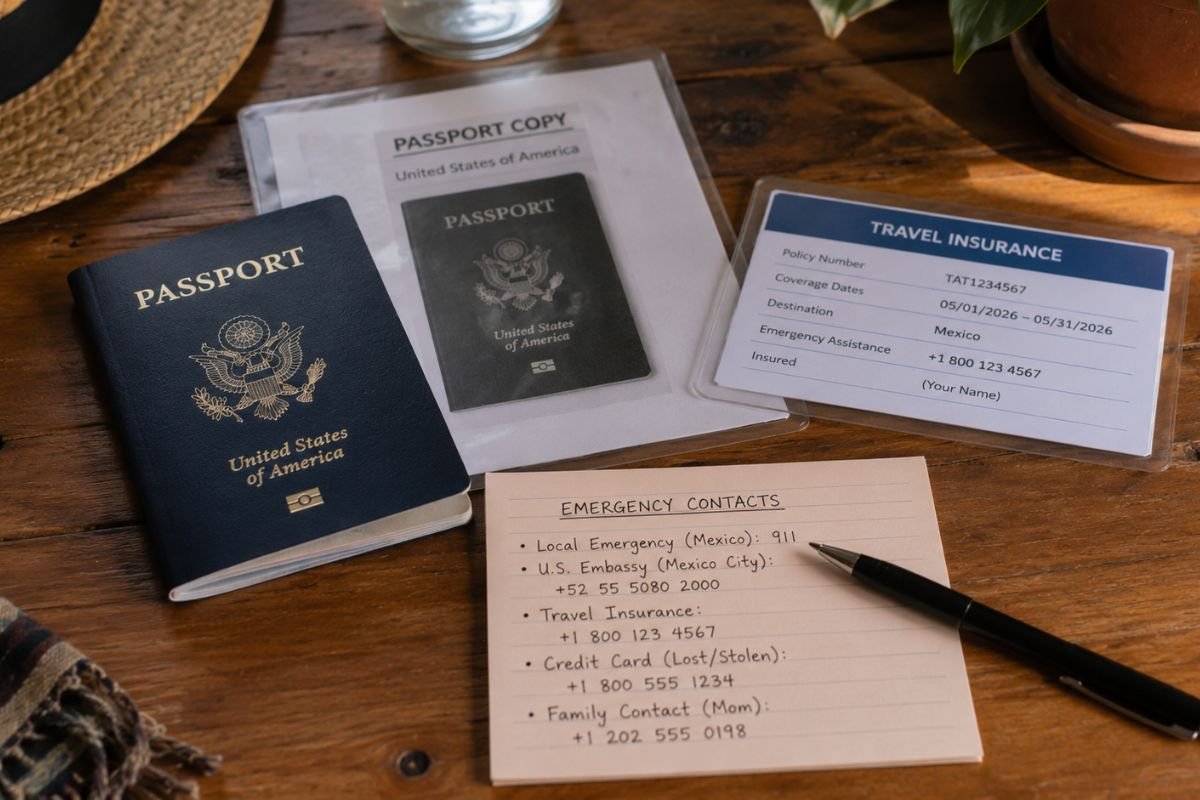
Carry your insurance card and policy number physically. Farmacias del Ahorro and Similares are reliable pharmacy chains, and many have in-house doctors for about 50 pesos a consultation, a genuinely useful shortcut for anything minor.
Don’t wait it out just because you’re alone and don’t want to make a fuss. Nobody’s coming to advocate for you if you don’t advocate for yourself first.
Safety isn’t about being scared the whole trip. It’s about knowing these five things well enough that you never actually need most of them. Last section covers the money side properly: what this trip really costs, the hidden fees nobody budgets for, and when booking a tour actually saves you more than it costs.
The Real Daily Budget: Not the “Mexico Is Cheap” Fantasy
I read “you can live on $30 a day in Mexico” on three different blogs before my first trip and budgeted accordingly. By day four I’d blown through a week’s budget, not because Mexico is expensive, but because $30 a day assumes the type of travel I wasn’t actually doing: dorm beds every night, zero tours, zero cushion for the taxi you take when you’re tired instead of the bus you planned on. That number is technically true and almost useless for planning an actual first solo trip.
Here’s what it really costs, broken down by style:
| Style | Accommodation | Food | Transport | Activities | Total/Day |
|---|---|---|---|---|---|
| Budget | $15–25 (hostel dorm) | $10–15 (street food, markets) | $5–10 (metro, bus) | $5–10 (free tours, museums) | $35–60 |
| Mid-Range | $40–70 (private room, boutique hostel) | $20–30 (mix of street food + restaurants) | $10–20 (Uber, ADO buses) | $20–40 (guided tours, entrance fees) | $90–160 |
| Comfortable | $80–150 (nice hotel, Airbnb) | $30–50 (restaurants, some fine dining) | $20–40 (private transfers, domestic flights) | $40–80 (premium tours, experiences) | $170–320 |
Solo, you’re paying the full accommodation cost yourself with nobody to split it with, but you also have total flexibility over how you spend it. Budget $100 to $150 a day for a first trip that’s comfortable and doesn’t have you white-knuckling every purchase. You can absolutely do it cheaper. Just don’t plan your first solo trip around the absolute floor of what’s possible.
The “Hidden Costs” Nobody Mentions
My actual spending never matched my budget app, and for a while I couldn’t figure out why. Turns out it was death by a thousand small cuts: ATM fees, bathroom fees, the 25 pesos here and there that budget blogs never bother listing because none of them sound significant alone.
ATM fees run $3 to $5 per withdrawal on top of whatever your own bank charges, which adds up fast if you’re pulling cash every few days. Some cities quietly add a nightly hotel tax of 3 to 5 percent that doesn’t show up until checkout.
Major ruins aren’t cheap either: Chichen Itza runs around $30, Teotihuacan closer to $15, Sumidero Canyon about $25. Some museums and churches charge extra just to bring a camera in. Public bathrooms want 5 to 10 pesos at bus stations and some ruin sites, always carry small change for this specifically.
Bottled water at 15 pesos a bottle, three times a day, quietly becomes 315 pesos a week. And laundry runs 40 to 80 pesos per kilo at a lavandería, which sneaks up on you around day six when you’re finally out of clean clothes.
None of these individually break a budget. All of them together explain why your spending never quite matches your spreadsheet.
Booking Experiences: When to DIY vs. When to Book a Tour
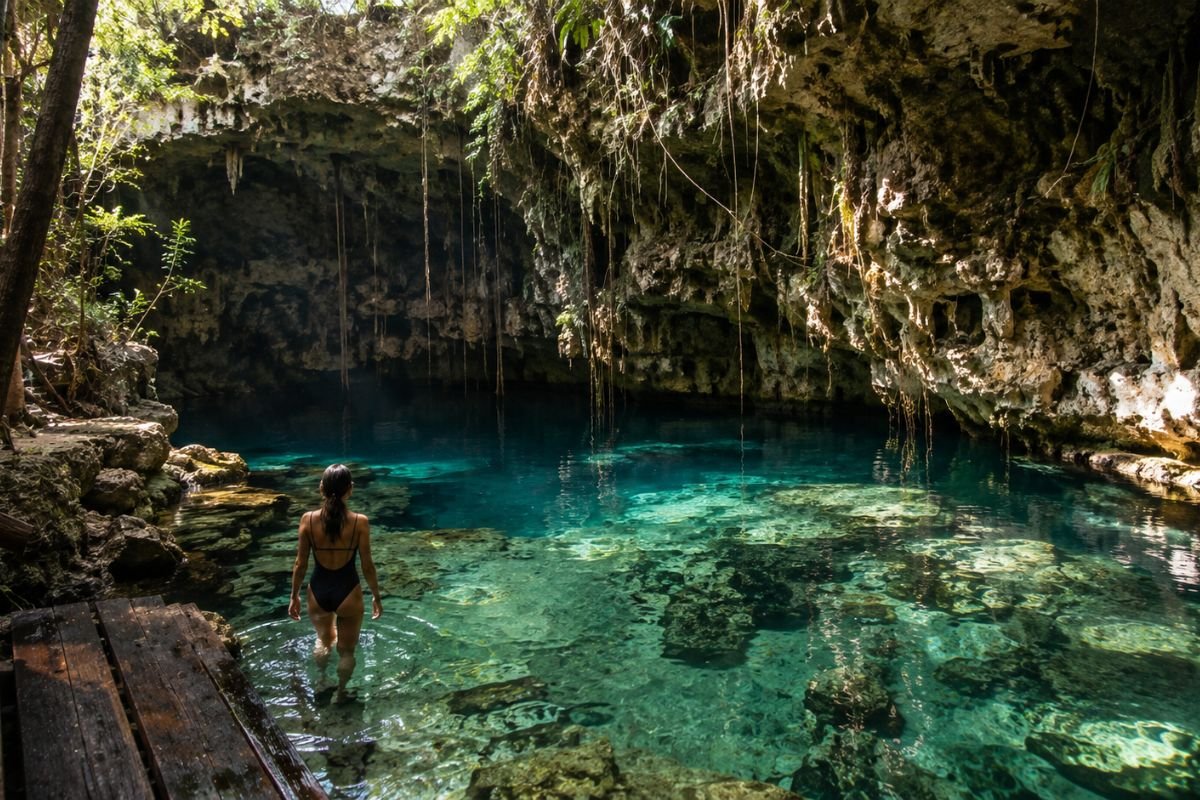
I used to feel a weird guilt about booking tours, like it made me less of a “real” traveler. Then I did the Teotihuacan pyramids on my own via public transport, got the timing wrong, and ended up standing in blazing midday heat with zero shade and a guide-less understanding of what I was even looking at. Independent travel isn’t automatically better. It’s better in some situations and genuinely worse in others.
DIY makes sense when you’re confident in Spanish, the destination is well-connected (CDMX’s metro, Tulum’s ADO routes), you’ve got time to spare, and the cost gap is real, a DIY cenote visit versus a guided one can be a meaningful difference. Tours make more sense for safety-sensitive situations: solo female at night, remote areas, border crossings.
They also win on logistics when there’s no real public transport option, like a Teotihuacan sunrise visit or Oaxaca’s mezcal route through small palenques that aren’t exactly on a bus line. And if you’ve got two weeks instead of two months, a good guide maximizes what you actually see instead of you burning half a day figuring out where you are.
GetYourGuide: The Experiences That Actually Solve Something
Most tour recommendations online are generic filler, “check out this cool tour,” with zero connection to an actual problem you have. These are the ones I’ve used that solve the specific headaches this whole checklist has been pointing at:
| Problem | Solution | Why It Works |
|---|---|---|
| Arriving in CDMX alone at night | Private Airport Transfer | Pre-booked, driver meets you with a sign, no haggling |
| CDMX feels too big to figure out | Mexico City Highlights Bike Tour | 10+ neighborhoods in 4 hours, guide explains the metro as you go |
| Teotihuacan logistics | Teotihuacan Early Access + Lunch | Beat the crowds, transport and lunch included, no rental car |
| Oaxaca’s mezcal scene | Oaxaca Mezcal Tasting Tour | Safe transport to remote palenques with an English-speaking guide |
| Which cenote is even safe | Cenote Snorkeling from Tulum | Three cenotes in one day, gear included, zero research required |
| Night safety in CDMX | Roma Norte Food Tour at Night | Explore after dark in a group, eat where locals actually eat |
| Chichen Itza chaos | Chichen Itza Early Access from Cancun | Beat the cruise ship crowds, includes a cenote swim and lunch |
What actually makes GetYourGuide worth it solo isn’t the tours themselves, it’s the guardrails around them. Reviews come from real travelers, not sponsored influencer posts.
Cancellation is free, which matters when your plans shift constantly and you’re the only one deciding when they do. Tickets live on your phone, no printing, no fumbling at a gate in a language you don’t speak. And if a guide genuinely doesn’t show, which is rare but does happen, there’s an actual person to call instead of you standing alone figuring out plan B with no local number to dial.
The “Before You Leave Mexico” Checklist
Everyone plans the arrival obsessively and completely forgets the exit exists. I nearly missed a flight out of Cancun because I’d lost my FMM slip somewhere around day nine and didn’t discover it was gone until I was already at the airport counter, watching my boarding window shrink while an immigration officer processed a replacement.
Check your FMM is where it should be before you leave for the airport, not after you arrive. If it’s gone, get to immigration early, this is not a five-minute fix. Spend or exchange your leftover pesos before you get there, airport exchange rates are genuinely predatory.
If you rented a car, return it with a full tank or pay roughly triple at the counter for the privilege of not bothering. Weigh your bag at home, Mexican airlines enforce weight limits with a precision that will surprise you. Screenshot your boarding pass, airport WiFi is not something you want to depend on.
Arrive three hours early for international flights, security moves slowly and unpredictably. Keep 200 pesos aside for departure snacks and water, since airport prices are inflated the same way they are everywhere else in the world. And leave a review for your hotel, your tours, your favorite hole-in-the-wall restaurant, because someone wrote the review that got you into that boutique hostel in the first place, and the next solo traveler is reading exactly what you’re about to write.
Get the money and the exit right, and the trip ends the way it started: prepared, not panicked. That’s really the whole point of these 47 items. Not fear, just the difference between researching Mexico and actually being ready for it, which is exactly where this whole thing began, standing at a metro station with a dead phone learning that lesson the hard way so you don’t have to.
Frequently Asked Questions
Is Mexico actually safe for solo travelers, or is that just something people say to be nice?
It depends entirely on where in Mexico you mean. Tourist zones in CDMX, the Yucatán, and Oaxaca see mostly petty crime, the kind you’d guard against in any major city. Some northern border states carry real advisories worth taking seriously. Check the State Department’s advisory by state before you book, not after.
Do I need to speak Spanish to travel Mexico alone?
Not fluently, but more than tourist zones make you think you need. Learn the handful of phrases in this checklist before you land, since you won’t have a travel partner to lean on when English runs out.
Is Mexico City or Cancun a better first solo trip?
CDMX gives you the full country, museums, food, culture, and better domestic flight connections if your plans change. Cancun is easier and more English-friendly but keeps you inside a tourist bubble. Neither is wrong, they’re just different trips.
How much should I actually budget per day as a solo traveler?
Somewhere between $100 and $150 a day covers a comfortable first trip without constantly stressing over money. You can go lower, but don’t build your first solo trip around the absolute floor of what’s possible.
What’s the single biggest mistake first-time solo travelers make in Mexico?
Winging arrival day. Landing without a pre-booked transfer, local cash, or a plan for that first night compounds every other risk in this checklist, because you’re jet-lagged and disoriented exactly when you need to be sharpest.
Is it safe to take taxis alone at night?
Avoid hailing street taxis after dark entirely, in any city. Use Uber or DiDi where available, or have your hotel call a registered taxi de sitio and agree on the price before you get in.
What should I do if I lose my passport or get robbed?
Contact the nearest embassy or consulate as soon as you realize it’s gone, and file a police report if you need one for a replacement. Having digital and physical copies of your documents beforehand, and your embassy’s contact information saved, turns a crisis into a task list instead of a panic.
Conclusion: Why Mexico Solo
Mexico solo isn’t about being brave. It took me a while to understand that. I used to think solo travel required some kind of fearless personality I clearly didn’t have, given that I nearly cried over a taxi fare at a metro station on night one of my first trip. It’s not about bravery. It’s about being prepared, which is a much more learnable skill than courage.
The 47 items in this checklist aren’t fear-mongering. If anything, they’re the opposite: they’re what turns “I survived Mexico” into “I loved Mexico,” which are two completely different trips wearing the same passport stamps.
Most of what’s written about Mexico comes from people who didn’t do it the way you’re about to. Couples split the mental load and watch each other’s backs without even noticing they’re doing it.
Digital nomads have months to figure things out slowly, room for mistakes that don’t cost them much. Tour groups never actually navigate alone, someone else always has the map. None of that content was written for the person standing at a metro station at midnight with a dead phone, doing math they can’t afford to get wrong. This checklist was.
This is for the first-timer. The solo traveler. The person who wants to experience Mexico, not just get through it.
So here’s what actually happens next. Grab the printable of this checklist, the one built for your phone screen or a quick print before you pack, so none of these 47 things get lost in a browser tab you’ll forget to reopen at the airport.
If there’s a moment in this trip you’re already dreading, the airport arrival, the first solo dinner, the language barrier, book the GetYourGuide experience that solves it in advance, not while you’re already stuck trying to fix it on the ground. And if this saved you from even one bad night like mine, save it, bookmark it, send it to the next person you know who’s staring at a one-way ticket to Mexico wondering if they’re actually ready.
You are. Just prepared, not brave. That’s the whole trick.