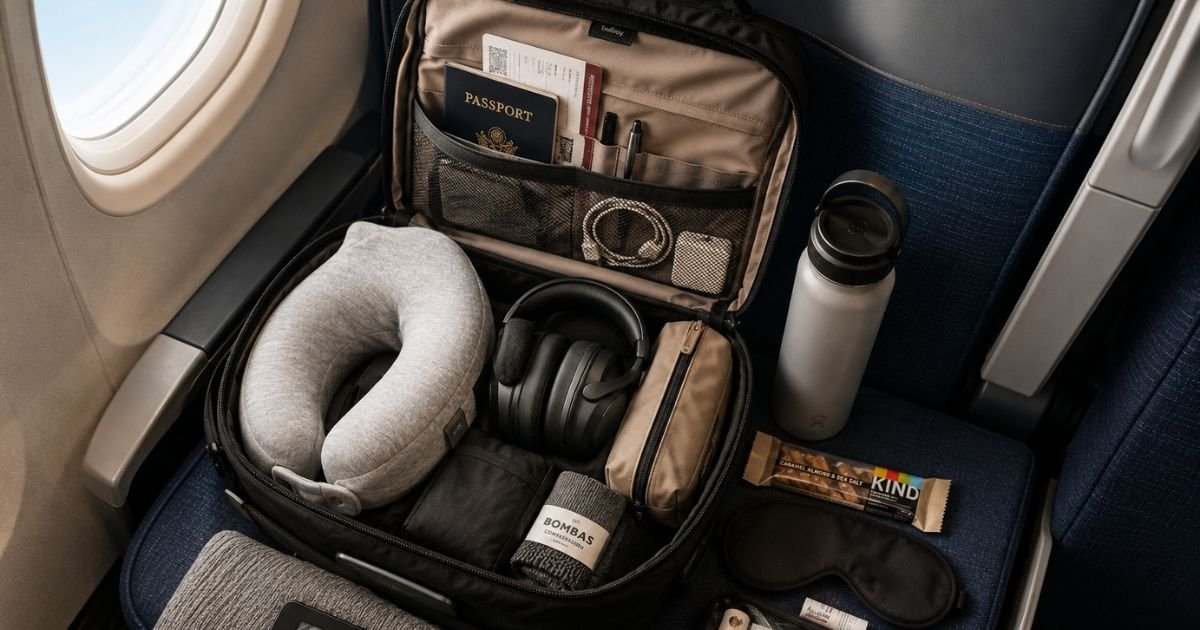
A good personal item packing checklist is the difference between landing after a 10 hour flight feeling human, and landing feeling like you fought a war with your own under seat bag.
If you’ve ever watched the seatbelt sign flick on, felt the cart traffic jam start up in the aisle, and realized the one thing you actually need is sitting in the overhead bin three rows back, you already know why this matters.
Your roller bag is basically your closet for the trip. That is where you put stuff you don’t need until you land in the hotel, such as your clothes, chargers and others. Your personal item serves a completely different purpose. It stays at your feet for eight, ten, sometimes fifteen hours straight, and everything in it needs to earn its spot.
Here’s the fast version first, then the full breakdown of why each item made the cut and what’s actually worth buying before your next flight.
The Quick Scan Checklist
- Travel pillow with real neck support (wrap-around style, not the old foam donut)
- Contoured eye mask and noise blocking earplugs
- A packable layer for temperature swings (cardigan, vest, or scarf-blanket combo)
- Compression socks, packed near the top so you can grab them fast
- Pass through power bank, under 100Wh
- Over ear noise canceling headphones, plus a Bluetooth transmitter if you prefer your own earbuds
- One slim cable pouch with a single charging cable and wall brick
- Downloaded shows, books, or playlists, done before you leave home
- Small clear pouch with lip balm, moisturizer or sheet mask, and eye drops
- Travel toothbrush or toothpaste tabs, deodorant wipes, sanitizing wipes
- Empty insulated water bottle to fill after security
- Almonds, protein bars, or dried fruit (skip the salty snacks)
- Electrolyte packets
- Passport, boarding pass, ID, spare card, and a pen
- Prescription medication, kept on your person at all times
- A backup outfit rolled into the bottom of the bag
Now let’s get into the why, and which specific picks are actually worth adding to your cart before you fly.
Start With the Basics: Size Limits and How to Organize the Bag
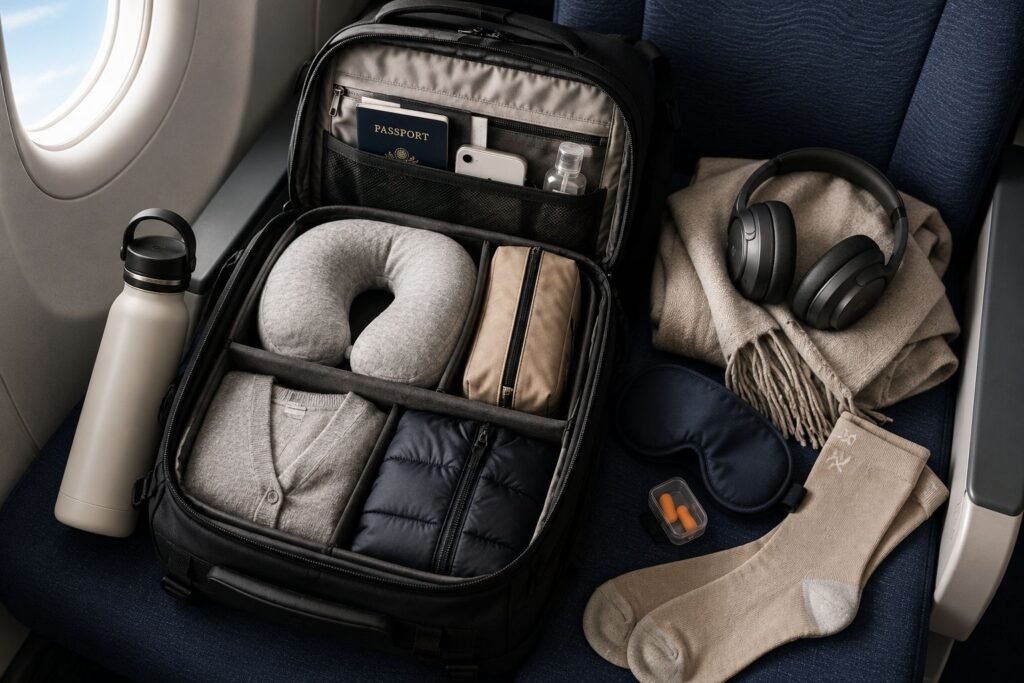
Before packing anything, know your limits. Most major airlines want your personal item to fit under the seat in front of you, which usually works out to around 18 x 14 x 8 inches.
Budget carriers are stricter. Ryanair, Spirit, and similar low-cost airlines will measure your bag at the gate if it looks even slightly oversized, so check their specific rules before packing rather than after.
Once you know your bag, organize it into three zones instead of tossing everything in at random. Here are some bags to look out for in my ultimate travel gear guide where you have different bag choice to choose from.
At the bottom zone have to be things you hope you never need mid-flight: backup clothes, a laptop you’re not using right now, anything heavy you don’t want to dig past repeatedly.
The middle zone is for comfort items you’ll want once in a while: your pillow, your toiletry pouch, things that don’t need to be instantly accessible.
The top zone and any exterior pockets are for what you’ll reach for constantly: passport, phone, water bottle, hand sanitizer. If you have to unzip the whole bag to find your boarding pass, the packing order needs work.
Comfort and Sleep: The Non Negotiables
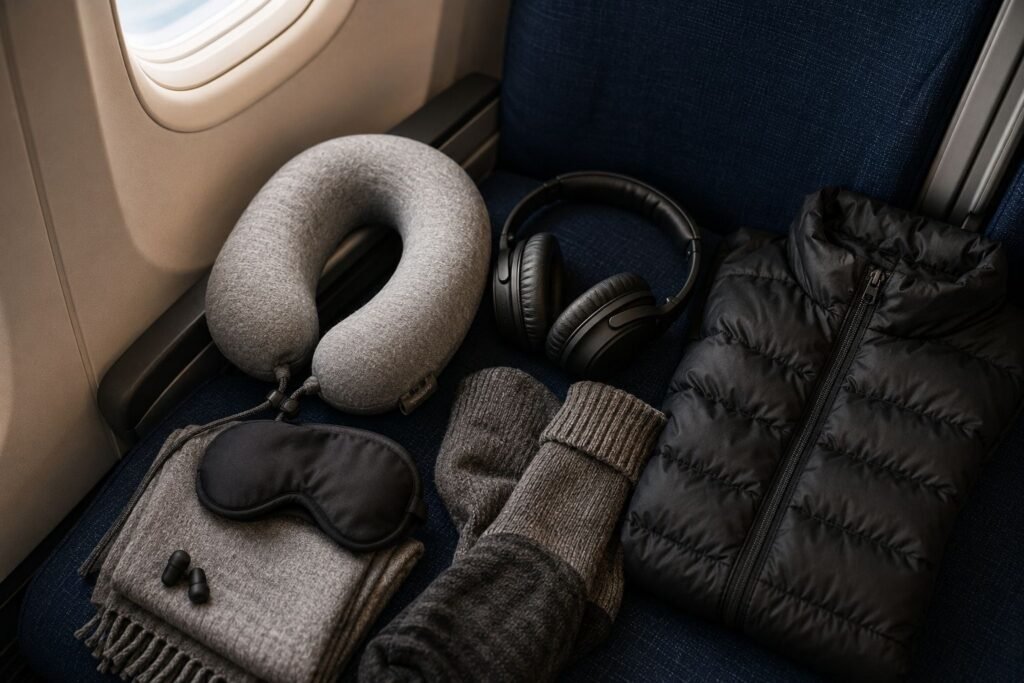
Long-haul flights take a real toll on your body. After several hours in the air, a stiff neck, dry skin, and feeling completely out of sync with your destination are almost guaranteed if you don’t prepare a little.
A real travel pillow makes a bigger difference than people expect. The old U-shaped foam versions are being replaced by wrap around designs like the Trtl pillow, or twistable memory foam that clips onto the headrest rails so your head doesn’t roll forward every time you doze off. If you only upgrade one item on this list before your next flight, make it this one.
Pair it with a contoured eye mask, the kind that doesn’t press flat against your eyelids, and a solid pair of earplugs. Cabin lights don’t fully go dark until well into the flight, and the low engine hum is louder than most people remember once they’re actually trying to sleep through it.
Temperature control matters more than most packing lists mention. Planes run cold, then warm, then cold again without warning. A lightweight merino cardigan, a packable down vest, or a travel scarf that doubles as a blanket covers you either way, and it’s worth having one within reach rather than buried in the overhead bin.
Don’t forget your compression socks either. Keep them near the top of your bag so you can put them on before takeoff. Spending six, eight, or even fifteen hours in the same seat can leave your feet and ankles swollen, and on longer flights, compression socks can help improve circulation and lower the risk of deep vein thrombosis (DVT).
Keeping Yourself Entertained (and Charged)
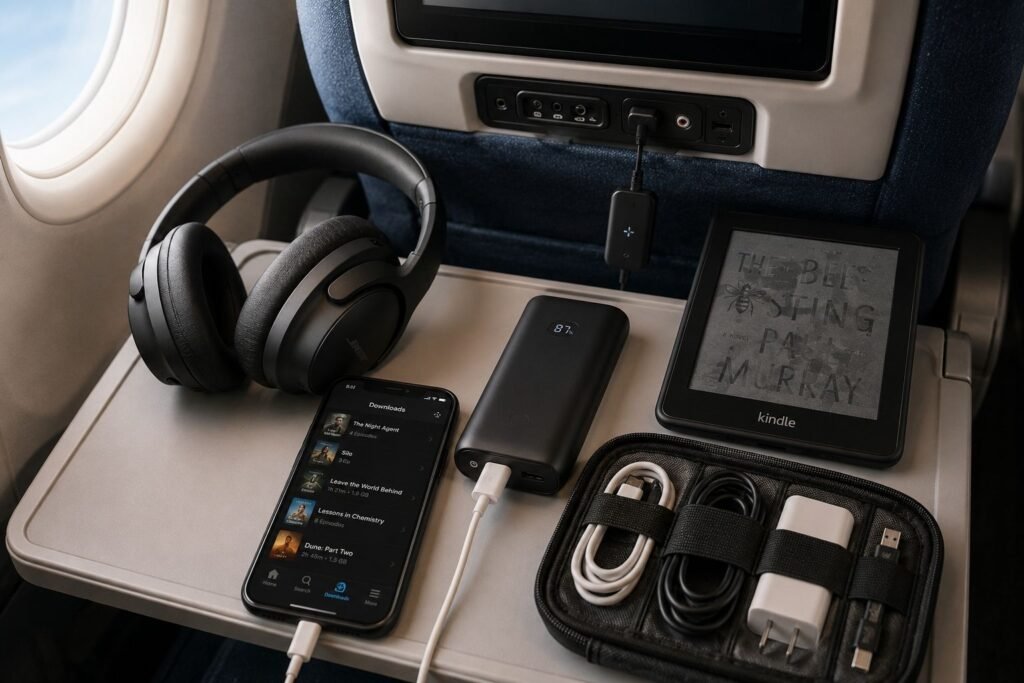
Seatback entertainment systems have a habit of freezing, glitching, or not working at all, so plan like you can’t rely on them.
Keep a pass through power bank under the 100Wh limit airlines require somewhere easy to grab. You’ll want it to top off your phone mid flight, and TSA may ask to see it during screening.
For headphones, over ear noise canceling styles tend to last longer on battery and block more cabin noise than earbuds.
If you’d rather use your own wireless earbuds with the plane’s screen, a small Bluetooth transmitter like an AirFly is worth throwing in, since most seatback systems still only run on that old-style audio jack.
Keep your cables in one flat, slim pouch instead of loose at the bottom of the bag. One cable that fits your devices, one small wall brick, done. It’s a small thing, but untangling three cords at 30,000 feet gets old fast.
Before you even leave the house, download whatever you’ll want to watch, read, or listen to. Wifi on planes is spotty at best, and the last thing you want is to be stuck buffering a show you were counting on.
The Mid Flight Refresh Kit
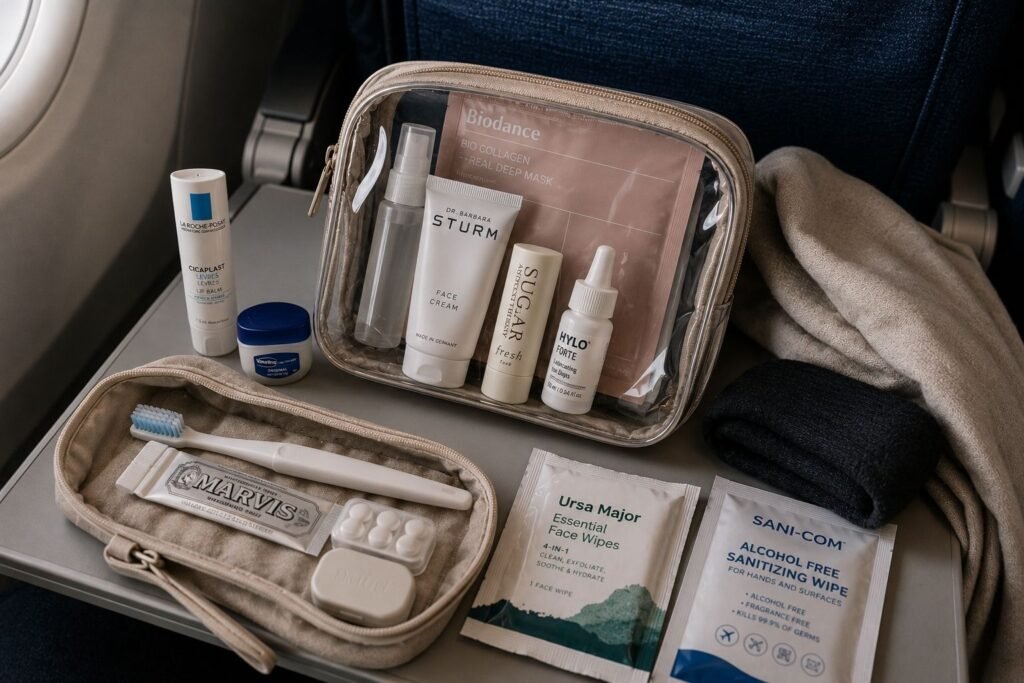
Cabin air is dry, often under 20% humidity, which is drier than most deserts. Your skin, lips, and eyes feel it fast.
Keep a small clear pouch separate from your main liquids bag, stocked with what you’ll actually reach for mid-flight rather than dig for once at security. A heavy lip balm, a travel-size moisturizer or sheet mask, and preservative-free eye drops go a long way toward not landing looking like you aged five years overnight.
On the hygiene side, a travel toothbrush or toothpaste tabs, a couple of deodorant wipes, and alcohol-free sanitizing wipes for your tray table and armrest cover the basics. Wiping down your seat area when you first sit down takes thirty seconds and it’s really worth doing every time.
Snacks and Staying Hydrated
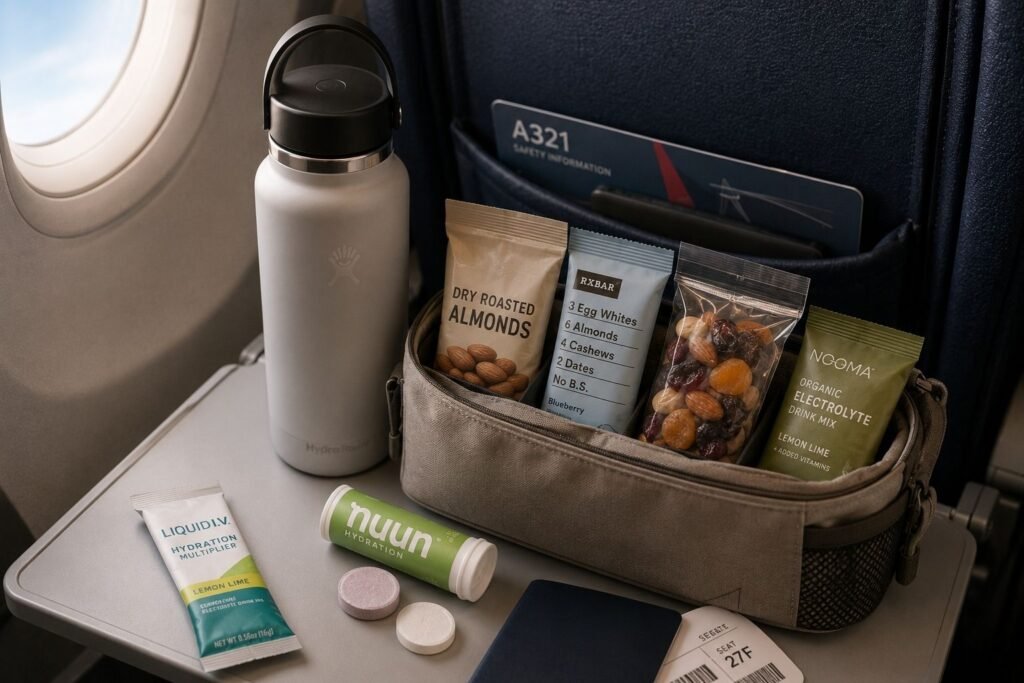
Airline meal timing rarely matches your actual hunger, and dehydration is one of the biggest reasons people land feeling wrecked.
Bring an empty insulated water bottle through security and fill it at a fountain near your gate. Keep it in an outer pocket so you’re not unzipping the whole bag every time you want a sip.
For snacks, lean toward almonds, protein bars, or dried fruit rather than anything salty. Pretzels and chips taste great in the moment but they make the bloating and water retention from sitting for hours noticeably worse.
Electrolyte packets, whether it’s Liquid IV or Nuun tablets, are worth adding too. Mixing one into your water partway through the flight helps you actually absorb the hydration instead of just making more bathroom trips.
The Just In Case Essentials
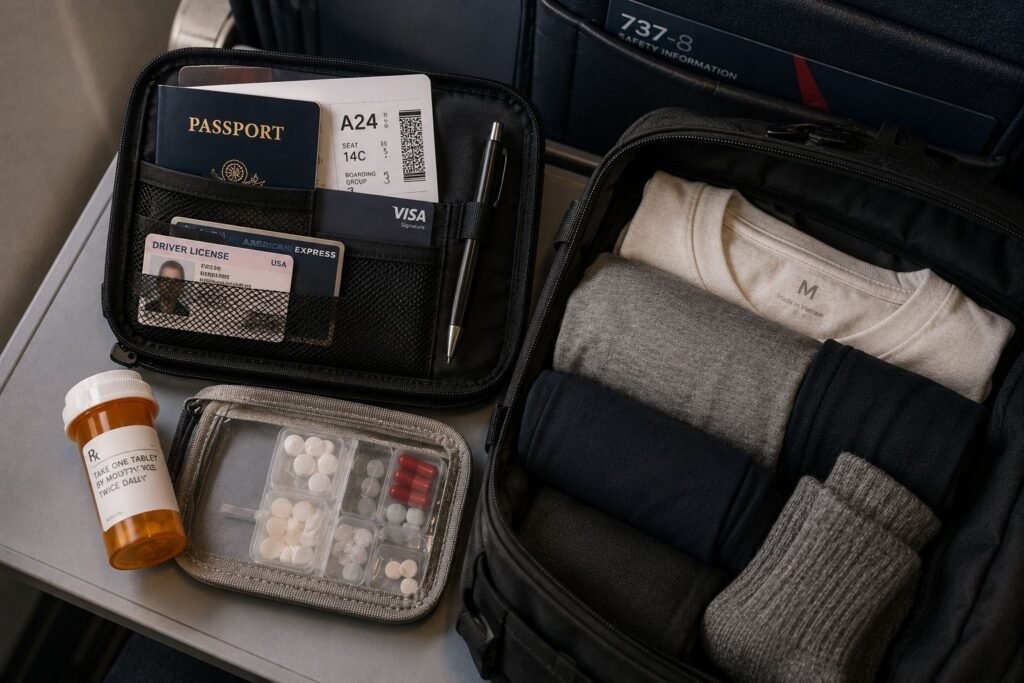
No matter how well you plan, travel doesn’t always go smoothly. Flights get delayed, bags get gate-checked, and luggage occasionally takes longer to arrive than you do. A few small essentials in your personal item can save you a lot of frustration.
Keep a small document pouch with your passport, boarding pass, ID, a spare credit card, and a pen. While many airports have gone digital, paper customs and arrival forms are still used in some destinations.
Prescription medication should always stay with you. Never pack it in a checked bag or in luggage that could be gate checked at the last minute.
Gate-checking is more common than many travelers realize, especially on full flights. Pack a fresh pair of underwear, clean socks, and a lightweight T-shirt in your personal item. If your roller bag gets checked unexpectedly and your luggage is delayed, you’ll be grateful to have a clean change of clothes ready to go.
Pulling It All Together
None of this needs to be complicated. Pack the bag in zones, keep what you’ll need constantly within easy reach, and don’t rely on the plane to entertain, hydrate, or comfort you. Do that, and a long flight stops feeling like something to survive and starts feeling like a long, mildly annoying afternoon instead.
Save this checklist before your next trip, and if there’s one upgrade worth making this month, start with the travel pillow. It’s the single item people regret not buying sooner.
What’s the one thing you never fly without? Drop it below, I’m always looking to steal a good packing trick.
Links in this post are affiliate links. This means we may earn a small commission if you make a purchase through them, at no extra cost to you. As an Amazon Associate, we earn from qualifying purchases. We only recommend products we believe are genuinely useful. Thank you for your support.