

Tram 28 vs walking tour Lisbon is a question almost every first-time visitor ends up asking, usually somewhere around day two, after they’ve already seen the yellow tram in every third photo on their feed. Tram 28 is the single most-photographed thing tourists do in this city, and there’s a quiet assumption that goes along with it: ride the tram, and you’ve toured the old town.
You haven’t. That gap between what the tram shows you and what’s actually sitting along its route is the entire reason this comparison exists, and it’s worth untangling before you spend a morning on one or the other.
Quick answer: Tram 28 is worth riding once for the experience and a handful of photo stops, but it moves too fast and gets too crowded to actually teach you anything about the neighborhoods it passes through.
A walking tour covers less ground but shows you far more of what makes Alfama and Graça interesting. If you only have time for one, the walking tour wins on substance. If you want both, there’s a way to fit them into the same morning, and that’s covered further down.
This comparison is based on riding the route at multiple times of day across different seasons, and on talking to local guides about what the tram route looks like from the ground rather than from a seat.
What Riding Tram 28 Actually Gets You

The tram runs a loop of roughly 13 stops between Martim Moniz and Campo Ourique, cutting through Graça, Alfama, Baixa, and Estrela along the way. The route and current timetable are published by Carris, Lisbon’s public transit operator, and it’s worth a quick check before you go since schedules shift slightly between seasons. On paper the route sounds like a full tour of old Lisbon in one ticket. In practice, the experience depends almost entirely on when you show up.
By 9am in peak season, the queue at Martim Moniz or Praça do Comércio can already run 30 to 45 minutes, and the tram itself fills within two or three stops.
Once it’s full, it’s full. People hang off the back, bags get squeezed against the windows, and the famous wooden seats become a tight fit for anyone over six stops in. Mid-afternoon in July or August, this is the norm rather than the exception, and Carris itself has acknowledged overcrowding on this specific line as a recurring issue during high season.
What you can see clearly from inside a packed, moving tram car is limited. You get a few seconds of the Alfama rooftops as the tram climbs, a glimpse of the Sé cathedral facade, and the sensation of the tram squeezing through gaps barely wider than itself.
The truth is that what you can’t get would be any sense of what’s actually around you. There’s no narration, no stopping at the viewpoints, and no chance to read a plaque. The tram is transportation that happens to pass interesting things, not a tour of them.
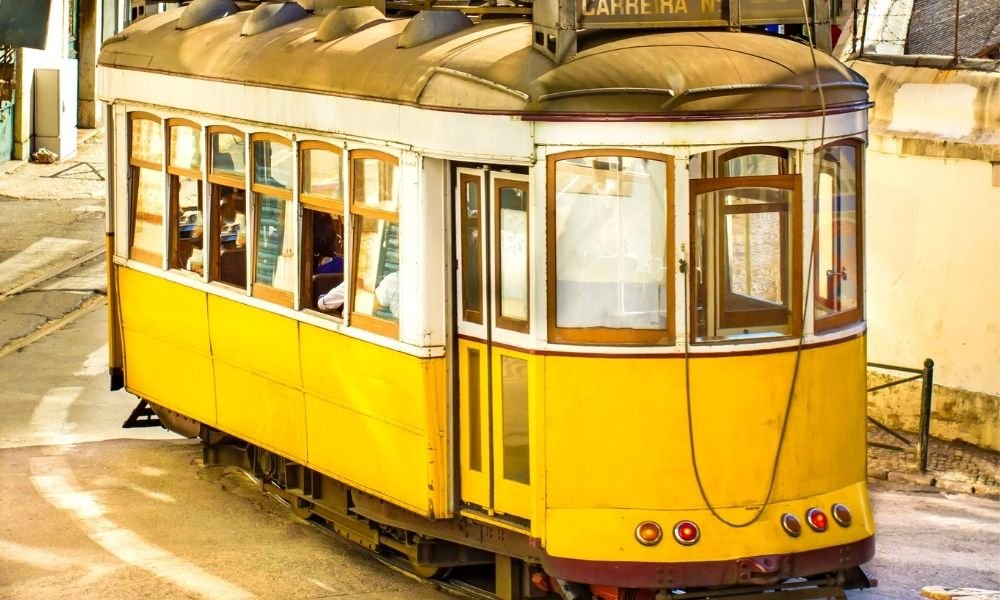
It’s also worth saying plainly, that the photogenic version of Tram 28 that shows up on Instagram, half-empty, golden light, nobody else in frame, is usually shot before 8am and well outside peak months. The lived reality most visitors get is standing-room-only and a phone held above someone else’s shoulder.
What a Walking Tour Covers That the Tram Doesn’t
A walking tour through Alfama and Graça is a moves at a fraction of the tram’s pace, and that’s the entire point. Where the tram covers the full loop in about 45 minutes if traffic cooperates, a walking tour typically spends two to three hours on a much smaller footprint, and that smaller footprint is where the actual neighborhood lives.

Guides stop at the miradouros, the viewpoints scattered across Alfama and Graça, and let you actually stand there for five or ten minutes instead of catching a half-second view through tram glass. Miradouro de Santa Luzia and Miradouro das Portas do Sol both sit close to the tram route, but the tram doesn’t stop long enough at either for you to do anything but glance.
A decent guide also fills in the parts that aren’t visible at all from a tram seat, how Alfama survived the 1755 earthquake that flattened most of the rest of the city, why the street layout twists the way it does, what the fado houses tucked into the side streets actually are. None of that comes through a window.
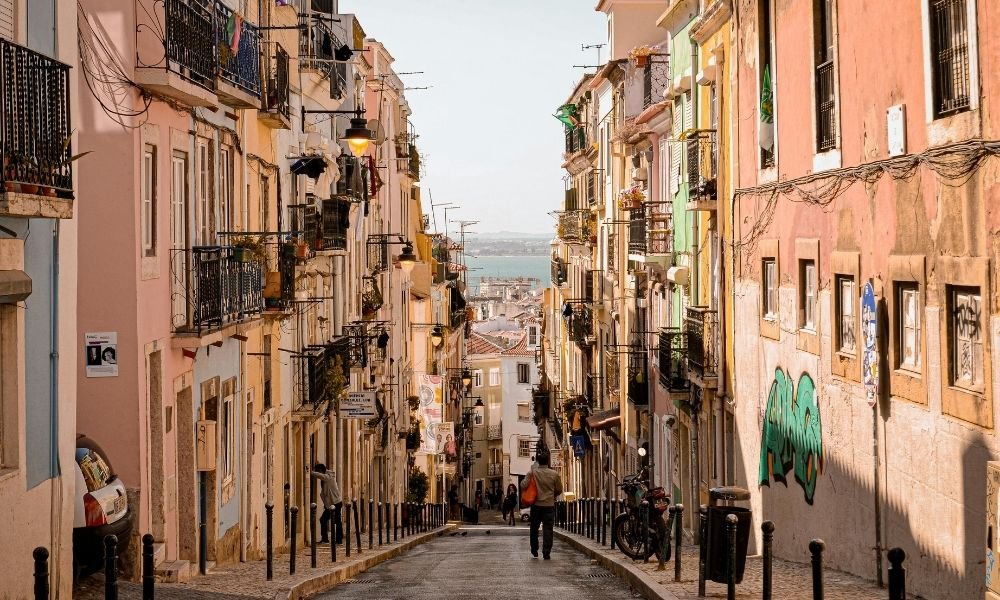
And the side streets themselves matter. Tram 28’s tracks run down a handful of fixed routes by necessity. The real texture of Alfama, the laundry strung between buildings, the tiled facades, the steps that don’t appear on any map, sits in the alleys the tram physically cannot enter.

The trade-off is ground covered. A walking tour won’t take you all the way out to Campo Ourique or back through Baixa. It stays local. But local, in this case, is where the interesting part is.
Most visitors who’ve done both, tram and walk, say the same thing afterward: the tram gave them a memory, the walk gave them an understanding. Those aren’t the same product, even though they’re often marketed as interchangeable ways to “see the old town.”
There’s also a pacing benefit that’s easy to underestimate until you’re standing in Alfama in July heat. A walking tour builds in shade stops, water breaks, and the kind of unhurried pace that a packed tram simply can’t offer. You’re not jockeying for window space with twenty other people trying to get the same photo.
Side-by-Side Comparison Table
| Tram 28 | Walking Tour | |
|---|---|---|
| Cost | €3 single ticket (or covered by transit pass) | €20 to 35 per person typically |
| Time required | 45 to 60 min for the full loop, plus queue time | 2 to 3 hours |
| Crowd level | High to extreme in peak season | Small groups, usually 8 to 15 people |
| Depth of experience | Surface-level, photo opportunities | Historical context, viewpoints, side streets |
| Physical effort | Minimal, you’re seated | Moderate, hills and steps throughout Alfama |
| Ground covered | Full loop across four neighborhoods | One or two neighborhoods, in depth |
Neither option is wrong. They’re solving different problems. The tram is cheap transportation with a view. The walking tour is a slower, more expensive way to actually understand what you’re looking at.
Can You Do Both? (Yes, Here’s How)

This is the part most guides to Lisbon skip over, and it’s the most useful thing in this post if you have a free morning. You don’t have to choose. Ride the tram early, then walk the same ground later, and you get the photo and the substance without wasting a day.
Here’s the practical version. Get to the tram stop at Martim Moniz by 7:30 or 8am, before the tour buses and the queues build up. At that hour the tram is genuinely closer to the version you see in photos, and the ride itself takes maybe 20 minutes if you stay on for a partial loop rather than the full route. Get off around Alfama or the Sé, since that stretch is the most worthwhile section anyway.
Then, later in the morning or after a coffee break, book or show up for a walking tour that covers that same stretch of Alfama and Graça.
You’ll recognize the streets from the tram window, except now you’re actually standing in them, hearing why they look the way they do, and stopping at the viewpoints the tram just rolled past. The two experiences end up complementing each other instead of competing, and the whole combo fits into half a day without feeling rushed.
Best Walking Tours That Cover the Tram 28 Route

If you’re skipping the tram entirely or just want the walking half sorted in advance, a few options consistently cover the right ground.
GetYourGuide
- Tram 28, Alfama and Custard Tart Walking Tour with Local Guide. Covers the core of the tram’s most scenic stretch on foot, with stops at the main miradouros and time built in for fado history and the old Moorish street layout. Check availability on GetYourGuide .
- Alfama Hidden Corners Small Group Walk. A smaller-group option that goes further into the side streets the tram never reaches, good if you’ve already done the touristy viewpoints and want something quieter. See current options on GetYourGuide .
Viator
- Lisbon Old Town and Alfama Walking Tour. A broader walk that still anchors itself around the same neighborhoods Tram 28 runs through, with flexible cancellation if your schedule shifts. Check Viator for availability .
Book a day or two ahead if you’re traveling in peak season. Morning slots, the ones that pair well with an early tram ride, tend to go first.
Tips for Riding Tram 28 If You Still Want To
If you’re set on riding it, a few things make the difference between a decent experience and a frustrating one.
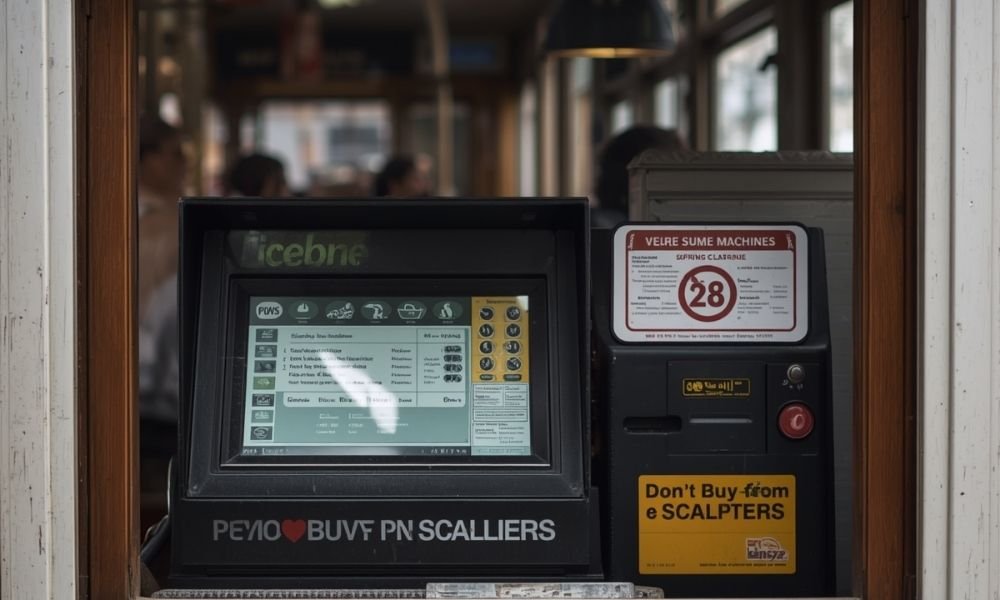
Buy your ticket the right way. You can pay onboard with cash or card, or use a Viva Viagem transit card loaded in advance, which works out cheaper per ride. What you should not do is buy from anyone selling tickets near the stop itself.
This is one of the more common tourist traps in Lisbon, people positioning themselves around Martim Moniz or Praça do Comércio selling tram tickets at inflated prices, sometimes for tours that aren’t even the real Tram 28. The actual ticket machines and onboard payment are right there. There’s no need to buy from a stranger on the sidewalk.
Time it for early morning. Before 8:30am is consistently your best window, especially from spring through fall. After that, queues build fast and stay long through the afternoon.
Sit on the right side for photos. Heading from Martim Moniz toward Estrela, the right side of the tram tends to catch the better views as it climbs through Alfama. It’s not a hard rule, tram cars and seating vary, but it’s worth angling for if you have a choice.
Don’t expect a seat in peak season. If the tram is already crowded when it arrives, standing for the ride is normal. Hold on, keep bags close, and don’t expect to get great photos while standing.
FAQ
Is Tram 28 in Lisbon worth it?
Yes, once, mainly for the experience itself and a handful of photo opportunities along the climb through Alfama. It’s not worth treating as your primary way of seeing the old town, since the speed and crowding mean you absorb very little of what you’re actually passing.
Is Tram 28 a tourist trap?
Not exactly, but it gets treated like one because of the ticket-selling scams near the main stops and the gap between the photogenic version people expect and the crowded reality most riders get. The tram itself is a legitimate, useful piece of Lisbon’s public transport that happens to run through scenic neighborhoods. The trap is in overestimating what the ride alone will show you.
How long does the Tram 28 route take?
The full loop runs about 45 to 60 minutes under normal traffic, longer if the tram is delayed by congestion in the narrower stretches, which happens often in Alfama.
Can you walk the same route as Tram 28?
Largely yes, particularly the stretch through Alfama and Graça, which is the most scenic section anyway. You won’t replicate the full loop out to Campo Ourique on foot easily in one outing, but the part worth seeing is walkable and arguably better seen that way.
What’s the best time to ride Tram 28 to avoid crowds?
Before 8:30am, or alternatively later in the evening close to when service winds down. Midday through late afternoon in peak season is consistently the most crowded window.
Want the walking version sorted before you land? Check current Alfama and Graça walking tour options on GetYourGuide .
Still mapping out the rest of your trip? The best walking tour guide for Lisbon goes deeper into picking a guide for Alfama specifically, and the 3-day Lisbon itinerary for first-timers shows where this tram-and-walk combo fits alongside Belém and a Sintra day trip without overloading your schedule.
Note before you go: Some of the links in this post are affiliate links. If you click through and book a tour, ticket, or hotel, I may earn a small commission. It costs you nothing extra and it helps keep honest travel guides like this one free. I only link to things I would actually book myself.