

A 3 days in Lisbon itinerary first time visitors is really one of the more satisfying things to plan, because the city actually fits. Three days is enough to cover Alfama, Belém, and either Sintra or the quieter neighborhoods without feeling like you’re sprinting between monuments.
The condition is that you book Belém Tower and Jerónimos Monastery tickets before you land, and that you use the metro and trams rather than trying to walk everything. Lisbon is hilly in a way that looks deceptively manageable on a map and very convincingly punishing on day two.
We want to assume in this itinerary that you’re arriving the morning of the day one and leaving the evening of day three. If you’re a slower traveler who needs a long lunch and a nap, that’s fine too. I’ll flag the moments where you can reasonably drop something without breaking the whole plan.
Before You Arrive, Take a Quick Planning Checklist
All key stops across 3 days in Lisbon — including the optional Sintra day trip
Here are few things we have written here that will save you a lots of frustration if you sort them out before you board.
Book Belém Tower and Jerónimos Monastery tickets online. Both attractions enforce timed entry, and slots go fast in summer. Belém Tower reopened on 26 May 2026 after a 13-month restoration closure, and it now runs a strict timed-entry system capped at 900 visitors per day, so advance booking matters more than ever. Grab the combo ticket if you can, since it covers both and costs less than buying them separately. Book your Belém Tower skip-the-line tickets here.
Get a Viva Viagem card at the airport. It’s a reloadable transit card that works on the metro, trams, and most buses. You can top it up at any station machine and it cuts the per-journey cost significantly compared to paying cash each time. Get it from the Lisbon Aerobus kiosk or any metro ticket machine as you land.
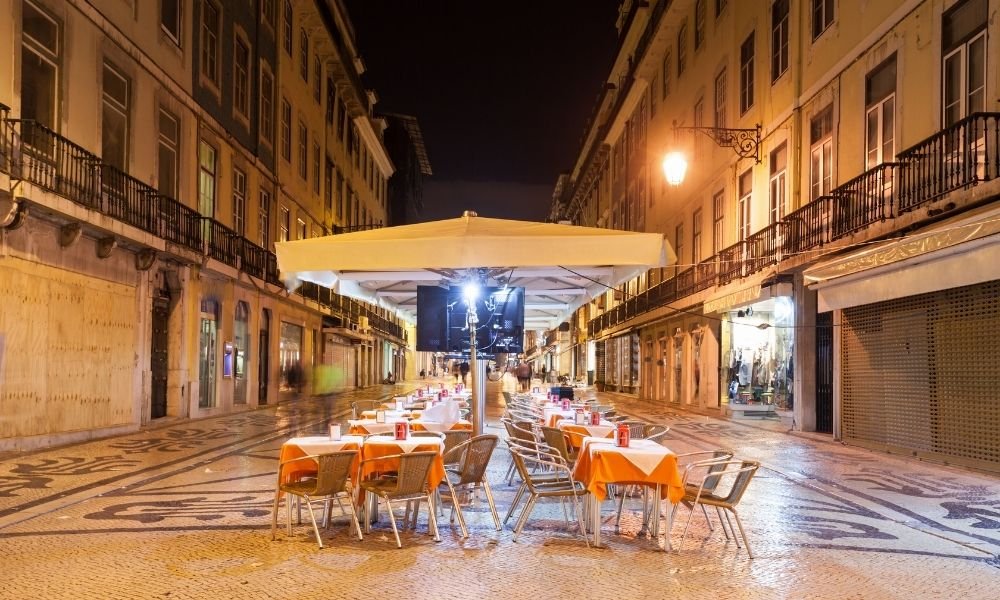
Comfortable shoes are not optional. Lisbon’s pavements are calçada portuguesa, traditional hand-laid black and white cobblestones that look beautiful and are completely unforgiving on anything with a thin sole. They also get extremely slippery when wet. Check the forecast, pack grip, and leave the new trainers at home.
Peak season note: July and August are crowded and hot. If you’re visiting then, plan your outdoor walking for mornings before 11am and late afternoons after 4pm, and use the middle of the day for indoor sites, long lunches, or a museum.
Day 1: Alfama, Baixa, and Your First Evening in the City
Morning (9am to 12pm): Alfama and São Jorge Castle
Start in Alfama. Specifically, start at the Sé de Lisboa, the cathedral, which sits at the bottom of the hill and is one of the oldest buildings in the city. You don’t need to spend long inside, but it’s a useful anchor point for the neighborhood and costs almost nothing to enter the main nave.

From there, walk up. That’s genuinely the direction. Alfama grew on a hillside before anyone drew a grid, so the streets spiral and double back on themselves in a way that’s half the point. You will get slightly lost. This is fine. The neighborhood is small enough that you’ll find your way out, and the getting lost is often where you find the best tiled doorway or the washing line strung above an alley that everyone wants to photograph.
São Jorge Castle sits at the top and is worth the climb for the views alone. From the ramparts you can see the whole sweep of the Tagus river and the terracotta rooftops below in every direction. The castle itself has a decent museum and some atmospheric towers to walk through, but the view is the thing.
A practical note on timing: get to the castle before 10:30am if you can, because the tour groups arrive and the terraces get genuinely packed by mid-morning.
If you want this whole morning to actually mean something beyond pretty photos, this is the stretch where a walking tour earns its price. The Moorish foundations, the earthquake story, the fado connection: none of it announces itself from the outside, and a good guide threads it together in a way that turns a beautiful neighborhood into a place you’ll actually remember. See top-rated Alfama walking tours here
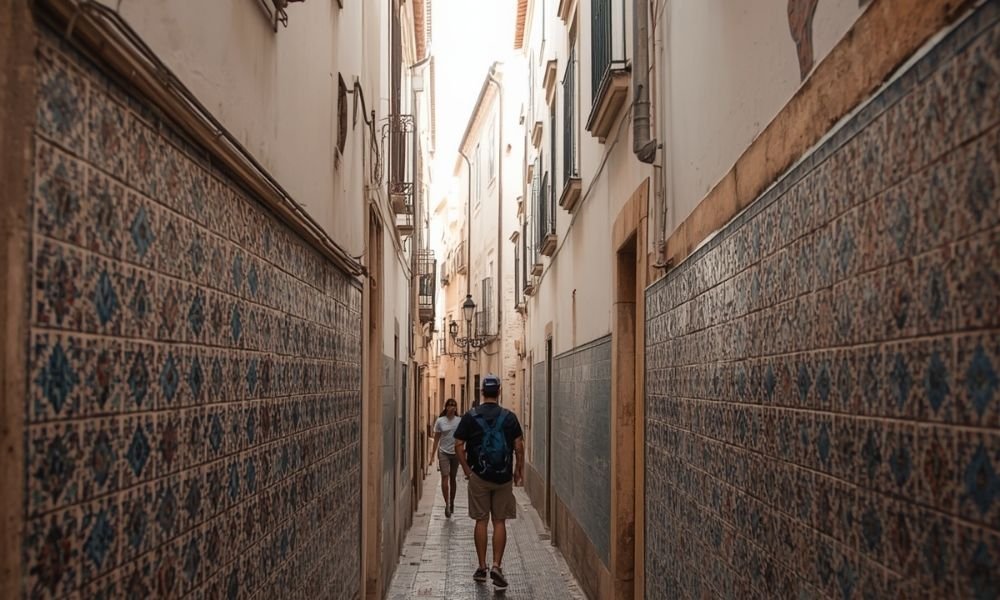
Afternoon (12pm to 4pm): Baixa, Praça do Comércio, and Lunch
Come back down from Alfama and walk toward the river. Baixa is Lisbon’s flat central grid, the part that was rebuilt in straight lines after the 1755 earthquake flattened it, which is why it feels so different from the organic tangle you just left.
Grab lunch here. The area around Rua dos Correeiros has a handful of solid tascas (simple Portuguese restaurants) that do the kind of lunch that costs €12 and involves a quarter of a roast chicken, bread, and wine whether you asked for it or not.
After lunch, walk down to Praça do Comércio. It’s the large riverside square with the yellow government buildings and the triumphal arch, and it’s one of those spaces that genuinely needs to be seen in person. Photos flatten it. Sit on the steps facing the river for a few minutes. Buy a pastel de nata from one of the nearby cafes. Watch the ferries.
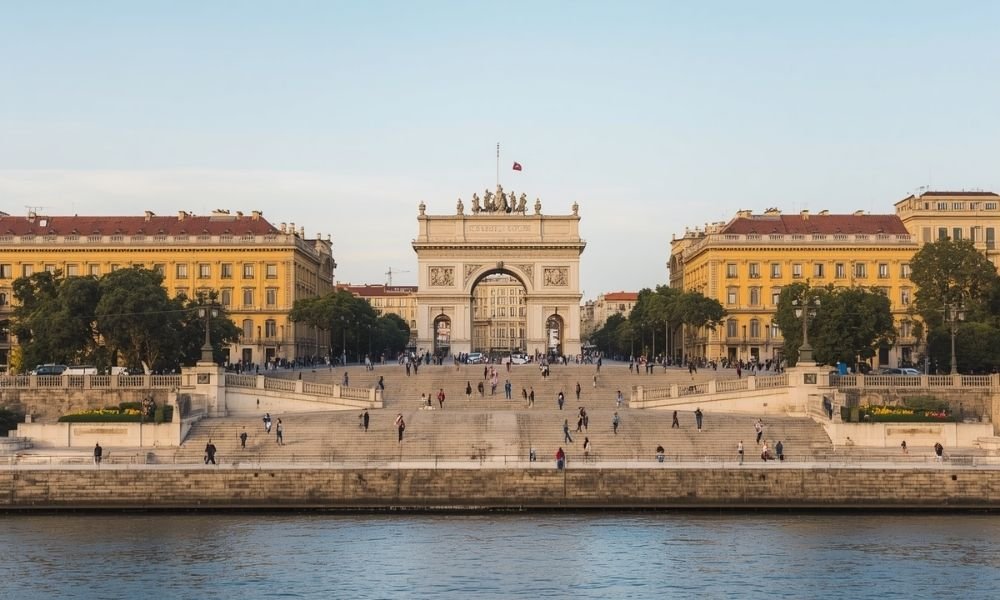
Evening (5pm to 9pm): Chiado, Bairro Alto, and Fado
Head up into Chiado for the early evening. It’s Lisbon’s most elegant neighborhood: bookshops, good coffee, the kind of streets you walk slowly because the buildings keep making you look up. Bertrand Livraria on Rua Garrett is the oldest operating bookshop in the world, which is one of those facts that sounds like tourism copy until you’re actually standing inside it.
As the evening arrives, Bairro Alto wakes up. The neighborhood directly above Chiado turns into a wall-to-wall bar street after dark, which is fun in small doses, but for a first night in Lisbon the better call is fado.
A fado dinner is not cheap. Expect to pay €35 to €60 per person including food and a drink minimum. But for a first visit it’s one of those things you’ll regret skipping. The music is specifically Lisbon’s, it’s specifically melancholic, and hearing it live in a small room is a completely different thing from listening to it on Spotify on the plane over. Book a fado dinner experience here.

Day 2: Belém District (Towers, Monastery, and Pastéis de Nata)
Morning (9am to 12pm): Jerónimos Monastery
Take the tram or the 727 bus from Cais do Sodré to Belém. The journey takes about 20 minutes and runs along the riverside, and it’s a good ride.
Jerónimos Monastery is the first stop and the one that most people underestimate. The exterior is extraordinary, all late Gothic Manueline stonework with maritime motifs carved into every surface, but the interior cloister is where it gets to you.
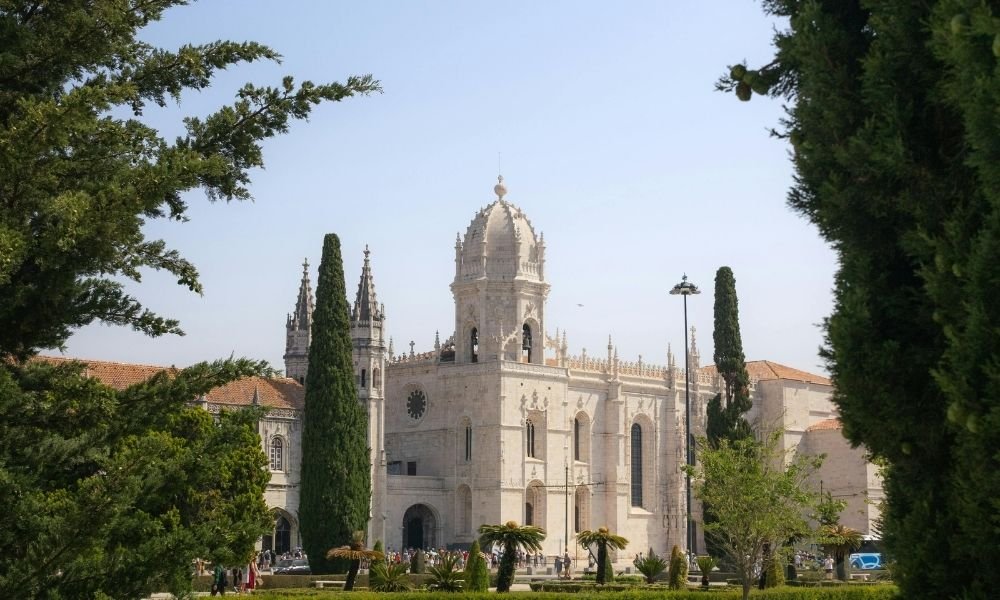
It’s vast and calm and almost otherworldly quiet even when there are people in it. Vasco da Gama is buried here. So is Fernando Pessoa. The monastery operates on timed entry, which is why booking ahead matters. Your slot controls which way the morning flows. Book Jerónimos Monastery tickets here.
Plan on 60 to 90 minutes inside.
Midday (12pm to 2pm): Belém Tower
Walk along the river to Belém Tower. The walk itself takes about 15 minutes and passes the Monument to the Discoveries, which is worth a pause but not a long one unless you want to go up to the top.
Good news for 2026 visitors: Belém Tower reopened on 26 May 2026 after thirteen months of restoration work, the first major overhaul since 1998. The exterior stonework has been cleaned back to something close to its original colour, and the interior now runs on a strict timed-entry cap of 900 visitors per day.
That last part matters practically. This is no longer a show-up-and-queue situation. If you haven’t pre-booked a slot, you may find the day fully sold out by the time you arrive.

The tower itself is smaller than you expect from photographs and more interesting up close. Built at the water’s edge in the 16th century as a ceremonial gateway and defensive fortification, it sits partially over the Tagus in a way that makes it photograph differently depending on the tide. The interior connects four levels via a narrow spiral staircase; the terrace at the top has strong river views toward the 25 de Abril Bridge. Budget 45 minutes to an hour. Get your Belém Tower tickets here.
If you booked the combo ticket, entry flows directly from Jerónimos. Just show the same booking.
Afternoon (2pm to 6pm): Pastéis de Belém, Riverside Walk, and MAAT
This is mandatory: go to Pastéis de Belém on Rua de Belém. It’s the original bakery, the one that has been making the same pastéis de nata recipe since 1837, and yes, there will be a queue. It moves quickly. Order at the counter, sit down, eat them warm with cinnamon and powdered sugar, accept that they’re better than any you’ll have elsewhere, move on with your life.

After the bakery, walk back along the riverside. The stretch between Belém Tower and the LX Factory direction has a wide pedestrian promenade that’s pleasant in the afternoon, and if you have any interest in contemporary art, the MAAT museum sits right on the riverbank with a building that’s genuinely worth seeing even if you skip the exhibitions. The rooftop is free to walk.
Evening (6pm to 9pm): LX Factory or Back to Bairro Alto
LX Factory is a former industrial complex on Rua Rodrigues de Faria that now houses independent restaurants, design shops, vintage markets, and a very good bookshop. Sunday is the main market day, but the restaurants are busy most evenings. It’s a good dinner option if you want something more relaxed than the tourist-facing places in central Baixa.
Alternatively, take the metro back toward Cais do Sodré and spend the evening in the Pink Street area (Rua Nova do Carvalho), which is noisier and younger, or back up in Chiado for a quieter dinner. Depends what you’re after.
Day 3: Sintra Day Trip (or Lisbon’s Quieter Side)
Day three splits into two genuinely different options, and which one makes sense depends on your energy levels and what you want from the trip.

Option A: Sintra Day Trip
Sintra is 40 minutes from Rossio station on a direct train that runs every 20 to 30 minutes. The trains start filling up early in summer. By 9am the platforms are already busy, so aim to be on a train before 8:30am if you’re going in peak season.
Pena Palace is the headline and it earns it: a 19th-century Romanticist royal palace perched on a hilltop in the middle of a forest, painted in yellow and red, with towers that look genuinely like someone built a fairy-tale castle and then forgot to tell the architect it was a joke. The views from the battlements extend to the Atlantic on clear days. Budget 90 minutes to two hours for the palace and grounds.
Quinta da Regaleira is the second stop and arguably the stranger one. The estate was built by a wealthy eccentric at the turn of the 20th century and is full of Masonic and Templar symbolism, hidden tunnels, and an initiation well that spirals down into the earth. It’s deeply odd and worth two hours if you have them.
The honest caveat about Sintra: the logistics are slightly annoying to DIY. The buses between sites run infrequently and fill up, the crowds around Pena Palace in high season are genuine, and if you haven’t pre-booked palace entry you can find yourself queuing for 45 minutes.
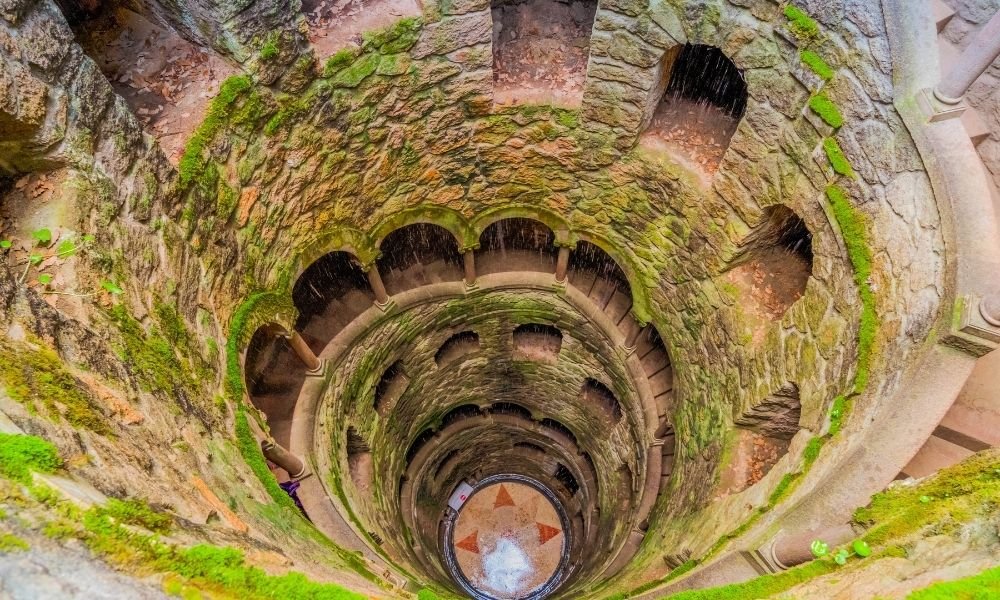
A guided day tour from Lisbon takes care of all of this and typically includes transport, a guide who keeps the day moving, and pre-booked entry. Browse top-rated Sintra day tours from Lisbon.
Option B: Stay in Lisbon, Príncipe Real and the Miradouros
If the idea of an early train and a crowd-heavy day trip sounds like exactly what you don’t need on day three, staying in Lisbon is a genuinely good call.
Start in Príncipe Real, which is quieter and more residential than the neighborhoods you’ve already seen. The Saturday market in Jardim do Príncipe Real is excellent. The streets around it have some of Lisbon’s best independent shops, wine bars, and ceramics. Spend the morning here at a slow pace.
In the afternoon, do a miradouros crawl across the city’s network of viewpoints. Miradouro da Graça tends to have fewer tour groups than the more famous Santa Luzia. Miradouro da Senhora do Monte is the highest and has the best full-city panorama.
Miradouro do São Pedro de Alcântara is slightly more formal, with a tiled panel showing the city laid out in front of you. Take them in sequence over two or three hours, stopping for coffee in between. If you want the golden hour properly timed, a sunset miradouros walk with a guide will get you to the right spot without the crowd. Book a sunset walking tour here.

Where to Stay for This Itinerary
The neighborhood you choose affects how the logistics flow more than most travelers expect before arriving.
Alfama puts you at the center of the atmosphere. You’ll wake up in the oldest part of the city, hear fado from a bar down the alley, and have the castle practically outside your window. The tradeoff is that you will walk up and down stairs to get anywhere, and the roads don’t always accommodate taxis or Ubers easily. Worth it for the experience, harder if you’re moving around with heavy luggage.
Chiado and Baixa are the practical center of gravity. You’re walking distance from the waterfront, close to the trams that go to Belém, and on the metro line for Rossio station when it’s Sintra day. The streets are flatter, the restaurants are excellent, and you won’t feel like you’re fighting the geography. This is the easiest base for the three-day structure above.
Príncipe Real rewards slightly more experienced travelers or those who don’t mind a quieter, more local feel. The neighborhood is beautiful and genuinely less touristy in the evenings, but it’s a bit further out and involves a walk or a short tram ride to reach most of the day one and two sights. Compare hotels in these Lisbon neighborhoods on Travelpayouts. com.
Getting Around With Metro, Trams, and When to Just Walk
The metro is fast, clean, and covers the central neighborhoods well. Rossio, Baixa-Chiado, Cais do Sodré, and Marquês de Pombal are the stops that matter most for this itinerary. The Viva Viagem card you picked up at the airport makes the whole system significantly cheaper than buying individual tickets.
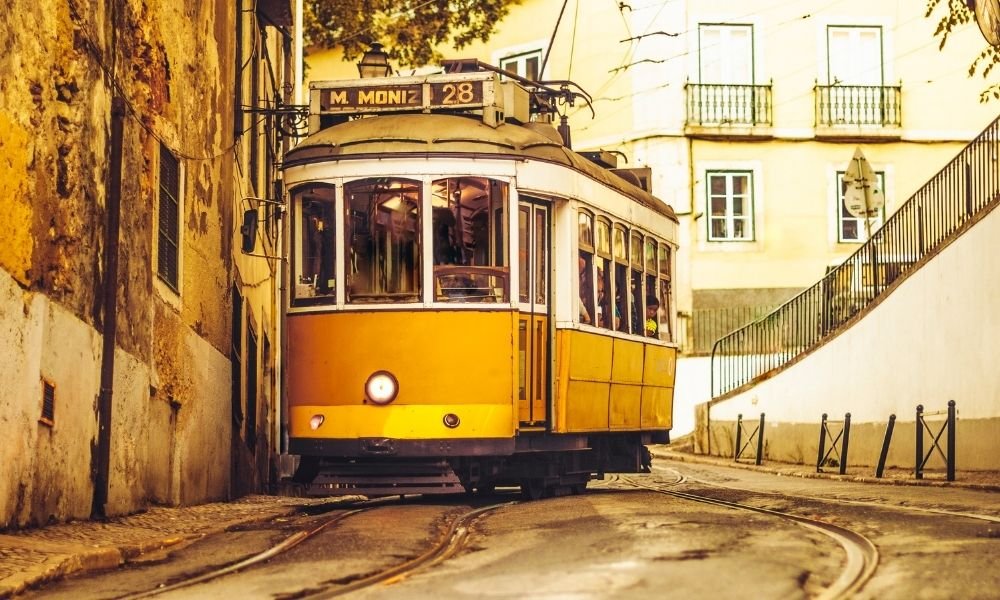
Tram 28 is the famous one. It climbs through Alfama and Mouraria in a route that’s genuinely scenic, but it is also extremely crowded with tourists and a well-known spot for pickpockets. If you want the experience of riding it, do it once, keep your bag in front of you, and don’t bring anything you’d genuinely miss losing. For the Belém journey, tram 15E or the 727 bus from Cais do Sodré is the practical choice.
Uber and Bolt both work well in Lisbon and are often cheaper than taxis for shorter journeys. For getting back late from Bairro Alto or LX Factory when you don’t want to deal with the metro, they’re the right call.
Walking between Alfama and Baixa is doable. Walking from Baixa all the way to Belém is technically possible and practically exhausting. Take public transit.
Money, Safety, and Travel Insurance
Lisbon runs on card payments now more than cash, but having €20 to €30 in your pocket covers the tascas and market stalls that are still cash-preferred. ATMs are everywhere and generally reliable; avoid the standalone ones in high-tourist areas that charge heavy conversion fees and use bank-affiliated machines instead.
When it comes to safety, Lisbon is a relaxed city. The areas most consistently mentioned for petty theft are Tram 28 (see above), the packed streets of Bairro Alto late at night, and Alfama’s narrower alleys, which are quiet and dark after 10pm. The rules are the same as any European city: bag in front of you, phone not out in crowded bars, nothing visible in a car.
On travel insurance: a Sintra day trip is specifically the kind of scenario where it earns its keep. Train delays causing a missed connection, a bag left on a platform, a twisted ankle on an uneven cobblestone going down from Pena Palace, none of these are catastrophic, but all of them are annoying and potentially expensive without coverage. For a short trip like this, SafetyWing’s day-rate travel medical cover is built exactly for the “I need something in case of a specific incident” rather than a heavy annual plan. One link, no drama, worth knowing about before you go.
Budget Breakdown for 3 Days in Lisbon
| Category | Budget Traveler | Mid-Range | Comfortable |
|---|---|---|---|
| Accommodation (per night) | €40–70 (hostel/guesthouse) | €90–150 (mid hotel) | €180–300+ (design hotel) |
| Food (per day) | €20–30 (tascas + markets) | €45–65 (mix of restaurants) | €80–120 (nicer meals + wine) |
| Transport (per day) | €4–8 (Viva Viagem) | €10–20 (transit + Uber occasionally) | €20–35 (Uber-heavy) |
| Attractions (Belém combo) | €18 combo ticket | €18 combo + 1 museum | €18 combo + 2 museums + tour |
| Sintra day (if going) | €10 train return + €16 palace | €10 train + €30 combo entry | €50–75 guided day tour |
| Fado dinner | Skip or go early/cheaper | €35–45 per person | €60–90 per person |
| Daily total estimate | €65–100 | €130–180 | €250–400 |
These are honest averages, not optimistic ones. Lisbon is still one of the more affordable Western European capitals, though prices have risen noticeably in the last few years.
Frequently Asked Questions
Is 3 days enough time in Lisbon?
Three days covers the main areas comfortably without rushing, as long as you’re organized about pre-booking the Belém sites. You won’t run out of things to do, but you also won’t feel like you’re ticking off a checklist. Most first time visitors leave wishing they had another day, and that’s usually a good sign.
Should I do a day trip to Sintra or stay in Lisbon?
If you’ve never been and have any interest in architecture, landscapes, or slightly eccentric 19th-century palaces, go to Sintra. If you’re tired, prefer cities to castles, or are traveling with young children who’ve already had enough of long days, the Príncipe Real alternative is genuinely just as good.
What’s the best area to stay in Lisbon for 3 days?
Chiado and Baixa for logistics and walkability. Alfama for atmosphere and the full immersive experience. Príncipe Real if you want a quieter, more residential feel with excellent restaurants nearby.
Do I need to book Belém Tower tickets in advance?
Yes, more than ever. Belém Tower reopened in late May 2026 after restoration and now operates a hard daily cap of 900 visitors under a new timed-entry system. That cap fills quickly in summer. Book at least three to five days ahead in peak season; same-day entry is essentially not a realistic option anymore.
Is Lisbon walkable or do I need public transit?
Both. Within neighborhoods, walking is the best way to actually see anything. Between neighborhoods, particularly Baixa to Belém, use the tram or bus. The Viva Viagem card makes this easy and cheap.
For more detail on the specific Alfama walk on day one, the Lisbon self-guided vs paid walking tour guide breaks down exactly what you’ll get with and without a guide in that neighborhood. And before day two, the Belém Tower skip-the-line ticket guide covers everything about entry times, pricing, and what’s actually worth seeing inside, because the ticket logistics are specific enough that a quick read the night before is worth it. If Sintra is on your list and you’re leaning toward booking a tour rather than navigating the trains yourself, the Sintra day tours linked above are where to start.
A quick note before you go: some of the links in this post are affiliate links. If you click through and book a tour, ticket, or hotel, I may earn a small commission. It costs you nothing extra and it helps keep honest travel guides like this one free. I only link to things I would actually book myself.